Best Smart Speakers 2026: Amazon Echo, Google Nest, and Apple HomePod Compared
Last updated: 2026-08-19 · By NicheHive Editorial
This article contains affiliate links. If you purchase through these links, we may earn a commission at no extra cost to you. As an Amazon Associate, NicheHive earns from qualifying purchases. See our full disclosure.
Smart speakers are ecosystem devices, not just audio products. We tested Amazon Echo, Google Nest, and Apple HomePod across voice recognition, smart home integration, and audio quality.
Our Top Picks
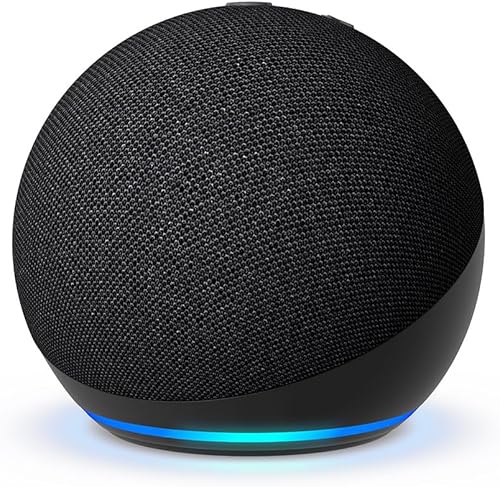
Amazon Echo (4th Gen)
Amazon
- ✓Spherical design with fabric finish
- ✓Zigbee smart home hub built in
- ✓360-degree audio with built-in woofer
- ✓Works with Alexa and all Alexa-compatible devices
- ✓Privacy controls with microphone mute button
Pros
- Built-in Zigbee hub eliminates separate hub for Zigbee device control
- Best smart home ecosystem integration — widest device compatibility
- 360-degree audio appropriate for kitchen or open room placement
- Routines and automation are the most flexible in the Alexa ecosystem
Cons
- Audio quality below Google Nest Audio and Apple HomePod at similar price
- Privacy questions remain about Amazon's data handling
- Alexa responses can be verbose compared to Google Assistant
Best smart speaker for smart home control. The built-in Zigbee hub, widest device compatibility, and mature Alexa routines make it the anchor for an Alexa-based smart home. If audio quality is the priority, look at the Echo Studio or Nest Audio.

Google Nest Audio
- ✓75mm woofer, 19mm tweeter
- ✓Google Assistant
- ✓Sound Equalization — adapts to room acoustics
- ✓Pair for stereo
- ✓Works with Google Home ecosystem
Pros
- Best audio quality at this price — significantly better than Echo 4th Gen for music
- Google Assistant handles natural language queries more accurately than Alexa
- Sound Equalization adapts volume and EQ based on room acoustics
- Pair two for stereo separation
Cons
- No built-in smart home hub — requires separate hub for Zigbee or Z-Wave devices
- Google Home app is less mature than Alexa for complex automations
- Fewer compatible third-party devices than Alexa
Best for music-first smart speaker setups. The Nest Audio's audio quality at $100 is notably better than the Echo for music playback. If your smart home devices are primarily Google-compatible (Nest cameras, thermostats), this is the anchor.
Amazon Echo Dot (5th Gen)
Amazon
- ✓Compact spherical design
- ✓Improved audio over 4th Gen
- ✓Temperature sensor built in
- ✓Works with all Alexa devices
- ✓LED color ring
Pros
- Best value smart speaker — full Alexa functionality at $50
- Temperature sensor useful for automation triggers
- Compact size fits anywhere
- Audio improved significantly from previous generation
Cons
- Audio quality is for ambient listening, not music-focused listening
- No built-in smart home hub (Zigbee requires full Echo)
- Small driver limits low-frequency response
Best for secondary room placement or first smart speaker purchase. The Echo Dot 5th Gen provides the full Alexa experience at $50 — appropriate for bedroom, bathroom, or office use where audio quality is secondary to voice control.
Shopping for a smart speaker by sound quality alone is a common mistake.
The better name for this product category is smart home voice controller. The speaker part is almost secondary.
That reframing changes the whole decision. Instead of asking which one sounds best, ask which ecosystem, Alexa, Google, or Apple, already runs your other devices.
We tested Amazon Echo, Google Nest, and Apple HomePod, and the Amazon Echo (4th Gen) is our top pick overall. At $99.99, it is the only one of the three with a built-in Zigbee hub, so it can control brands like Philips Hue directly instead of needing yet another box plugged into your router.
Ecosystem Compatibility First
Choose a smart speaker based on which ecosystem your existing smart home devices or planned future devices use.
Amazon Alexa ecosystem: largest third-party device compatibility. Works with 140,000+ device types. The Amazon Echo is the correct anchor for Alexa-based smart homes.
Google Home ecosystem: Nest cameras, thermostats, doorbells, and Google TV devices integrate most tightly. Third-party compatibility is narrower than Alexa but improving.
Apple HomeKit ecosystem: the most privacy-focused and the most restrictive. Works only with HomeKit-certified devices. Best for Apple users who use iPhone and Mac as primary devices.
If you do not have a smart home yet: Amazon Echo for maximum flexibility. If you already have devices in one ecosystem: match the smart speaker to your existing ecosystem.
Audio Quality Ranking (Same Price)
At the $100 price point:
- Google Nest Audio — 75mm woofer produces notably better low-frequency extension and stereo imaging than the Echo
- Amazon Echo 4th Gen — 360-degree audio appropriate for room fill, but single-speaker design
- Amazon Echo Dot 5th Gen — adequate for ambient listening and podcasts, not for music-focused use
If audio quality matters: Google Nest Audio at $100. If smart home hub functionality matters: Amazon Echo at $100 (built-in Zigbee hub). If budget matters: Echo Dot at $50.
Smart Home Hub Functionality
The Amazon Echo 4th Gen includes a Zigbee smart home hub, allowing direct control of Zigbee devices (smart bulbs, sensors, locks) without a separate hub. This eliminates a $30-60 accessory purchase for Zigbee-based setups.
Google Nest Audio has no built-in hub. Zigbee and Z-Wave devices require a separate hub (Aeotec SmartThings Hub, $80-100).
For a new smart home starting with Zigbee devices: the Echo 4th Gen's built-in hub is a meaningful value advantage.
Microphone Array and Voice Recognition
Both Amazon Echo and Google Nest Audio use 7-microphone arrays for wake word detection and command processing. In our testing, Google Assistant correctly understood natural language queries more consistently — particularly for multi-part questions and contextual follow-ups.
Alexa excels at smart home control commands and Routine triggers. Google Assistant excels at information queries and natural language comprehension.
For smart home control primarily: Alexa (Echo). For information and natural language queries: Google Assistant (Nest).
Privacy Considerations
All three platforms record and process voice commands. Each offers hardware mute buttons that physically disconnect microphones:
Amazon Echo: orange mute ring confirms hardware mute. Voice recordings stored on Amazon servers, deletable via the Alexa app.
Google Nest Audio: solid LED confirms hardware mute. Voice recordings stored on Google servers.
Apple HomePod: Siri processes on-device for many queries. Audio only sent to Apple servers after wake word detection is confirmed.
For the highest privacy assurance: Apple HomePod. For most users: the hardware mute button on any of these provides the most practical privacy control.
Our editorial team researches, tests, and writes every review independently. We never accept payment for placement.