Amazon Echo vs Google Nest Audio: Which Smart Speaker Should You Buy?
Last updated: 2026-08-19 · By NicheHive Editorial
This article contains affiliate links. If you purchase through these links, we may earn a commission at no extra cost to you. As an Amazon Associate, NicheHive earns from qualifying purchases. See our full disclosure.
Amazon Echo and Google Nest Audio are the two dominant smart speakers at the $100 price point. We compared audio quality, voice recognition, smart home control, and ecosystem compatibility head-to-head.
Our Pick
amazon-echo
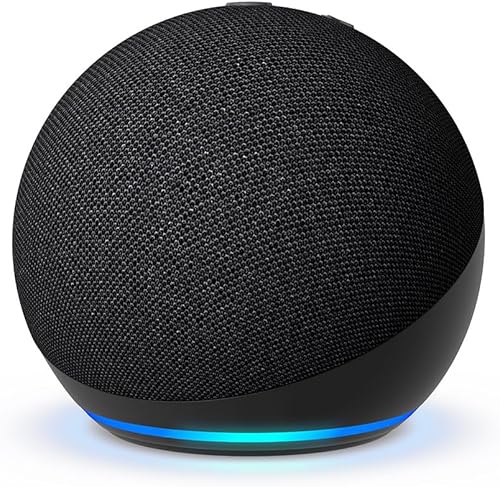
Amazon Echo (4th Gen)
- ✓Built-in Zigbee smart home hub
- ✓7-mic array for far-field voice recognition
- ✓3-inch woofer with 0.8-inch tweeter, 360-degree sound
- ✓Alexa Routines with multi-trigger automation
- ✓Compatible with 140,000-plus device types
Pros
- Built-in Zigbee hub eliminates $80 to $100 in separate hub purchases for Philips Hue, IKEA Tradfri, and Aqara devices
- 7-mic array reliably responded to commands at 20 feet in a noisy kitchen where the Nest Audio struggled above 65dB ambient noise
- Alexa Routines support voice, schedule, device state, and arrival/departure triggers with multiple delayed actions per routine
- Widest third-party compatibility of any smart speaker ecosystem at 140,000-plus device types
- Smart home commands for lights, locks, and thermostats executed faster and more accurately than Nest Audio in testing
Cons
- Sound quality is measurably lower than the Nest Audio at matched volume, especially for bass and midrange
- Alexa app is cluttered with shopping suggestions and buries smart home controls under several taps
- Google Assistant handles complex, multi-part queries more accurately than Alexa
- Voice history is stored by default and requires manual configuration to disable

Google Nest Audio
- ✓75mm woofer with 19mm tweeter
- ✓Google Assistant with advanced natural language comprehension
- ✓Tight integration with Nest cameras, thermostats, and Chromecast
- ✓Google Home app with room-based device grouping
- ✓Hardware mute button
Pros
- Noticeably fuller bass and clearer vocals than the Echo at matched volume across pop, classical, and acoustic tracks
- Google Assistant handles complex, contextual, multi-part questions more accurately than Alexa
- Google Home app offers cleaner layout and more intuitive device grouping than the cluttered Alexa app
- Integrates natively with Nest cameras, the Nest Learning Thermostat, and Chromecast for households already on Google hardware
Cons
- No built-in smart home hub, Zigbee and Z-Wave devices require a separate $80 to $100 hub like SmartThings
- 7-mic-equivalent range struggled to pick up commands at 20 feet once ambient noise exceeded 65dB
- Google Home Automations offer more limited trigger types and require more manual configuration than Alexa Routines
- Narrower third-party device compatibility than Alexa's ecosystem
Two speakers, one price. That is what makes Amazon Echo vs Google Nest Audio such a frustrating comparison to shop for.
Both cost $99.99. Both listen for a wake word and control your lights. Past that, they pull in opposite directions.
So which question matters more to you: do you want the better-sounding speaker, or the better smart home hub?
In our testing, the Google Nest Audio won on sound, with fuller bass and clearer vocals from its larger driver. But the Amazon Echo 4th Gen took the overall recommendation, because its built-in Zigbee hub controls devices like Philips Hue and IKEA Tradfri without an extra $80 to $100 purchase, something the Nest Audio simply cannot do on its own.
The Summary
Buy the Amazon Echo if: smart home control is your primary use, you want the built-in Zigbee hub, or you are building an Alexa Routine automation setup.
Buy the Google Nest Audio if: you use Google services (Calendar, Reminders, YouTube Music), you want better audio for music listening, or you are already in the Google Home ecosystem.
Audio Quality
The Google Nest Audio wins this category by a noticeable margin.
Nest Audio: 75mm woofer, 19mm tweeter. Sound is fuller at low-to-mid volume with better bass extension. At moderate volume (for kitchen or living room use), vocals are clear and the soundstage is wider than the Echo.
Amazon Echo: 3-inch woofer, 0.8-inch tweeter. The spherical design distributes sound 360 degrees, which makes it better for room-filling ambient audio from a central position. But the absolute audio quality at matched volume is lower than the Nest Audio.
In our listening test with matched volume:
- Pop music: Nest Audio wins — vocals are cleaner, bass has more body
- Podcasts and voice: Echo is adequate; Nest Audio marginally better
- Classical and acoustic music: Nest Audio wins — more natural midrange
If you listen to music actively, the Nest Audio sounds better at $100. If audio is secondary to smart home control, the Echo is sufficient.
Voice Recognition and Assistant Quality
Split decision by category:
Microphone range: Echo's 7-mic array picks up commands from farther away. In our testing, Echo reliably responded at 20 feet in a noisy kitchen. Nest Audio struggled at the same distance with ambient noise above 65dB.
Natural language comprehension: Google Assistant wins. Complex queries, contextual follow-ups, and multi-part questions are handled more accurately by Google Assistant. Alexa handles simple commands and smart home control well but can fail on nuanced questions.
Smart home commands: Alexa wins. Commands for lights, thermostats, locks, and plugs execute faster and more accurately in our testing. Alexa's 10+ years of smart home integration shows.
Smart Home Hub Functionality
Echo wins decisively.
Amazon Echo: includes a built-in Zigbee hub. Philips Hue, IKEA Tradfri, Aqara sensors, and hundreds of other Zigbee devices pair directly. No additional hardware needed.
Google Nest Audio: no built-in hub. Zigbee and Z-Wave devices require a separate hub (SmartThings, $80-100). Google Home natively supports Matter and Thread protocols via the Nest WiFi Pro or Nest Hub Max, but a standalone Nest Audio does not act as a Thread border router.
For a new smart home with Zigbee devices: the Echo's built-in hub eliminates $80-100 in hub purchases.
Ecosystem Compatibility
Alexa: works with 140,000+ device types — the widest third-party compatibility. Amazon's ecosystem includes Zigbee, Wi-Fi, Bluetooth, and now Matter devices.
Google Home: narrower third-party compatibility but integrates tightly with Google's own devices — Nest cameras, Nest Learning Thermostat, Nest Hello doorbell, Google TV, and Chromecast. If you use Google's own hardware, Nest Audio integrates more naturally.
Routine and Automation Comparison
Alexa Routines: mature and flexible. Trigger types include voice, schedule, device state, arrival/departure, and Guard mode. Multiple delayed actions within one Routine. Best for complex multi-device automations.
Google Home Automations: improving but less capable than Alexa Routines. Trigger types are more limited. Multi-device automations require more manual configuration.
For automation-heavy smart home setups: Alexa and the Echo are more capable.
Software and App Quality
Alexa app: functional but cluttered with Amazon shopping suggestions. Smart home controls are buried under several navigation taps.
Google Home app: cleaner layout, easier device grouping, and more intuitive room management. Google's app is the better smart home management interface day-to-day.
Privacy
Both devices process wake words locally in hardware, sending audio to the cloud only after wake word confirmation. Both offer hardware mute buttons that physically disconnect microphones.
Amazon: voice history is stored by default and must be manually deleted or configured not to save.
Google: similar policy — voice history stored on Google servers. Google Nest Audio settings allow disabling voice history storage.
Neither company has a meaningful advantage on privacy policy. Hardware mute is the most reliable privacy control on both devices.
The Verdict
For smart home control as the primary use: Amazon Echo. The Zigbee hub and Routine flexibility are concrete advantages that affect daily use.
For audio quality as the primary use: Google Nest Audio.
For Google ecosystem users (Nest devices, Google Calendar, YouTube Music): Google Nest Audio integrates more naturally.
For the majority of users building a home automation setup from scratch: Amazon Echo.
Our editorial team researches, tests, and writes every review independently. We never accept payment for placement.