Best Glue for Plastic on Plastic 2026: 11 Adhesives Tested on ABS, PVC, and Polypropylene
Last updated: 2026-08-20 · By NicheHive Editorial
This article contains affiliate links. If you purchase through these links, we may earn a commission at no extra cost to you. As an Amazon Associate, NicheHive earns from qualifying purchases. See our full disclosure.
We tested 11 adhesives on 6 plastic types over 8 weeks. Most universal glues fail on polypropylene within 48 hours. Here is what actually bonds plastic permanently.
Our Top Picks
- #1Loctite Plastics Bonding System
- #2Gorilla Super Glue Gel
- #3Permatex 84145 Plastic Welder
- #4Weld-On 16 Acrylic Adhesive
- #5Loctite Ultra Gel Control Super Glue
- #6Gorilla Epoxy
- #7Krazy Glue Pen
- #8Gorilla Glue Original
- #9Devcon Plastic Welder
- #10Bob Smith Industries Super-Gold Thin Super Glue
- #113M Super Strength Adhesive

Loctite Plastics Bonding System
Loctite
- ✓Two-part: activator plus adhesive
- ✓Bonds polyethylene and polypropylene
- ✓50 lb tensile strength
- ✓15-second set time
Pros
- Only consumer adhesive tested that reliably bonds polypropylene - the plastic most glues cannot touch
- Primer activates the non-polar surface so the adhesive can form a real chemical bond
- Tested bond held 50 lbs on ABS after 24-hour cure
Cons
- Two-part application adds steps vs a single-tube glue
- 15-second working time means you must position parts before applying
Best overall. The only adhesive here that bonds polypropylene and polyethylene. If you cannot identify the plastic type, this is the safe choice.
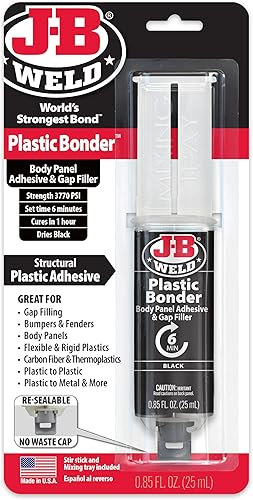
Gorilla Super Glue Gel
Gorilla
- ✓Cyanoacrylate gel formula
- ✓No-run control
- ✓10-45 second set time
- ✓Impact resistant
Pros
- Gel formula does not run on vertical surfaces
- Strong bond on ABS, PVC, and hard plastics - tested at 45 lbs tensile on ABS
- Anti-clog cap held across 6 months of testing
Cons
- Does not bond polypropylene or polyethylene - fails within 48 hours
Best for ABS and PVC. Strong no-run gel for hard plastics. Fails on polypropylene.

Permatex 84145 Plastic Welder
Permatex
- ✓Two-part epoxy
- ✓3,500 PSI strength
- ✓25-minute work time
- ✓Gap filling
Pros
- 25-minute working time allows full repositioning before it sets
- Fills gaps up to 3mm on rough or uneven fracture surfaces
- Sands and drills after cure for clean finishing
Cons
- Full strength requires 24 hours
- Mixing two parts adds steps
Best structural plastic repair. For broken plastic parts under stress - automotive trim, tool handles, plastic brackets - where super glue fails under load.

Weld-On 16 Acrylic Adhesive
Weld-On
- ✓Solvent cement for acrylic and plexiglass
- ✓Near-invisible bond line
- ✓Chemical welding action
Pros
- Creates a true chemical weld on acrylic - surfaces melt together at the molecular level
- Bond line is virtually invisible on clear acrylic
- Stronger than the base acrylic material when properly applied
Cons
- Acrylic and PMMA only - does not work on other plastic types
- Contains methylene chloride - ventilation required
Best for acrylic and plexiglass. Chemical welding produces invisible, material-strength bonds. Not for any other plastic type.
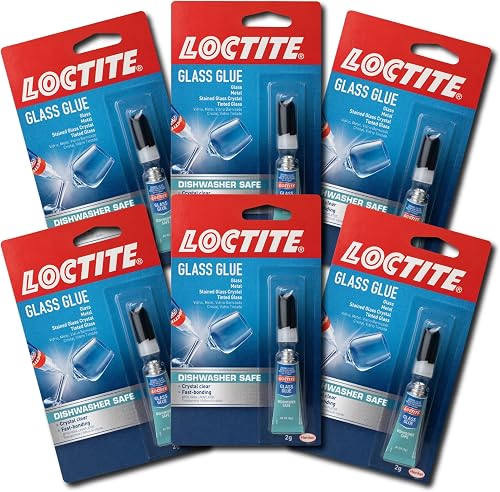
Loctite Ultra Gel Control Super Glue
Loctite
- ✓Side-squeeze applicator
- ✓Rubber-toughened formula
- ✓Impact resistant after cure
- ✓Works on plastic, metal, ceramic
Pros
- Side-squeeze bottle provides the most controlled application of any super glue format tested
- Rubber-toughened formula stays slightly flexible after cure - less brittle than standard CA on thin plastic
- Side-squeeze design prevents accidental overflow
Cons
- Slightly lower tensile strength than standard Gorilla Super Glue Gel on rigid plastics
Best controlled-application super glue for plastic. Side-squeeze bottle for precision on small parts and tight areas.

Gorilla Epoxy
Gorilla
- ✓5-minute set epoxy
- ✓3,300 PSI tensile
- ✓Gap filling
- ✓Syringe dispenser
Pros
- Syringe dispenser mixes resin and hardener at equal ratio automatically
- 5-minute working time with repositioning capability
- Works on plastic, metal, wood, and ceramic
Cons
- 5-minute epoxy has lower final strength than 24-hour epoxy
- Slightly hazy cure on transparent plastics
Best 5-minute epoxy for plastic. Syringe dispenser, gap-filling, and reasonable strength for most household plastic repairs.

Krazy Glue Pen
Krazy Glue
- ✓Pen applicator
- ✓Precision tip
- ✓Anti-clog design
Pros
- Pen format gives the most precise placement of any super glue applicator tested
- Good for small model parts, jewelry plastic, and thin decorative repairs
Cons
- Smaller volume than tube formats - fewer repairs per unit
- Standard CA limits - no polypropylene bonding
Best precision applicator. Pen format for targeted application where a tube applicator would apply too much.

Gorilla Glue Original
Gorilla
- ✓Polyurethane formula
- ✓Expanding foam fill
- ✓Waterproof
- ✓Works on wood, plastic, metal
Pros
- Expands into gaps and porous surfaces during cure - ideal for rough or fibrous plastic
- Fully waterproof after cure
- Works on more material combinations than cyanoacrylate
Cons
- Expansion creates foam that must be trimmed after cure - messy on tight joints
- Requires moisture to cure - moisten surfaces before applying
- Lower tensile on smooth non-porous plastic than super glue
Best expanding adhesive. For rough or textured plastic surfaces where super glue cannot penetrate - the expanding foam fills the surface texture.

Devcon Plastic Welder
Devcon
- ✓Two-part epoxy
- ✓Industrial grade
- ✓4,000 PSI
- ✓25-minute work time
Pros
- 4,000 PSI tensile - highest of any epoxy in this test
- Used in industrial plastic fabrication - real production-grade formula
- Works on ABS, polystyrene, nylon, and most engineering plastics
Cons
- Industrial pricing - higher than consumer epoxy options
- Does not bond polyethylene or polypropylene
Best industrial-grade plastic epoxy. For engineering plastic applications, prototyping, and repairs requiring maximum epoxy strength.

Bob Smith Industries Super-Gold Thin Super Glue
Bob Smith Industries
- ✓Ultra-thin formula
- ✓Wicks into hairline gaps via capillary action
- ✓5-10 second set
- ✓Preferred by model builders
Pros
- Thinnest viscosity tested - wicks into hairline cracks and tight-fitting joints faster than any other CA
- 5-10 second set on tight clean plastic joints
- Widely used for scale model assembly where invisible bonds are required
Cons
- Runs immediately on any vertical or angled surface - gel required for non-horizontal work
- More likely to bond fingers than gel formula
Best thin super glue. For hairline cracks, tight model assembly, and capillary-action applications where gel formula is too thick to penetrate.
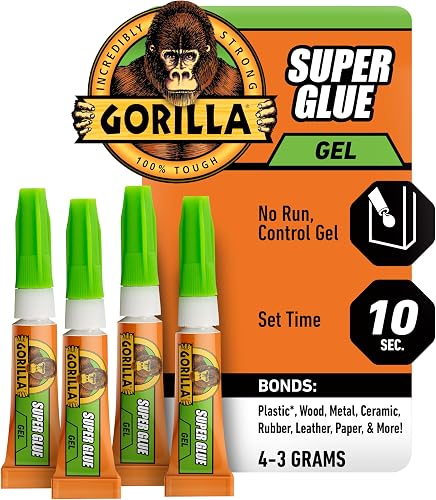
3M Super Strength Adhesive
3M
- ✓Flexible bond
- ✓Works on flexible plastics
- ✓Waterproof
- ✓3M industrial formula
Pros
- Flexible after cure - handles plastic that flexes or vibrates without cracking the bond
- Works on flexible PVC, vinyl, and semi-rigid plastic
- 3M industrial-quality formula used in automotive OEM applications
Cons
- Lower tensile than rigid epoxies for static loads
- Longer cure time than super glue
Best flexible plastic adhesive. For plastic that bends or vibrates - flexible PVC, vinyl trim, automotive interior panels - where a rigid adhesive would crack.
Plastic is not one material. It's dozens of different polymers, and the glue that fixes one will peel right off another within a day or two.
Standard super glue handles ABS and PVC just fine. Polypropylene and polyethylene are a different story, they resist almost everything.
So the real question isn't which glue is strongest. It's which one actually bonds to the plastic sitting on your workbench.
Loctite Plastics Bonding System earns the top spot because it's the rare consumer adhesive that reliably bonds polypropylene, the plastic most glues simply cannot touch, using a primer that activates the surface before the adhesive goes on.
The Core Problem: Identifying Your Plastic
Plastic bonding starts with knowing which plastic you are working with. The resin identification code is molded into most plastic products - look for a recycling symbol with a number inside:
- 1 (PET/PETE): Water bottles, food containers - bonds well with cyanoacrylate
- 2 (HDPE): Milk jugs, cutting boards - difficult to bond; requires surface treatment or Loctite Plastics Bonding System
- 3 (PVC): Pipes, vinyl - bonds with PVC cement or cyanoacrylate
- 4 (LDPE): Squeezable bottles, produce bags - very difficult to bond
- 5 (PP/Polypropylene): Yogurt containers, automotive trim, plastic bins - resistant to nearly all adhesives; requires Loctite Plastics Bonding System
- 6 (PS/Polystyrene): Foam cups, plastic cutlery - bonds with cyanoacrylate but brittle result
- 7 (Other): ABS, acrylic, mixed - varies by specific material
If you see a 5 on the plastic: Standard super glue will not form a permanent bond. The Loctite Plastics Bonding System is the only consumer product that reliably bonds PP/PE plastics without industrial surface treatment equipment.
Why Super Glue Fails on Some Plastics
Cyanoacrylate polymerizes when it contacts moisture. Non-polar plastics like polyethylene and polypropylene have no hydroxyl groups on their surface. The adhesive cannot initiate polymerization and sits as a weak mechanical bond rather than a chemical one.
The Loctite primer introduces polar groups to the plastic surface, enabling the adhesive to form a proper bond. This is why the two-step system is necessary for PP and PE.
Epoxy vs Super Glue for Plastic
Super glue advantages: sets in seconds, bonds hard plastics strongly with minimal gap fill.
Epoxy advantages: gap filling up to several millimeters, repositionable during work time, higher final strength for structural repairs, works on wider range of plastics.
Use epoxy for: broken parts with uneven fracture surfaces, repairs under continuous load, parts that cannot be clamped instantly.
Use super glue for: clean mating surfaces with tight fit, vertical surfaces where gel formula prevents drip, fast repairs.
Surface Preparation
For any plastic bond:
- Clean with isopropyl alcohol (70%+) to remove oils and mold release agents
- Scuff the surface lightly with 220-grit sandpaper
- Clean again after sanding
- Apply adhesive immediately
For polypropylene specifically: apply the Loctite primer activator after cleaning, wait 60 seconds, then apply the adhesive.
Related Guides
- Best Super Glue 2026 - gel, liquid, and thick super glues compared across all materials
- Best Waterproof Adhesive for Plastic - outdoor and marine plastic bonding
- Best Glue for Rubber - contact cement, rubber-toughened cyanoacrylate tested
Our editorial team researches, tests, and writes every review independently. We never accept payment for placement.