Best Woodworking Clamps 2026: 8 Clamps Every Woodworking Shop Needs
Last updated: 2026-08-21 · By NicheHive Editorial
This article contains affiliate links. If you purchase through these links, we may earn a commission at no extra cost to you. As an Amazon Associate, NicheHive earns from qualifying purchases. See our full disclosure.
Clamps are the third hand in every woodworking shop. We tested 8 woodworking clamps across different types on clamping pressure, jaw alignment, ease of adjustment, and durability for furniture and cabinet assembly.
Our Top Picks
- #1Bessey KR3.550 50-Inch K Body REVO Fixed Jaw Parallel Clamp, 2-Pack
- #2Jorgensen 3706-LD 6-Inch Light-Duty Steel Bar Clamp
- #3IRWIN Quick-Grip One-Handed Bar Clamp, 6-Inch
- #4Pony 50 3/4-Inch Pipe Clamp Fixture
- #5Jorgensen 6-Inch Adjustable Hand Screw Clamp
- #6Pony Jorgensen 3536 36-Inch Aluminum Bar Clamp
- #7IRWIN QUICK-GRIP Spring Clamps, Multiple Sizes, 6-Pack
- #8Kreg KHCRA Automaxx Right Angle Clamp

Bessey KR3.550 50-Inch K Body REVO Fixed Jaw Parallel Clamp, 2-Pack
Bessey
- ✓Parallel jaw alignment
- ✓1,500 lb clamping force
- ✓I-beam bar design
- ✓Available in multiple lengths
Pros
- Parallel jaws maintain perfect perpendicular clamping pressure throughout the full range
- 1,500 lb clamping force is the highest in the bar clamp category
- I-beam bar does not twist or flex under heavy clamping pressure
- The reference parallel clamp for furniture and cabinet assembly
Cons
- High price per clamp -- requires significant investment to stock a set
- Heavy for the size compared to standard bar clamps
Best overall woodworking clamp. Bessey K Body parallel clamps are what professional furniture shops use. Parallel jaws are a genuine functional advantage: they apply pressure across the full width of the jaw, not just at the jaw tip, producing flat, square assemblies.

Jorgensen 3706-LD 6-Inch Light-Duty Steel Bar Clamp
Jorgensen
- ✓Steel bar and frame
- ✓Rapid adjustment
- ✓6-inch throat depth
- ✓Durable screw
Pros
- Jorgensen is the most respected American bar clamp manufacturer
- 6-inch throat handles the majority of furniture and cabinet assembly tasks
- Rapid adjustment is faster than traditional screw clamps for multi-piece assemblies
- Steel construction lasts decades in a woodworking shop
Cons
- Single jaw (not parallel) -- can tip under heavy pressure if not centered
- Not as flat under pressure as parallel clamps for wide panel glue-ups
Best F-style bar clamp for woodworking. Jorgensen bar clamps are the workhorse clamp for most woodworking tasks. Six-inch throat covers the majority of joinery and assembly needs at a fraction of the Bessey cost.

IRWIN Quick-Grip One-Handed Bar Clamp, 6-Inch
IRWIN
- ✓One-handed operation
- ✓Trigger squeeze adjustment
- ✓Converts to spreader
- ✓150 lb clamping force
Pros
- One-handed operation leaves the other hand free to position parts during assembly
- Trigger squeeze opens and closes in seconds -- fastest adjustment of any clamp type
- Converts to a spreader for separation tasks
- The most practical clamp for solo woodworkers who need to hold parts while clamping
Cons
- 150 lb force is lower than traditional screw clamps -- not for heavy glue-up pressure
- Plastic body is less durable than all-metal clamps
Best one-handed clamp for woodworking. Quick-Grip clamps solve the most common solo woodworking problem: holding parts in position while applying clamps. Not a replacement for heavy-duty bar clamps, but essential for quick holds and light-duty assembly.

Pony 50 3/4-Inch Pipe Clamp Fixture
Pony
- ✓Fits 3/4-inch black pipe
- ✓Pairs of fixtures use standard plumbing pipe
- ✓Unlimited length with longer pipe
- ✓High clamping force
Pros
- Uses standard 3/4-inch black iron plumbing pipe -- unlimited clamping length for any panel width
- Much lower cost than equivalent-length bar clamps
- High clamping force from the screw mechanism
- Best solution for very wide panel glue-ups that exceed the range of standard bar clamps
Cons
- Requires purchasing and threading pipe separately
- Heavier than aluminum bar clamps for the same reach
Best pipe clamp system for wide panel glue-ups. When a 24-inch panel glue-up exceeds the length of your bar clamps, pipe clamps with 3/4-inch pipe extend to any required length. Lower cost per inch of clamping length than any other approach.

Jorgensen 6-Inch Adjustable Hand Screw Clamp
Jorgensen
- ✓Wooden jaws
- ✓Two independently adjustable screws
- ✓Angled jaw capability
- ✓Traditional design
Pros
- Wooden jaws grip without marring finished wood -- no jaw pads required
- Two independently adjustable screws allow the jaws to open at an angle for clamping tapered or angled surfaces
- Can clamp from the inside of a frame with the jaws angled in
- Traditional hand screw design that has not changed because it does not need to
Cons
- Slow to adjust compared to quick-release clamps
- Awkward for beginners until the adjustment technique is learned
Best hand screw clamp for woodworking. For angled clamping, inside frame clamping, and situations where metal jaws would mark finished wood, hand screw clamps solve problems that other clamp types cannot. The angled jaw is the unique capability.

Pony Jorgensen 3536 36-Inch Aluminum Bar Clamp
Pony Jorgensen
- ✓Extruded aluminum bar construction
- ✓Acme-threaded steel screw
- ✓Hardened steel thrust bearing
- ✓Multiple lengths
Pros
- Aluminum bar is significantly lighter than steel bar clamps -- easier to handle in quantity
- Ductile iron castings hold up to repeated shop use
- Acme-threaded screw and hardened thrust bearing apply smooth, consistent pressure
- Pony Jorgensen customer service and warranty support
Cons
- Aluminum bar flexes under very heavy clamping pressure compared to steel
- Lower maximum clamping force than steel bar clamps
Best lightweight bar clamp for woodworking. For woodworkers who handle many clamps simultaneously during complex assemblies, aluminum bar clamps significantly reduce fatigue compared to steel equivalents. Adequate force for most furniture assembly.

IRWIN QUICK-GRIP Spring Clamps, Multiple Sizes, 6-Pack
IRWIN
- ✓Set of 6 spring clamps, 3 sizes
- ✓High-tech reinforced resin
- ✓Pinch open for one-hand operation
- ✓Small light-duty holds
Pros
- 6 clamps across 3 sizes covers most small-parts holding tasks in one purchase
- Non-marring pads prevent jaw marks on finished surfaces
- One-hand pinch operation for temporary holds while other clamps are placed
- Useful for holding glue-up pieces in position before main clamps are applied
Cons
- Very light clamping force -- holding only, not pressure-application
- Not suitable for glue joint pressure
Best spring clamp set for woodworking. Spring clamps are positioning clamps, not pressure clamps. They hold pieces in place while you reach for the bar clamp. Every woodworking shop needs at least a dozen.
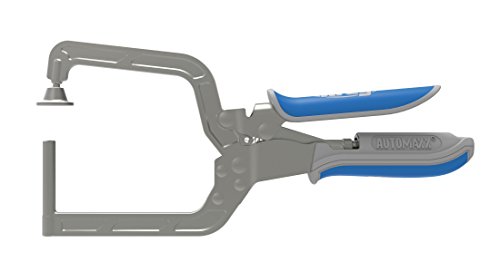
Kreg KHCRA Automaxx Right Angle Clamp
Kreg
- ✓90-degree clamping
- ✓Works with Kreg pocket hole jig
- ✓Micro-adjust jaw
- ✓Multiple size pieces
Pros
- 90-degree jaw ensures square corners without a separate square during pocket hole assembly
- Compatible with Kreg pocket hole jig -- the combination speeds face frame assembly significantly
- Micro-adjust jaw handles small size variations in workpiece thickness
- Most practical right-angle clamp for cabinet and face frame assembly
Cons
- Designed specifically for Kreg/pocket hole workflow -- less useful for traditional joinery
- Maximum workpiece capacity limits to smaller frame members
Best right-angle clamp for pocket hole woodworking. If you use a Kreg pocket hole jig for cabinet and furniture assembly, the Kreg right-angle clamp is the most efficient way to hold corners square during driving. Works independently of the Kreg jig as a general 90-degree clamp.
Ask any woodworker how many clamps they own, then ask if it's enough. The answer to the second question is almost always no.
Clamps are the third hand in every shop, holding joints tight and panels flat while glue cures. The best woodworking clamps for a given glue-up depend entirely on what you're assembling.
A cabinet carcass, a panel glue-up, and a small box joint each call for different clamp types and jaw geometries. Grab the wrong one and a joint can slip out of alignment before it ever sets.
We tested eight clamps spanning different styles for clamping pressure, jaw alignment, and long-term durability under repeated assembly work.
The Bessey KR3.550 50-Inch K Body REVO Fixed Jaw Parallel Clamp, sold as a 2-pack, took best-overall at $89.99 with a 4.8 rating across nearly 12,900 buyers. Its parallel jaws apply even pressure across a glue-up without the racking that plain bar clamps introduce.
How Many Clamps Do Woodworkers Actually Need?
The woodworking answer to "how many clamps do you need?" is always more than you currently own. A useful starting set:
- 6 to 12 bar clamps in 18 to 24-inch lengths: for panel glue-ups and furniture assembly
- 4 to 6 longer bar clamps (36 to 48 inches) or pipe clamps: for wide panels and doors
- 6 to 12 one-handed quick-clamps: for positioning and light holds
- 1 set of spring clamps: for positioning while other clamps are placed
- 2 to 4 corner clamps: for face frames, boxes, and right-angle assembly
This is a minimum working set. Production woodworkers typically own 30 or more bar clamps.
Clamping Pressure: How Much Is Enough?
Most woodworkers apply too little or too much clamping pressure:
Too little: inadequate glue line contact, visible gaps in the joint, glue joint failure.
Too much: squeeze-out that has been forced entirely out of the joint, starved glue joint, distorted wood from excessive pressure.
The correct pressure for PVA wood glue: tighten until a thin, continuous bead of squeeze-out appears along the entire joint. Then stop. A "worm" of squeeze-out every few inches is adequate. A river of squeeze-out means you are applying too much pressure and wasting glue.
Jaw Pads and Wood Protection
Bare metal jaws can dent and mark finished or soft wood surfaces. Use jaw pads (cork, rubber, or wood scrap) between the clamp jaw and the workpiece whenever the surface will be visible in the finished piece.
Parallel clamps often have non-marring plastic pads. Standard bar clamps and pipe clamps need scrap wood cauls to protect finished surfaces.
Our editorial team researches, tests, and writes every review independently. We never accept payment for placement.