Best Bandsaw Blades for Woodworking 2026: 8 Blades for Resawing and Curves
Last updated: 2026-08-21 · By NicheHive Editorial
This article contains affiliate links. If you purchase through these links, we may earn a commission at no extra cost to you. As an Amazon Associate, NicheHive earns from qualifying purchases. See our full disclosure.
The right bandsaw blade determines how well your saw resaws, handles curves, and cuts without drift. We tested 8 bandsaw blades on resaw performance, blade life, tracking, and cut quality in hardwood.
Our Top Picks
- #1Olson Saw FB19293DB Bandsaw Blade 3/8-Inch x 93-1/2-Inch, 4 TPI
- #2Starrett BM1014 Bi-Metal Band Saw Blade, 1/2-Inch Width, 10-14 TPI
- #3Olson Saw BM82864BL Bi-Metal Band Saw Blade, 1/2-Inch x 64-1/2-Inch, 18 TPI
- #4Laguna Resaw King Carbide-Tip Bandsaw Blade, 3/4-Inch x 115-Inch, Vari-Tooth
- #5POWERTEC 67-1/2-Inch Bandsaw Blade, 1/8-Inch x 14 TPI
- #6POWERTEC 80-Inch Bandsaw Blade, 1/8-Inch x 14 TPI
- #7POWERTEC 105-Inch Bandsaw Blade, 1/2-Inch x 3 TPI
- #8Lenox Diemaster 2 Bi-Metal Band Saw Blade, 93.5-Inch x 1/2-Inch, 14 TPI

Olson Saw FB19293DB Bandsaw Blade 3/8-Inch x 93-1/2-Inch, 4 TPI
Olson Saw
- ✓3/8-inch width, 4 TPI general-purpose geometry
- ✓Thin-kerf, flex-back high-carbon steel
- ✓Skip-tooth style with raker set pattern
- ✓93-1/2-inch length for common 14-inch bandsaws
Pros
- 4 TPI balances resaw speed and curve-cutting ability in a single blade
- 3/8-inch width tracks straight cuts while still handling tighter curves
- Flex-back design reduces wear on wheels, tires, and bearings
- Olson is a reference brand woodworkers reach for first when upgrading from stock blades
Cons
- High-carbon steel is not as long-lived as bi-metal in abrasive hardwoods
- Fixed length -- confirm your bandsaw's blade length before ordering
Best all-around bandsaw blade for woodworking. The 3/8-inch, 4 TPI Olson blade is the single blade most woodworkers should own first -- it resaws acceptably and cuts curves competently, covering the bulk of shop tasks.

Starrett BM1014 Bi-Metal Band Saw Blade, 1/2-Inch Width, 10-14 TPI
Starrett
- ✓1/2-inch width, variable 10-14 TPI
- ✓Bi-metal construction with hardened teeth
- ✓.020-inch thin-kerf body
- ✓Starrett precision manufacturing
Pros
- Starrett's quality control produces consistent, precisely-set teeth
- Variable 10-14 TPI reduces vibration and harmonics compared to single-pitch blades
- Bi-metal teeth hold an edge far longer than carbon steel
- Starrett is a precision measurement and blade manufacturer trusted across metal and wood shops
Cons
- Marketed primarily as a portable band saw blade -- check width and length against your stationary saw's wheels
- Fine 10-14 TPI is slower than a 4-6 TPI blade for thick resaw cuts
Best precision bandsaw blade for fine, controlled cuts. Starrett's bi-metal construction and tight manufacturing tolerances produce a blade that tracks true, though woodworkers with a 14-inch stationary saw should size it against their saw specs before buying.
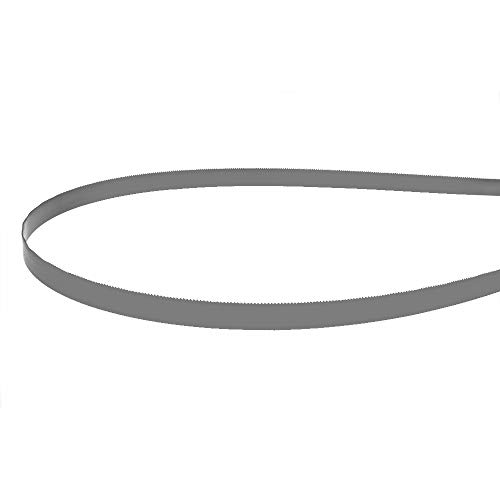
Olson Saw BM82864BL Bi-Metal Band Saw Blade, 1/2-Inch x 64-1/2-Inch, 18 TPI
Olson
- ✓Bi-metal construction with hardened teeth
- ✓18 TPI regular tooth, raker set
- ✓1/2-inch width, 64-1/2-inch length
- ✓Made in the USA since 1918
Pros
- Bi-metal construction doubles or triples blade life compared to carbon steel in hardwood
- Hardened teeth maintain sharpness through dense hardwoods and abrasive material
- Flexible backing handles repeated wheel flex without fatigue fractures
- Olson is one of the most widely available bi-metal bandsaw blade brands in US woodworking supply
Cons
- More expensive per blade than carbon steel
- 64-1/2-inch length fits smaller benchtop saws -- verify length for larger 14-inch saws
Best bi-metal bandsaw blade for woodworking. For woodworkers who cut hardwood regularly and want the extended blade life of bi-metal construction, Olson's bi-metal line is a practical, widely-stocked option.

Laguna Resaw King Carbide-Tip Bandsaw Blade, 3/4-Inch x 115-Inch, Vari-Tooth
Laguna
- ✓C4 carbide teeth, individually brazed
- ✓Vari-tooth 12-14-16mm pitch reduces vibration
- ✓3/4-inch width, 115-inch length
- ✓Made in Germany, finish-ground in the USA
Pros
- Carbide teeth last far longer than carbon steel or bi-metal in equivalent use
- Vari-tooth pitch minimizes harmonics for ultra-smooth, wafer-thin veneer cuts
- Stays sharp through abrasive exotic hardwoods that quickly dull carbon blades
- Can be resharpened multiple times, extending the investment
Cons
- Very high price -- significant upfront investment
- Requires professional carbide sharpening when it eventually dulls
Best premium bandsaw blade for production resawing. The Laguna Resaw King carbide blade pays for itself in production woodworking by eliminating frequent blade replacement. For hobbyists, the cost is harder to justify over a bi-metal blade.

POWERTEC 67-1/2-Inch Bandsaw Blade, 1/8-Inch x 14 TPI
POWERTEC
- ✓1/8-inch width for curve cutting
- ✓14 TPI for fine finish
- ✓Carbon steel construction
- ✓Sized for 10-inch benchtop bandsaws such as the Rikon 10-300
Pros
- 14 TPI produces a smooth cut surface that needs minimal sanding
- 1/8-inch width handles moderate-to-tight curves in furniture parts
- Affordable enough to keep a dedicated curve-cutting blade on hand
- Widely stocked, easy replacement blade
Cons
- 14 TPI cuts slowly -- not for resawing or fast rough work
- Sized for 10-inch benchtop saws -- confirm length matches your bandsaw
Best bandsaw blade for smooth curve cuts in furniture parts. The narrow 1/8-inch, 14 TPI POWERTEC blade is an inexpensive way to keep a dedicated curve blade in the shop alongside a wider resaw blade.

POWERTEC 80-Inch Bandsaw Blade, 1/8-Inch x 14 TPI
POWERTEC
- ✓1/8-inch width for tight radius cuts
- ✓14 TPI
- ✓80-inch length, sized for 12-inch bandsaws such as Craftsman
- ✓Smooth cut surface
Pros
- 1/8-inch width cuts a tighter radius than 1/4-inch or 3/8-inch blades
- Essential for bandsaw boxes, vessel cutting, and organic shapes
- 14 TPI produces a smooth cut surface in thin stock
- Low cost keeps a narrow blade on hand without a big investment
Cons
- Narrow blades deflect more easily in thick hardwood -- keep cuts shallow
- Requires careful tracking adjustment -- narrow blades are more sensitive to wheel setup
Best narrow bandsaw blade for tight curves. When a 1/2-inch blade cannot make the radius you need, this 1/8-inch POWERTEC blade is the answer for bandsaw boxes, vessels, and any tight-curve work.

POWERTEC 105-Inch Bandsaw Blade, 1/2-Inch x 3 TPI
POWERTEC
- ✓1/2-inch width, 3 TPI
- ✓Carbon steel
- ✓105-inch length for 14-inch bandsaws with riser blocks
- ✓Lowest price in this lineup
Pros
- Lowest price in the woodworking bandsaw blade category
- 1/2-inch, 3 TPI works for both moderate curves and light resawing
- Good for learning bandsaw tension, tracking, and drift compensation
- Fits 14-inch saws upgraded with a riser block
Cons
- Carbon steel -- shorter life than bi-metal or carbide alternatives
- Quality control less consistent than Starrett, Olson, or Timber Wolf
Best value bandsaw blade for beginners. For new bandsaw users learning blade tension, tracking, and drift compensation before investing in premium blades, this POWERTEC blade delivers acceptable performance at minimal cost.

Lenox Diemaster 2 Bi-Metal Band Saw Blade, 93.5-Inch x 1/2-Inch, 14 TPI
Lenox
- ✓Bi-metal construction, hook tooth
- ✓Raker set, positive rake, 14 TPI
- ✓Works in wood and soft metals
- ✓North American manufactured
Pros
- Hook tooth geometry with positive rake cuts aggressively while staying smooth
- Bi-metal extends life significantly over carbon steel in both wood and metal cutting
- Lenox manufactures blades with consistent quality control
- Works in both wood and soft metals -- adds shop versatility
Cons
- Not optimized specifically for wood resawing -- a dedicated Timber Wolf or Laguna blade is better for that task
- Higher cost than single-material wood blades
Best all-purpose bi-metal bandsaw blade. For shops that use the bandsaw for both wood and metal, Lenox Diemaster handles both materials competently with the extended life of bi-metal construction.
Most woodworkers blame their bandsaw for a bad cut. Usually it's the blade.
Tracking drift, rough resaw surfaces, and curves that won't hold a line all trace back to tooth geometry, width, and material more often than the machine itself. Picking the best bandsaw blades for woodworking is one of the cheapest upgrades a shop can make.
We tested 8 blades on resaw performance, blade life, tracking accuracy, and finish quality in hardwood.
The Olson Saw FB19293DB, a 3/8-inch, 4 TPI blade at $24.99, was our overall pick. Its width and tooth spacing strike a balance that handles both resawing and curve work well, which is why it's the blade most woodworkers should own first.
For finer, more controlled cuts, the Starrett BM1014 bi-metal blade at $34.99 trades some of that versatility for precision and edge life.
Bandsaw Blade Width and Radius of Cut
The width of a bandsaw blade directly determines the minimum radius it can cut:
- 1/8-inch blade: very tight curves, minimum radius approximately 3/16 inch
- 1/4-inch blade: tight curves, minimum radius approximately 5/16 inch
- 3/8-inch blade: moderate curves, minimum radius approximately 1 inch
- 1/2-inch blade: gentle curves, minimum radius approximately 2.5 inches
- 3/4-inch blade: primarily for straight resaw cuts, cannot cut curves
Match blade width to your cutting task. If you primarily resaw, use the widest blade your saw can tension. If you cut curves, choose the narrowest blade that handles the required radius.
TPI for Woodworking
2-3 TPI: aggressive resawing, fast but rough cut. For rough milling where the surface will be planed or heavily sanded.
4-6 TPI: general-purpose wood cutting. Handles curves and light resawing. The most versatile range for woodworking.
10-14 TPI: fine cuts in thin stock, smooth surface finishes. Slow cutting rate.
Most woodworking shops keep at least two blades: a wide 3 TPI resaw blade and a 1/2-inch 6 TPI general-purpose blade.
Blade Tension and Tracking
Two setup steps that have the most impact on bandsaw performance:
Blade tension: insufficient tension causes blade deflection and drift. Most woodworkers under-tension their bandsaw blades. Use the saw manufacturer's deflection test, or the flutter-free method: tension until the blade no longer flutters when tapped. Tension properly, not just "tight enough."
Blade tracking: the blade should run in the center of the upper and lower wheels. Adjust the upper wheel tilt until the blade tracks centered. Check tracking whenever a blade is installed or changed -- it varies between blades.
Proper tension and tracking eliminate the drift and inconsistency that most beginners attribute to blade quality.
Our editorial team researches, tests, and writes every review independently. We never accept payment for placement.