Best Beginner Wood Lathe 2026: 8 Lathes for Learning Woodturning
Last updated: 2026-08-21 · By NicheHive Editorial
This article contains affiliate links. If you purchase through these links, we may earn a commission at no extra cost to you. As an Amazon Associate, NicheHive earns from qualifying purchases. See our full disclosure.
A wood lathe is the entry point to woodturning -- spindle work, bowls, and decorative objects. We tested 8 beginner and mid-range lathes on motor stability, speed range, tool rest quality, and bed length for common turning projects.
Our Top Picks
- #1NOVA 46300 Comet II Variable Speed Mini Lathe 12-Inch x 16 1/2-Inch
- #2WEN 3421 3.2-Amp 8-Inch by 12-Inch Variable Speed Mini Benchtop Wood Lathe
- #3JET 12-Inch x 21-Inch Variable-Speed Woodworking Lathe, 1 HP, 115V 1Ph (JWL-1221VS)
- #4Powermatic 20-Inch x 35-Inch Variable Speed Woodworking Lathe, 2 HP, 220V 1Ph (3520C)
- #5RIKON 70-100 12-by-16-Inch Mini Lathe
- #6Delta Industrial 46-460 12-1/2-Inch Variable-Speed MIDI Lathe
- #7Grizzly Industrial T25920 12-Inch x 18-Inch Variable-Speed Benchtop Wood Lathe
- #8SHOP FOX W1704 1/3-Horsepower Benchtop Lathe

NOVA 46300 Comet II Variable Speed Mini Lathe 12-Inch x 16 1/2-Inch
NOVA
- ✓Variable speed 250-4,000 RPM
- ✓16-inch swing
- ✓18-inch between centers
- ✓Headstock indexing
Pros
- Variable speed with electronic control maintains consistent RPM under cutting load
- 16-inch swing accommodates most bowl-turning project sizes
- NOVA's headstock quality and spindle runout are better than most competitors at this price
- Headstock indexing for fluting and decorative cuts
Cons
- 18-inch between centers limits spindle turning to shorter projects
- Higher price than basic midi lathes
Best overall beginner wood lathe. The NOVA Comet II is the midi lathe that experienced turners recommend to beginners who want to avoid upgrading within a year. Variable speed control and 16-inch swing cover most turning projects a beginner encounters.

WEN 3421 3.2-Amp 8-Inch by 12-Inch Variable Speed Mini Benchtop Wood Lathe
WEN
- ✓8-inch swing
- ✓12-inch between centers
- ✓Variable speed 580-3,700 RPM
- ✓Tool rest and drive centers included
Pros
- Lowest price in the variable-speed lathe category
- 8-inch swing and 12-inch between centers covers small spindle work and pens
- Variable speed across a useful range for small turning
- WEN warranty and customer support are good for the price tier
Cons
- 8-inch swing too small for bowl turning beyond 6 inches
- Motor can bog under aggressive cuts in dense hardwood
Best budget wood lathe for beginners. For pen turning, small spindle work, and woodworkers who want to try turning before investing in a larger lathe, the WEN 8x12 provides the essential turning experience at the lowest accessible price.

JET 12-Inch x 21-Inch Variable-Speed Woodworking Lathe, 1 HP, 115V 1Ph (JWL-1221VS)
JET
- ✓12-inch swing
- ✓21-inch between centers
- ✓60-3,600 RPM variable speed
- ✓Reversible headstock
Pros
- 21-inch between centers handles most furniture spindle turning
- 60 RPM minimum enables very large, unbalanced bowl blanks to be turned safely at low speed
- Reversible headstock for sanding off the lathe at low speed -- common technique
- JET quality control and customer service are reliable
Cons
- 12-inch swing is less than NOVA Comet II at a similar price
- Heavy -- difficult to move once set up
Best midi lathe for between-center turning. The JET 1221VS's 21-inch between-centers capacity and 60 RPM low end are the specific advantages for spindle turners making furniture legs, stair balusters, and long decorative pieces.

Powermatic 20-Inch x 35-Inch Variable Speed Woodworking Lathe, 2 HP, 220V 1Ph (3520C)
Powermatic
- ✓20-inch swing
- ✓35-inch between centers
- ✓2 HP motor
- ✓American-made quality
Pros
- 20-inch swing handles large bowl blanks and platters
- 35-inch between centers for furniture legs and full staircase balusters
- 2 HP motor runs without hesitation under the most aggressive bowl-turning cuts
- Powermatic is the American shop lathe benchmark -- built to run daily in production
Cons
- Very high price
- Full-size lathe requires significant floor space
Best full-size lathe for serious woodturners. The Powermatic 3520C is what professional woodturners and serious hobbyists buy when they outgrow midi lathes. The 20-inch swing and 2 HP motor handle every turning task without compromise.

RIKON 70-100 12-by-16-Inch Mini Lathe
RIKON
- ✓12-inch swing
- ✓16-inch between centers
- ✓5-speed pulley
- ✓Tool rest and drive centers included
Pros
- 12-inch swing covers most small bowl and spindle turning for beginners
- 16-inch between centers for pens, lidded boxes, and short spindle work
- RIKON builds this lathe with better runout tolerance than most similarly priced minis
- Complete tool rest and centers included -- ready to turn after assembly
Cons
- 5-speed pulley requires stopping and manually moving the belt to change speed
- Smaller motor than variable-speed midi lathes
Best mini lathe for beginner woodturning. RIKON's mini lathe is the step between the WEN budget option and the variable-speed NOVA. For woodworkers who want better quality than WEN without the midi lathe price, the RIKON 70-100 is the correct choice.

Delta Industrial 46-460 12-1/2-Inch Variable-Speed MIDI Lathe
Delta
- ✓12-1/2-inch swing
- ✓16-1/2-inch between centers
- ✓Variable speed 250-4,000 RPM
- ✓Banjo locking system
Pros
- 12.5-inch swing handles most hobby-scale bowl and spindle turning
- Variable speed 250 RPM low end safe for rough, unbalanced bowl blanks
- Delta banjo locking system is the most secure tool rest lock in the midi lathe category
- Established brand with US service and parts
Cons
- 16.5-inch between centers is shorter than JET's 21 inches at a similar price
- Heavier than some competitors in the midi category
Best Delta wood lathe for beginners. The Delta 46-460 is a solid midi lathe for woodworkers who prefer the Delta brand ecosystem. The banjo locking is a specific advantage for safety-conscious turners who work with large, aggressive cuts.

Grizzly Industrial T25920 12-Inch x 18-Inch Variable-Speed Benchtop Wood Lathe
Grizzly
- ✓12-inch swing
- ✓18-inch between centers
- ✓Variable speed 300-3,700 RPM
- ✓Digital RPM readout
Pros
- Variable speed digital readout for precise, repeatable speed settings
- Heavy-duty cast-iron construction provides stability during aggressive cuts
- Grizzly value pricing is the best per-feature in the midi lathe market
- Compact 8-inch x 30-inch footprint fits smaller workbenches
Cons
- Grizzly QC variability -- inspect carefully on delivery
- 3/4 HP motor is modest compared to JET or NOVA at similar price
Best value midi lathe for woodturning. The Grizzly T25920 delivers variable speed with a digital readout and cast-iron construction at a lower price than NOVA or JET. QC is lower but value is the highest in the midi lathe category.
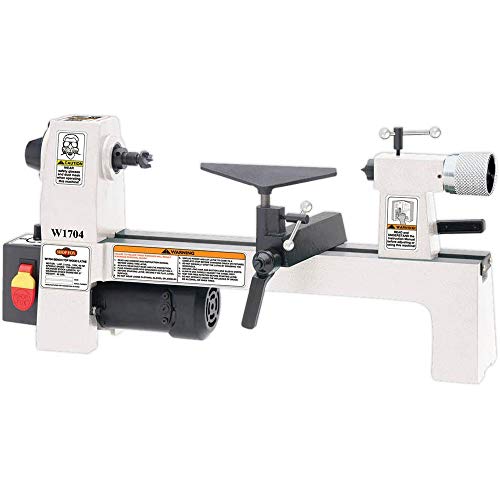
SHOP FOX W1704 1/3-Horsepower Benchtop Lathe
Shop Fox
- ✓8-inch swing
- ✓13-inch between centers
- ✓5-speed pulley
- ✓Compact design
Pros
- Small footprint fits on a workbench corner -- no dedicated lathe stand required
- 13-inch between centers handles pens, bottle stoppers, and small spindles
- 5-speed covers the range needed for pen turning and small spindle work
- Affordable entry point for pen turners specifically
Cons
- 1/3 HP motor is the weakest in the category -- bogs in dense hardwood
- 5-speed pulley system requires stopping to change speed
Best lathe for pen turning and small projects. For woodworkers whose primary turning interest is pen making, Shop Fox W1704 provides adequate capacity at a low price. The 13-inch between centers covers pen blanks and small spindles comfortably.
Turning your first bowl on an underpowered lathe is a fast way to lose interest in woodturning altogether. Speed that surges under load and a tool rest that won't stay put fight you at exactly the moment you're trying to learn basic control.
That's why the best beginner wood lathe matters more than most first-tool purchases. It's the difference between building skill and building frustration.
We tested 8 beginner and mid-range lathes on motor stability, speed range, tool rest quality, and bed length across the projects a new turner actually attempts.
The NOVA 46300 Comet II earned the top spot at $599. Its variable speed control holds steady from 250 to 4,000 RPM even under cutting load, and a 16-inch swing covers most bowl-turning projects a beginner will run into.
Want to try turning before committing that much? The WEN 3421 at $159 gets you a real variable-speed lathe, just don't expect it to handle much beyond pens and small spindle work.
Getting Started with Woodturning
Woodturning is a distinct woodworking discipline with its own tools and techniques. A beginner starting with a lathe should plan to acquire:
Basic turning tools:
- 1-inch roughing gouge: for bringing square stock to round
- 3/4-inch or 1-inch skew chisel: for smooth cylinders and beads
- 1/4-inch or 3/8-inch spindle gouge: for coves and detail work
- 1/2-inch bowl gouge: for bowl turning
- Parting tool: for cutting off turned pieces
Sharpening system: woodturning tools must be sharp to cut cleanly. A slow-speed grinder (1,750 RPM) with a CBN wheel is the most practical sharpening setup for turning tools.
Face shield: woodturning produces chips that fly at high speed. Safety glasses alone are not sufficient -- a full face shield is necessary.
Midi vs Full-Size Lathe
Midi lathe (10 to 16-inch swing): the most practical choice for most home woodturners. Handles spindle work, small and medium bowls, and decorative turning. Compact enough to fit in a typical garage or basement shop.
Full-size lathe (18 to 24-inch swing): required for large bowls (12 inches and above), furniture legs in full length, and production woodturning. Takes more floor space.
For a beginner, a midi lathe in the 12 to 16-inch swing range is the correct starting point. Start there and evaluate your needs after a year of turning experience.
Speed Selection for Woodturning
Low speed (60-500 RPM): for rough, unbalanced bowl blanks and large-diameter pieces. Never start an unbalanced blank at high speed.
Medium speed (500-1,500 RPM): for most bowl turning after the blank is balanced.
High speed (1,500-4,000 RPM): for small spindle work, pens, and finishing cuts in small pieces.
Variable speed is an important feature for safety -- it allows starting slowly and increasing to working speed after the blank is confirmed balanced.
Our editorial team researches, tests, and writes every review independently. We never accept payment for placement.