Best Wood Hand Planes 2026: 8 Bench Planes for Smoothing, Jointing, and Flattening
Last updated: 2026-08-21 · By NicheHive Editorial
This article contains affiliate links. If you purchase through these links, we may earn a commission at no extra cost to you. As an Amazon Associate, NicheHive earns from qualifying purchases. See our full disclosure.
Hand planes produce surfaces that sandpaper cannot match. We tested 8 bench planes from beginner sets to premium cast iron, comparing sole flatness, blade quality, adjustment mechanism, and sharpness out of the box.
Our Top Picks
- #1Stanley 12-905 No. 4 Contractor Grade Smoothing Bench Plane, 14-Inch
- #2STANLEY No. 4 Sweetheart Premium Bench Plane with A2 Steel
- #3Kunz Plus Smoothing Plane No. 4
- #4Stanley 1-12-004 Smooth Plane Bailey No. 4
- #5STANLEY 12-960 Contractor Grade Low Angle Block Plane
- #6Stanley 1-12-137 62 Low-Angle Sweetheart Jack Plane
- #7STANLEY 12-136 No. 4 Sweetheart Smoothing Bench Plane
- #8STANLEY 12-220 Adjustable Block Plane, 7-Inch

Stanley 12-905 No. 4 Contractor Grade Smoothing Bench Plane, 14-Inch
Stanley
- ✓No. 5 size — 14-inch sole
- ✓A2 tool steel blade
- ✓Blade bedded at 45 degrees
- ✓Adjustable frog and mouth
Pros
- A2 tool steel holds an edge significantly longer than the older Stanley carbon steel blades
- Adjustable frog lets you close the mouth for fine work and open it for hogging stock
- 14-inch sole handles both stock removal and preliminary smoothing
- Sweetheart series has better sole flatness than earlier Stanley production runs
Cons
- Blade requires sharpening before first use — out-of-the-box edge is adequate but not sharp
- Cap iron fit needs adjustment on some units — check the fit before first use
Best overall hand plane. The No. 5 jack plane is the most versatile size in the bench plane family. Stanley's Sweetheart line delivers better steel and better tolerances than standard Stanley production.

STANLEY No. 4 Sweetheart Premium Bench Plane with A2 Steel
Stanley
- ✓Ductile cast iron body
- ✓A2 tool steel blade at 0.09 inch thick
- ✓Precision ground sole
- ✓Norris-style adjuster for smooth depth control
Pros
- Precision-ground sole requires minimal lapping straight from the box
- A2 steel blade holds an edge longer than standard Stanley carbon steel
- Norris-style adjuster gives smoother, more precise depth control than standard lever adjusters
- Backed by Stanley's limited lifetime warranty at a fraction of boutique plane pricing
Cons
- Higher price than standard Stanley Bailey-line planes
- A2 blade requires diamond stones or CBN wheels to sharpen — harder than O1
Best premium plane. Out-of-the-box performance well above standard production planes. The precision-ground sole and A2 blade make this the definitive step-up No. 4 smoothing plane for woodworkers who plane regularly without boutique custom-maker pricing.

Kunz Plus Smoothing Plane No. 4
Kunz
- ✓Ductile iron body
- ✓O1 tool steel blade
- ✓Precision ground sole
- ✓Adjustable mouth
Pros
- Grey cast iron body machined and ground for flatness -- minimal lapping needed out of the box
- Precision-ground sole handles final surface preparation and glue line cleanup
- Stable, chatter-free foundation for demanding smoothing work
- Better fit and finish than comparable price points from generic import brands
Cons
- Less brand recognition in the US than Stanley
- Replacement parts less widely stocked than Stanley-pattern parts
Best mid-range plane. Kunz Plus delivers European manufacturing quality between standard Stanley production and premium boutique makers. A solid step up for woodworkers ready to invest beyond an entry-level plane.

Stanley 1-12-004 Smooth Plane Bailey No. 4
Stanley
- ✓Cast iron body
- ✓High carbon steel blade
- ✓Standard Bailey-pattern body
- ✓Standard Stanley blade compatibility
Pros
- Lowest price for a functional full-size No. 4 plane from a recognized brand
- Standard Bailey pattern accepts widely available replacement blades for easy upgrade
- Simple, well-understood design with decades of aftermarket parts support
Cons
- Sole may need light lapping before producing consistent shavings
- Blade steel quality is basic -- dulls faster than O1 or A2 alternatives
- Adjustment mechanism has more play than premium planes
Entry-level only. Needs work to perform well -- expect to lap the sole and sharpen the blade before first use. The standard Bailey-pattern blade size makes upgrading the blade easy and affordable down the line.

STANLEY 12-960 Contractor Grade Low Angle Block Plane
Stanley
- ✓13-1/2 degree bed angle
- ✓Quick-release cam-lock cutter
- ✓Precision-ground cast iron base
- ✓Finger grips for one-handed use
Pros
- 13-1/2 degree bed angle is effective for end grain — lower than most block planes
- Quick-release cam-lock makes cutter removal for sharpening fast
- Precision-ground cast iron sides and bottom hold flatness under regular use
- Finger grips machined into the sides support comfortable one-handed control
Cons
- Basic epoxy-coated finish, not the fit and finish of premium block planes
- Not a substitute for a bench plane — different role in the workshop
Best block plane. For chamfering edges, trimming end grain, and fitting joints, the low-angle design gives better results than a standard bench plane. The quick-release cutter and finger grips suit one-handed use.
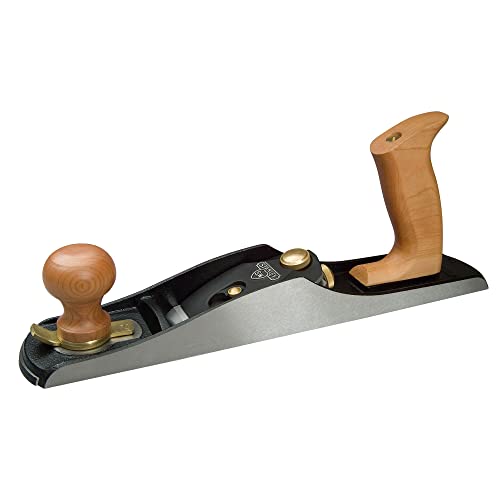
Stanley 1-12-137 62 Low-Angle Sweetheart Jack Plane
Stanley
- ✓Bevel-up design — blade bedded at 12 degrees
- ✓Adjustable mouth
- ✓A2 tool steel blade
- ✓Ductile iron body
Pros
- Bevel-up design allows changing effective cutting angle by selecting blade bevel angle
- A2 blade holds an edge well through repeated jack-plane passes
- Adjustable mouth allows closing for fine shavings or opening for stock removal
- Sweetheart line quality at a price below boutique bevel-up planes
Cons
- Higher price than a standard Stanley Bailey-line plane
- Bevel-up sharpening requires more precise angle control than bevel-down planes
Best bevel-up plane. The Stanley 62 low-angle jack brings bevel-up versatility -- shooting miters, working end grain, initial smoothing -- to a price well below specialty bevel-up brands. The adjustable mouth and low bed angle make this a flexible do-it-all plane.

STANLEY 12-136 No. 4 Sweetheart Smoothing Bench Plane
Stanley
- ✓One-piece base and frog
- ✓Norris-type adjuster
- ✓Adjustable throat plate
- ✓10-45/64 inch sole
Pros
- One-piece base and frog design improves rigidity over standard three-piece Bailey planes
- Norris-type adjuster with lateral locking simplifies fine depth adjustment
- Adjustable throat plate handles different wood types and grain conditions
- Build quality exceeds standard Stanley Bailey-line planes at a moderate price step up
Cons
- Higher price than basic Bailey-pattern planes
- Still requires initial sharpening for best results, like most production planes
Best mid-tier smoothing plane. The Stanley 12-136 Sweetheart's one-piece base and Norris-type adjuster punch above standard production plane quality. A solid alternative for woodworkers who plane frequently but don't want boutique pricing.

STANLEY 12-220 Adjustable Block Plane, 7-Inch
Stanley
- ✓21-degree standard angle block plane
- ✓Carbon steel blade
- ✓Compact size — 7 inches
- ✓Fully adjustable cutter and throat
Pros
- Lowest price for a functional block plane with an adjustable cutter
- Compact 7-inch size fits in a tool apron pocket
- Stanley parts available anywhere — easy to find replacement blades
Cons
- Standard 21-degree angle is less effective on end grain than a low-angle block plane
- Carbon steel blade dulls faster than A2 or O1 alternatives
Entry-level block plane for occasional use. Functional for chamfering and basic trimming, with an adjustable cutter for depth and alignment. Upgrade to the low-angle Stanley 12-960 when the work demands fine end-grain surfaces.
Sandpaper scratches wood fibers in random directions. A sharp hand plane severs them cleanly, leaving a burnished surface no amount of sanding can match.
That is why the best wood hand planes stay within arm's reach of any serious furniture builder, even in a shop full of power tools.
We tested eight bench planes, from beginner-friendly sets to premium cast iron, evaluating sole flatness, blade quality, adjustment precision, and how sharp each one arrived out of the box.
The Stanley 12-905 No. 4 Contractor Grade Smoothing Bench Plane took the best-overall spot at $119.99, backed by a 4.6 average rating across nearly 4,800 buyers. Its adjustable frog and A2 tool steel blade prove a mid-priced plane can compete with pricier options when the fundamentals are right.
This guide compares how each model handles smoothing, jointing, and flattening, so you can match the plane to the actual work instead of buying on price alone.
Why Hand Planes Outperform Sandpaper for Final Surfaces
Sandpaper scratches wood fibers in random directions, creating a surface that absorbs stain unevenly and shows scratches in certain light. A sharp hand plane severs wood fibers cleanly, creating a burnished surface that takes finish more evenly and shows no scratch pattern. For furniture and cabinetry that will receive a clear finish, a hand-planed surface produces a noticeably superior result compared to sanding alone.
Understanding Plane Sizes
Stanley's numbering system (No. 1 through No. 8) defines sole length and blade width:
- No. 1–3: Small, for detail and trim work. Uncommon in modern workshops.
- No. 4: 9.5-inch sole. The standard smoothing plane. Most commonly used for final surface preparation.
- No. 5: 14-inch sole. The jack plane — between rough stock removal and smoothing. Most versatile single plane.
- No. 6–7: 18–22 inches. Jointer planes for truing and flattening long edges and faces.
- No. 8: 24-inch jointer. For flattening wide boards and panels.
For woodworkers buying a first plane: start with a No. 4 or No. 5. The No. 4 is the best smoothing tool. The No. 5 handles both rough dimensioning and preliminary smoothing.
Bevel-Down vs Bevel-Up Planes
Bevel-down (traditional): blade bedded at 45 degrees, bevel facing down. The effective cutting angle is the bed angle (45 degrees). Easier to sharpen — just hone the bevel. Most bench planes and the Stanley Sweetheart series use this design.
Bevel-up: blade bedded at 12–20 degrees, bevel facing up. The effective cutting angle is the bed angle plus the blade bevel angle. A 25-degree bevel on a 12-degree bed gives 37 degrees — good for softwood. A 50-degree bevel gives 62 degrees — good for difficult reversing grain. One plane, multiple effective angles by changing the blade bevel. Veritas specializes in this design.
Lapping a Plane Sole
Most planes (except Lie-Nielsen and premium Veritas) need their soles lapped flat before they produce consistent shavings. To lap:
- Apply permanent marker to the sole
- Work the sole across 220-grit sandpaper on a flat surface (glass or granite)
- Observe the marker — high spots erase, low spots remain
- Continue until the marker wipes uniformly across the full sole
A flat sole is critical for smoothing wide panels and jointing edges. Without a flat sole, the plane rocks and produces uneven surfaces.
Sharpening Before First Use
Every plane in this list performs better after sharpening, even Lie-Nielsen. The factory edge is ground but not honed to a polished finish. Sharpen the blade back to flat (remove any camber from grinding), then establish the primary and secondary bevel on progressively finer stones up to 6000–8000 grit. The difference in shaving quality between a factory edge and a properly honed edge is dramatic.
Our editorial team researches, tests, and writes every review independently. We never accept payment for placement.