Best Super Glue for Wood 2026: 8 CA Glues That Bond Wood Fast
Last updated: 2026-08-21 · By NicheHive Editorial
This article contains affiliate links. If you purchase through these links, we may earn a commission at no extra cost to you. As an Amazon Associate, NicheHive earns from qualifying purchases. See our full disclosure.
Cyanoacrylate glue bonds wood in seconds where clamps are not practical. We tested 8 CA glues on wood specifically, comparing bond strength, open time, gap filling, and viscosity options for different woodworking tasks.
Our Top Picks
- #1Gorilla Super Glue Gel
- #2Bob Smith Industries BSI-131H Insta-Cure Thin Super Glue
- #33M Scotch-Weld CA8 Instant Adhesive
- #4Bob Smith Industries BSI-139H Super-Gold Odorless Foam-Safe CA
- #5Loctite 40140 401 Prism Surface Insensitive Instant Adhesive
- #6Gorilla Original Gorilla Glue, 4 oz Bottle
- #7Loctite Super Glue Gel Control
- #8FastCap 2P-10 SoloKit Instant Adhesive & Activator Set

Gorilla Super Glue Gel
Gorilla
- ✓Gel formula — no-run on vertical surfaces
- ✓45-second handling time
- ✓Impact resistant
- ✓Anti-clog cap
Pros
- Gel formula stays in place on vertical joint faces — does not drip during setup
- 45-second handling time allows repositioning small pieces before the bond sets
- Impact-resistant formula reduces brittleness — holds on joints subject to light vibration
- Anti-clog cap prevents tip curing between uses — better storage life than standard CA
Cons
- Gel slightly reduces capillary wicking — less effective at penetrating very tight joints
- Larger bottle cures in storage faster if used infrequently
Best overall CA glue for wood. The gel formula and impact resistance make this the most practical all-around super glue for woodworking use. Good for repairs, small joints, and stabilizing small checks.

Bob Smith Industries BSI-131H Insta-Cure Thin Super Glue
Bob Smith Industries
- ✓Ultra-thin water-like viscosity
- ✓Wicks into hairline cracks
- ✓1–3 second set time
- ✓Professional grade formula
Pros
- Ultra-thin viscosity wicks into hairline cracks and checks in wood via capillary action
- Sets in 1–3 seconds after capillary wicking — among the fastest thin CA available
- Professional grade formula — used by woodturners and modelers for crack stabilization
- Well suited to accelerator use for production work
Cons
- Runs freely — cannot be used on open joints or rough wood without accelerator
- Short shelf life after opening — oxidizes faster than gel formulas
Best thin CA for wood stabilization. For stabilizing cracks, checks, and punky spots in turned bowls and carved pieces, thin CA wicks into voids that no other adhesive reaches. Standard choice in woodturning.

3M Scotch-Weld CA8 Instant Adhesive
3M
- ✓Medium viscosity (~100 cps)
- ✓Fast handling time
- ✓Fills small gaps
- ✓Industrial-grade formula
Pros
- Medium viscosity fills small gaps while still flowing into joints
- Fast handling time — long enough to align small parts before setting
- Better balance between wicking and gap-filling than thin or thick CA
- Industrial-grade 3M formula used across manufacturing and woodworking
Cons
- Not as effective as thick CA for large gaps or rough-textured joint faces
- Sold in industrial packaging — less consumer-friendly than hobby brands
Best medium viscosity CA for woodworking. The versatility of medium viscosity handles most woodworking tasks: inlay setting, small joint bonding, and controlled crack stabilization.

Bob Smith Industries BSI-139H Super-Gold Odorless Foam-Safe CA
Bob Smith Industries
- ✓Foam-safe formula
- ✓Flexible when cured
- ✓Works on wood, foam, and composites
- ✓Gap-filling medium viscosity
Pros
- Flexible after cure — reduces joint failure from vibration and thermal movement
- Works on balsa, foam, and composite materials as well as hardwood
- Medium viscosity handles small gaps without accelerator
- Bob Smith Industries is the professional standard for model and woodturning CA
Cons
- Flexible formula slightly lower tensile strength than rigid CA
- Higher price than consumer super glues
Best flexible CA for woodworking. The flexible cure is specifically useful for inlay work on guitar and instrument building where wood movement stresses rigid CA joints. Also excellent for balsa and composite work.

Loctite 40140 401 Prism Surface Insensitive Instant Adhesive
Loctite
- ✓Industrial ethyl cyanoacrylate
- ✓Low viscosity
- ✓Fast cure: 5–15 seconds on wood
- ✓High purity formula
Pros
- Industrial purity produces more consistent cure strength than consumer CA
- 5–15 second cure on wood — faster than most industrial alternatives
- Low viscosity wicks into tight joints for maximum surface contact
- Loctite industrial quality standard used in manufacturing applications
Cons
- Higher price than consumer alternatives
- Low viscosity runs — not suitable for open joints or rough surfaces without accelerator
Best industrial-grade CA for precision woodworking. Consistent cure strength and fast set time on wood. For fine furniture, inlay, and production woodworking where reliability matters more than price.

Gorilla Original Gorilla Glue, 4 oz Bottle
Gorilla
- ✓Polyurethane formula (not CA)
- ✓Waterproof
- ✓Expands as it cures
- ✓Works on oily and difficult woods
Pros
- Polyurethane works on oily tropical hardwoods where CA and PVA fail
- Waterproof bond suitable for outdoor applications
- Expansion during cure fills gaps and creates mechanical interlock
Cons
- Expansion creates foam squeeze-out that must be removed before it cures
- Requires moisture to cure — wood must be dampened before glue application
- Not technically a cyanoacrylate — different application method than CA glues
Best polyurethane wood glue. Not a CA glue but listed here as a comparison option. The waterproofing and oily-wood adhesion are better than any CA for exterior and tropical hardwood applications.
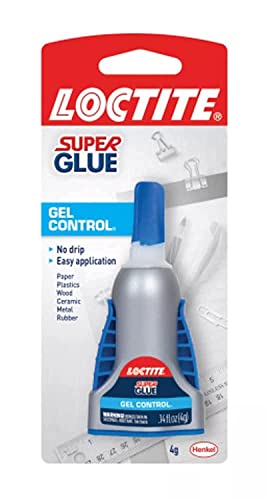
Loctite Super Glue Gel Control
Loctite
- ✓No-drip gel formula
- ✓Precision applicator tip
- ✓Easy application control
- ✓Bonds wood, plastic, metal, ceramic, rubber
Pros
- No-drip gel formula stays put without an accelerator
- Precision tip gives enough control to align small parts before setting
- Widely available household name with consistent quality control
- Good value — low price for a quality gap-filling CA
Cons
- Small bottle size means frequent repurchases for shop use
- Not as specialized as woodturning-specific CA brands
Best value gap-filling CA. The no-drip gel control formula fills small gaps and holds on joints that experience mild movement. A good everyday CA at a budget-friendly price.

FastCap 2P-10 SoloKit Instant Adhesive & Activator Set
FastCap
- ✓CA glue and accelerator system
- ✓Available in thin, medium, and thick
- ✓Accelerator sets instantly
- ✓Designed for cabinetmaking workflow
Pros
- CA and accelerator system designed for cabinetmaking production workflow
- Accelerator enables instant bonding — apply to one surface, CA to the other, press
- Three viscosity options in one brand — consistent quality across all three
- Designed by a cabinetmaking company — product knowledge matches the use case
Cons
- Accelerator adds an extra step and additional cost
- Accelerator application must be even — uneven coating produces patchy cure strength
Best CA system for production woodworking. The CA plus accelerator workflow from FastCap is the standard in many cabinet shops — bond instantly, no clamp waiting, move to next joint. Best for high-volume woodworking.
You can't clamp everything. A cracked pen blank, a chipped edge on a turned bowl, an inlay dot that needs to sit still for three seconds, none of that waits around for a bottle of yellow glue and thirty minutes under pressure.
That's the gap super glue for wood fills. Cyanoacrylate sets in seconds, not minutes, and it reaches into places a clamp never could.
The catch is that not all CA glue behaves the same way once it hits wood. Thin formulas wick into hairline cracks by capillary action, thick ones sit still and fill gaps, and gel versions refuse to drip on a vertical joint.
Our top pick, Gorilla Super Glue Gel, earns the spot for exactly that reason. At $8.49 it gives you roughly 45 seconds of working time to reposition a small part before it locks in, and the gel stays put instead of running off the joint.
When CA Glue Outperforms PVA in Woodworking
PVA (yellow wood glue) is the right choice for most glued wood joints. CA glue is the right choice for specific situations where PVA falls short:
Clamping is impractical: Small parts, irregular shapes, and assemblies where you cannot apply clamp pressure. CA bonds in 10–60 seconds. PVA needs 30+ minutes of clamping.
Positioning parts during assembly: Apply a drop of CA to locate a piece, then PVA around the joint for strength. CA holds position while you drive fasteners or position clamps.
Stabilizing checks and cracks: Thin CA wicks into hairline cracks and checks in turned bowls and carvings. PVA cannot penetrate narrow cracks.
Setting small inlays: Inlay work — stringing, purfling, shell dots — requires precise placement and a fast set. CA holds inlay while you remove excess.
Exotic and oily woods: Thin CA bonds rosewood, teak, and other oily species better than PVA because it does not depend on wood porosity.
Viscosity Selection Guide
Thin (water-like): Wicks into tight joints by capillary action. Use for crack stabilization, tight-fitting joints, and porous woods. Runs freely — cannot be used on open gaps or rough surfaces.
Medium: Balances wicking with gap-filling. Handles 1/64–1/16 inch gaps. The most versatile viscosity for general woodworking.
Thick (honey-like): Stays where applied. Fills gaps up to 1/8 inch. Requires longer cure time than thin CA. Use for rough-textured joint faces and larger gaps.
Gel: Thicker than thick — similar to a paste. Specifically useful for vertical or overhead applications where liquid CA would drip. Similar gap-filling to thick CA.
Accelerator Use
CA accelerator (sometimes called activator or kicker) cures CA glue nearly instantly on contact. Apply accelerator to one surface, CA to the other, press together — the bond forms in 1–2 seconds rather than 10–60 seconds.
Accelerator is essential for production work and for situations where you cannot hold parts in position for 30 seconds. The trade-off: accelerated CA joints are often slightly more brittle and the accelerator can cause white blush on some wood species.
Removing CA Glue from Wood
Acetone (nail polish remover) softens and dissolves cured CA. Apply to a cloth and hold against the bond line until the CA softens. For squeeze-out on a finished surface, let the CA fully cure first, then scrape or chisel away the bulk before applying acetone — scraping partially-cured CA often tears wood fibers.
CA debonder (sold alongside CA glue) is gentler than acetone and less likely to affect surrounding finish. Keep a small bottle in the shop for bond separations and cleanup.
Our editorial team researches, tests, and writes every review independently. We never accept payment for placement.