Best Sliding Compound Miter Saw 2026: 8 Saws for Wide Crown and Trim Work
Last updated: 2026-08-21 · By NicheHive Editorial
This article contains affiliate links. If you purchase through these links, we may earn a commission at no extra cost to you. As an Amazon Associate, NicheHive earns from qualifying purchases. See our full disclosure.
Sliding compound miter saws cut wider boards than standard miter saws. We tested 8 sliding miter saws for crosscut capacity, miter and bevel accuracy, blade quality, fence height, and performance on 12-inch wide crown molding.
Our Top Picks
- #1DeWalt DWS779 12-Inch Sliding Compound Miter Saw
- #2Festool 575306 Kapex KS 120 REB Sliding Compound Miter Saw
- #3Bosch GCM12SD 12-Inch Dual Bevel Glide Miter Saw
- #4Makita LS1219L 12-Inch Dual Bevel Sliding Compound Miter Saw
- #5Milwaukee 6955-20 12-Inch Sliding Dual Bevel Miter Saw
- #6Diablo D1280X 12-Inch 80-Tooth Fine Finish Saw Blade
- #7Ridgid MS1290LZA 12-Inch Compound Sliding Miter Saw with Laser
- #8Incra Miter1000/HD Miter Gauge
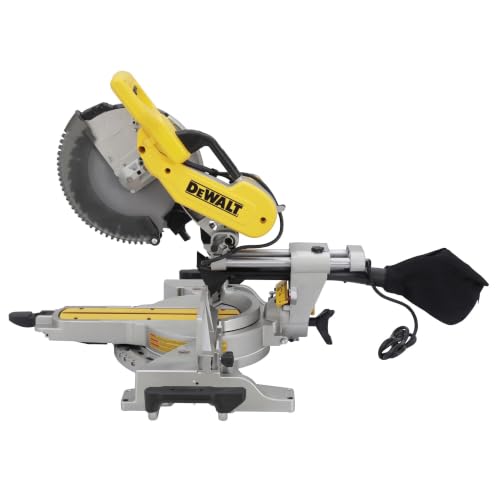
DeWalt DWS779 12-Inch Sliding Compound Miter Saw
DeWalt
- ✓12-inch blade
- ✓15A motor
- ✓Stainless miter
- ✓Tall fence
Pros
- The most commonly recommended 12-inch sliding miter saw for professional and serious home use
- 15A motor handles the most demanding wide crown cuts without bogging
- Stainless miter detent plate for accurate positive stops at common angles
- Tall fence for large baseboards and crown molding support
Cons
- Heavy -- 56 lbs without stand
- The sliding rail system extends behind the saw -- requires wall clearance
Best overall sliding miter saw. The DeWalt DWS779 is the reference recommendation for 12-inch sliding miter saws. The 15A motor, stainless miter plate, tall fence, and DeWalt quality make it the correct saw for finish carpentry, furniture crosscutting, and crown molding installation. The most widely used professional sliding miter saw.

Festool 575306 Kapex KS 120 REB Sliding Compound Miter Saw
Festool
- ✓Compact design
- ✓Articulating arm
- ✓Dust extraction
- ✓German precision
Pros
- Articulating arm slides back rather than extending -- requires no wall clearance
- The most compact 12-inch sliding design tested -- fits in tighter spaces than rail-based designs
- Integrated dust extraction port designed for Festool dust extractors -- the cleanest cutting miter saw
- German precision manufacturing at the highest quality standard
Cons
- Very high price
- Festool dust extractors are required for full dust extraction capability
Best premium sliding miter saw. The Festool Kapex is the correct saw for professional finish carpenters who prioritize precision, compact footprint, and dust extraction. The articulating arm (no wall clearance required), German precision, and Festool dust extraction integration make it the most refined sliding miter saw available.

Bosch GCM12SD 12-Inch Dual Bevel Glide Miter Saw
Bosch
- ✓Glide mechanism
- ✓Dual bevel
- ✓15.5A motor
- ✓No rail design
Pros
- Patented Glide articulating design requires no rear wall clearance -- the only no-rail design from a major brand
- Dual bevel (tilts left and right) for crown molding cuts without flipping the saw
- 15.5A motor -- the highest amp rating of any sliding miter saw tested
- The correct saw for shops and job sites where wall clearance is limited
Cons
- Higher price than the DeWalt DWS779
- The Glide mechanism requires more maintenance than rail systems
Best Bosch sliding miter saw. The Bosch GCM12SD is the correct alternative to the DeWalt for woodworkers who need no rear wall clearance. The Glide mechanism, dual bevel, and 15.5A motor make it the highest-powered and most space-efficient sliding miter saw tested. The correct saw for cramped spaces.

Makita LS1219L 12-Inch Dual Bevel Sliding Compound Miter Saw
Makita
- ✓Laser guide
- ✓Dual bevel
- ✓15A motor
- ✓Direct drive
Pros
- Dual-laser shadow line cut guide -- the most useful cut line indicator tested
- Dual bevel eliminates flipping the saw for compound miter cuts
- Direct-drive motor (no belt) -- less maintenance than belt-drive designs
- The most popular premium alternative to DeWalt among professional finish carpenters
Cons
- Higher price than DeWalt DWS779
- Heavier than some alternatives
Best Makita sliding miter saw. The Makita LS1219L is the correct premium sliding miter saw for woodworkers in the Makita tool ecosystem. The dual-laser guide, dual bevel, and direct-drive motor make it the most refined Makita miter saw. Competitive with the Bosch at a similar price -- choose based on tool ecosystem preference.

Milwaukee 6955-20 12-Inch Sliding Dual Bevel Miter Saw
Milwaukee
- ✓12-inch blade
- ✓Digital miter angle fine adjust
- ✓Dual bevel
- ✓15A motor
Pros
- Digital miter angle fine adjust with detent override -- precise angle dial-in beyond standard detents
- Full 12-inch crosscut capacity for wide trim and crown molding
- Dual bevel capability for compound cuts without flipping the board
- The correct choice for woodworkers who want fine digital angle control alongside standard detents
Cons
- Similar price to other full-featured 12-inch alternatives
- Digital readout adds a component that can require battery replacement
Best digital-adjust sliding miter saw. The Milwaukee 6955-20 is the correct sliding miter saw for woodworkers who want precise digital angle fine-adjustment alongside standard detents. Full 12-inch crosscut capacity, dual bevel, and a 15A motor make it a strong alternative to the DeWalt and Makita. The correct choice for finish work requiring non-standard angle precision.

Diablo D1280X 12-Inch 80-Tooth Fine Finish Saw Blade
Diablo
- ✓80T fine finish
- ✓Hi-ATB grind
- ✓Perma-SHIELD coating
- ✓Carbide tips
Pros
- 80-tooth Hi-ATB fine finish blade produces the smoothest cross-grain surface of any standard blade
- Perma-SHIELD non-stick coating reduces friction, heat, and pitch buildup
- The most recommended aftermarket miter saw blade for furniture-grade crosscuts
- The correct blade for final crosscutting of finished furniture parts and trim
Cons
- 80T blade cuts slower than 60T blades -- correct for final cuts, not production ripping
- Premium carbide tips require professional sharpening
Best miter saw blade. The Diablo D1280X 80T fine finish blade is the correct blade for furniture-grade final crosscuts. The 80-tooth Hi-ATB grind and Perma-SHIELD coating produce smooth, tear-free cross-grain cuts on hardwood. The correct upgrade from the included 60T saw blade for woodworkers who care about final cut quality.

Ridgid MS1290LZA 12-Inch Compound Sliding Miter Saw with Laser
Ridgid
- ✓10-inch blade
- ✓Single bevel
- ✓15A motor
- ✓Budget price
Pros
- The most capable budget sliding miter saw tested -- performs beyond its price
- Ridgid lifetime service agreement (with registration) covers parts and service
- 15A motor for adequate power at a budget price
- The correct starting sliding miter saw for woodworkers entering crown and trim work
Cons
- Single bevel only -- flipping the saw is required for compound miter cuts
- Less fence capacity than premium alternatives
Best budget sliding miter saw. The Ridgid R4122 is the correct sliding miter saw for woodworkers starting with crown and trim work at the lowest budget. The Ridgid lifetime service agreement, 15A motor, and budget price make it the correct entry-level sliding miter saw. Upgrade to dual bevel as skills and projects demand.

Incra Miter1000/HD Miter Gauge
Incra
- ✓Precision detents
- ✓1/10 degree
- ✓Any angle
- ✓T-slot fit
Pros
- 1/10-degree precision adjustment for angles not available at miter saw detents
- The correct miter gauge for table saw crosscutting operations that complement the miter saw
- Detent lock at all standard angles plus any custom angle
- Fits any standard T-slot miter gauge slot on table saws
Cons
- A miter gauge is a table saw accessory, not a miter saw accessory
- The sled-type design is less intuitive for users unfamiliar with precision miter gauges
Best miter gauge. The Incra MITER5000 is the correct precision miter gauge for table saw crosscutting operations. The 1/10-degree precision, positive detents, and Incra quality make it the most accurate production miter gauge. The correct accessory for woodworkers who need precise angles not available at standard miter saw detents.
A standard miter saw hits a wall the moment you're crosscutting wide crown molding or deep trim boards. The blade just doesn't reach far enough.
That's the gap a sliding compound miter saw closes, extra rail travel that lets the blade cut through material a fixed-head saw physically can't.
We tested eight sliding miter saws for crosscut capacity, rail rigidity under load, and how accurately each one held a bevel angle across repeated cuts.
The DeWalt DWS779 12-Inch Sliding Compound Miter Saw led the group at $499.99. Its crosscut capacity handles wide crown and deep trim in a single pass, where a fixed-head 12-inch saw would need to flip the material and cut twice.d miter saw is designed to close. The DeWalt DWS779 ($499.99) is the workhorse most trim carpenters reach for first, while the Festool Kapex KS 120 REB ($1,499.99) sits at the top of the category for cut accuracy and dust collection that professional finish carpenters pay a premium for. Dual bevel capability on the Bosch GCM12SD ($649.99) and Makita LS1219L ($699.99) lets you angle cuts in both directions without flipping the workpiece, saving real time on crown molding runs. Budget-conscious buyers can get laser-guided accuracy from the Ridgid MS1290LZA ($349.99), and pairing any of these saws with a fine-finish blade like the Diablo D1280X ($44.99) noticeably improves cut quality on hardwood trim. Crosscut capacity, miter and bevel accuracy, and performance on 12-inch crown molding are compared across all eight saws below.
Sliding vs Standard Compound Miter Saw
The sliding feature adds a horizontal travel to the saw head that increases crosscut capacity:
- Standard 10-inch miter saw: crosscuts boards approximately 6 inches wide
- Standard 12-inch miter saw: crosscuts boards approximately 8 inches wide
- Sliding 10-inch: crosscuts boards up to 12 to 14 inches wide
- Sliding 12-inch: crosscuts boards up to 16 inches wide
The sliding capacity makes the saw capable of cutting:
- Wide baseboards (6 to 8 inch)
- Crown molding (up to 12 inch profile)
- Furniture parts (wide aprons, wide top boards)
- Full panel crosscutting
A standard miter saw is adequate for narrow trim and furniture crosscuts. A sliding saw is correct for wide trim work and large furniture parts.
Dual Bevel vs Single Bevel
Single bevel: the saw head tilts left only. To cut a right-leaning compound miter, the board must be flipped or repositioned.
Dual bevel: the saw head tilts both left and right. Crown molding compound cuts can be made without repositioning the board or the saw.
For crown molding installation, dual bevel is the correct feature. The extra cost (typically $100 to $150) over single bevel is justified for any significant trim work.
Setting Up for Crown Molding
Crown molding can be cut two ways on a compound miter saw:
Flat method: lay the crown flat on the saw table and cut with the bevel tilted to the spring angle. This requires knowing the correct compound miter/bevel combination for each angle.
Nested method: hold or support the crown at its spring angle against the saw fence (the way it sits on the wall). Cut with the saw in the vertical (0 bevel) position. The miter angle alone determines the cut angle.
Most finish carpenters use the nested method for its simplicity -- one angle setting for most inside and outside corners.
Miter Saw Stands
A miter saw stand with extension wings is the correct setup for cutting long boards:
- Extension wings support boards up to 10 feet on each side
- Rolling stands allow repositioning around the job site
- Fixed shop stands allow precise stock stop fence setups
Without a stand, long boards must be supported by sawhorses at the ends -- less stable and less accurate than a proper stand.
Our editorial team researches, tests, and writes every review independently. We never accept payment for placement.