Best Sharpening Stones 2026: 8 Whetstones for Chisels, Plane Irons, and Knives
Last updated: 2026-08-21 · By NicheHive Editorial
This article contains affiliate links. If you purchase through these links, we may earn a commission at no extra cost to you. As an Amazon Associate, NicheHive earns from qualifying purchases. See our full disclosure.
Sharp tools cut cleaner, safer, and with less effort. We tested 8 sharpening stones for consistent grit, flat surface retention, cutting speed, and performance across tool steel types common in woodworking.
Our Top Picks
- #1Shapton Kuromaku K0702 Ceramic Whetstone, #1000
- #2KING KW65 1000/6000 Grit Combination Whetstone with Plastic Base
- #3Naniwa Chosera 1,000 Grit Super Ceramic Water Stone with Base
- #4DMT W8CX-WB 8-Inch DuoSharp Bench Stone
- #5Norton Japanese Sharpening Stone with 4000 Grit Stone and Holder
- #6Work Sharp Guided Sharpening System
- #7Shapton Glass Stone 8000 Grit
- #8Flexcut PW14 Knife Strop with Flexcut Gold Polishing Compound

Shapton Kuromaku K0702 Ceramic Whetstone, #1000
Shapton
- ✓1000 grit ceramic
- ✓No soaking required
- ✓Splash and go
- ✓Japanese made
Pros
- Ceramic abrasive cuts faster than aluminum oxide at the same grit rating
- No soaking required -- splash of water and sharpen
- Stays flat longer than softer stones -- less frequent flattening
- The most recommended single stone by hand tool woodworkers online
Cons
- High price per stone -- a full set (220, 1000, 5000) represents significant investment
- Hard ceramic can feel slow to beginners accustomed to softer stones
Best overall sharpening stone. The Shapton Pro 1000 is the reference recommendation for the main sharpening stage. Fast cutting ceramic, no soaking, and excellent flatness retention make it the correct workhorse stone for maintaining woodworking tools. The one stone to buy first.

KING KW65 1000/6000 Grit Combination Whetstone with Plastic Base
King
- ✓1000/6000 combo
- ✓Aluminum oxide
- ✓Budget value
- ✓Japanese made
Pros
- Two grits in one stone -- 1000 for sharpening, 6000 for finishing
- The most commonly recommended budget starter stone
- Japanese aluminum oxide construction -- softer and slower than ceramic but functional
- The correct starter stone for woodworkers who want to learn sharpening without high investment
Cons
- Softer than ceramic stones -- requires more frequent flattening
- Slower cutting than Shapton ceramic at the same grit
- Soaking required before use
Best value sharpening stone. The King KW-65 combo provides both sharpening (1000) and finishing (6000) grits at the lowest entry price. The correct starter stone for woodworkers learning sharpening. Softer and slower than Shapton, but functional for developing technique before upgrading.

Naniwa Chosera 1,000 Grit Super Ceramic Water Stone with Base
Naniwa
- ✓Chosera series
- ✓1000 grit
- ✓Splash and go
- ✓Fast cutting
Pros
- Naniwa Chosera is the alternative premium ceramic stone to Shapton
- Splash and go -- no soaking
- Very fast cutting -- removes metal quickly for initial sharpening stages
- Preferred by some woodworkers for feeling slightly faster than Shapton at the same grit
Cons
- Very high price
- Requires careful use -- the fast cutting can over-sharpen or remove excessive material
Best premium 1000 grit stone. The Naniwa Chosera is the premium alternative to Shapton. Some woodworkers prefer the slightly faster cut and feedback of the Chosera over Shapton. At similar prices, the choice is preference -- both are excellent. The correct choice for woodworkers who have tried Shapton and want to compare.

DMT W8CX-WB 8-Inch DuoSharp Bench Stone
DMT
- ✓Diamond abrasive
- ✓Two grits (coarse/fine)
- ✓No water required
- ✓Stays flat permanently
Pros
- Diamond abrasive never wears out of flat -- the correct answer for flattening water stones
- No water required -- use dry or with a small amount of water
- The most durable sharpening surface available
- The correct tool for flattening water stones and lapping plane soles
Cons
- Surface texture is different from water stones -- some woodworkers find the scratch pattern coarser
- Diamond stones dish slightly in the center over years of use
Best diamond sharpening stone. DMT DuoSharp is the reference diamond stone for flattening water stones and as a standalone sharpening surface. Diamond abrasive maintains flatness unlike water stones. The correct coarse tool for removing rust, re-beveling chipped edges, and flattening other stones.
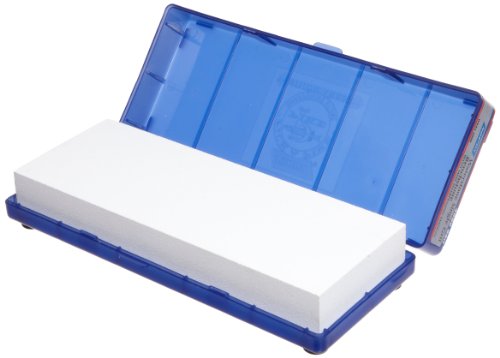
Norton Japanese Sharpening Stone with 4000 Grit Stone and Holder
Norton
- ✓4000 grit finishing stage
- ✓Includes stone holder
- ✓Norton brand
- ✓Water stone
Pros
- 4000 grit covers the refining stage after the 1000 grit workhorse stone
- Norton is the most available water stone brand in North America
- Included plastic holder doubles as a soaking and storage case
- A strong finishing stage that noticeably improves edge polish over 1000 grit alone
Cons
- Softer than Shapton -- dishes more quickly
- Requires soaking
Best finishing stone. The Norton 4000 grit stone covers the finishing stage after a Shapton 1000. Following 1000 with 4000 produces a noticeably more polished edge suitable for furniture work. The correct companion to a Shapton 1000 for a two-stone sharpening system, and it can be paired with an 8000 grit stone for a full progression.

Work Sharp Guided Sharpening System
Work Sharp
- ✓Guided angle system
- ✓Diamond plates
- ✓Multiple grits
- ✓For beginners
Pros
- Guided angle system eliminates the most difficult part of freehand sharpening for beginners
- Diamond plates require no water or maintenance
- Consistent 25 or 30-degree angle every time -- removes guesswork
- The correct sharpening system for woodworkers who struggle to maintain consistent freehand angles
Cons
- Guided systems develop less skill than freehand sharpening
- More setup time than freehand stones
Best guided sharpening system. The Worksharp Guided System is the correct tool for woodworkers who cannot maintain a consistent freehand angle on flat stones. The guided angle produces usable results without the skill development that freehand sharpening requires. The tradeoff is speed and flexibility.

Shapton Glass Stone 8000 Grit
Shapton
- ✓8000 grit
- ✓Ultra fine
- ✓Glass backing
- ✓Mirror polish
Pros
- 8000 grit is above the practical upper limit most woodworkers need for tool steel
- Glass backing stays permanently flat -- never requires flattening
- Produces a true mirror polish on A2 and O1 tool steel
- A strong final stone in a progression that maximizes cutting sharpness
Cons
- Very high price for a single specialty stone
- Unnecessary unless finishing work requires the sharpest possible edge
Best ultra-fine finishing stone. The Shapton GlassStone 8000 is the final polishing stage for woodworkers who want maximum edge sharpness. The glass backing stays permanently flat, and 8000 grit produces a mirror bevel that cuts with less resistance than lower-grit finishes. The correct final stone for hand tool woodworking.

Flexcut PW14 Knife Strop with Flexcut Gold Polishing Compound
Flexcut
- ✓Leather strop
- ✓Honing compound
- ✓Final polishing
- ✓Removes wire edge
Pros
- Stropping on leather after stones removes the wire edge and further polishes the bevel
- Green honing compound on the leather extends the edge polish beyond 8000 grit
- The fastest maintenance step -- strop between sharpenings to extend the time between stone work
- The correct final step in any sharpening progression
Cons
- Stropping at the wrong angle rounds the edge -- requires consistent angle maintenance
- Not a substitute for stone work when the edge is truly dull
Best honing strop. A leather strop charged with green honing compound is the correct final step after any water stone progression. Stropping removes the wire edge and polishes the cutting surface to a degree beyond 8000 grit stones. Used for daily maintenance between full sharpenings, it extends tool time on the bench.
A dull chisel doesn't cut wood. It tears it, and you can feel the difference the moment the edge catches instead of gliding through.
Sharpening stones are how that edge gets restored, and the grit progression you choose decides how fast you get there and how sharp "sharp" actually ends up being.
We tested eight stones across chisels, plane irons, and knives, checking cutting speed, how flat each stone stayed under use, and how the final edge held up.
The Shapton Kuromaku K0702 Ceramic Whetstone, #1000 grit, led our testing at $64.99. It cuts steel fast without dishing out as quickly as softer stones, which means less time flattening and more time actually sharpening.oodworking shop regardless of how many power tools it has. Water stones dominate this category: the Shapton Kuromaku #1000 ($64.99) is a fast-cutting middle grit for establishing a working edge, while the Shapton Glass Stone at 8000 grit ($69.99) takes that edge to a mirror polish. Combination stones like the KING KW65 ($34.99) cover coarse and fine grits in a single purchase, useful for woodworkers who don't want to buy stones one grit at a time. For anyone hesitant about freehand technique, the Work Sharp Guided Sharpening System ($59.99) removes the angle-consistency problem that trips up beginners, and a Flexcut strop with polishing compound ($24.99) is the final step for stropping away the wire edge. Consistent grit, flat surface retention, and cutting speed across common tool steels are compared for all eight stones below.
The Sharpening Progression
Tool sharpening follows a grit progression -- coarser grits remove metal faster, finer grits refine the edge to the final polish:
- 120 to 220 grit (coarse): for re-beveling, removing chips, and restoring very dull tools
- 400 to 600 grit (medium): for removing the scratch pattern from coarse stones
- 1000 grit: the main sharpening stage for most maintenance sharpening
- 4000 to 6000 grit: refining the edge after 1000 grit
- 8000 grit and above: final polishing
- Strop with compound: removes the wire edge, further polishes
For routine maintenance, a 1000 grit stone followed by a strop is sufficient. For new tools or damaged edges, start at 220 or 400 grit.
Free Hand vs. Guided Systems
Freehand sharpening: the stone stays flat, the tool moves across it at a consistent angle held by hand. Requires practice to maintain a consistent angle. Faster once learned. More flexible for odd shapes.
Guided systems (honing guides): a jig holds the tool at a fixed angle against the stone. Consistent results immediately. Less skill required. More setup time. Correct for beginners or woodworkers who sharpen infrequently.
The Veritas Mk.II honing guide is the most recommended honing guide for woodworking tools.
Flattening Water Stones
Water stones wear and develop a hollow in the center with use. A dished stone produces a convex bevel on the tool -- the opposite of what is needed.
Flatten water stones regularly on:
- A diamond plate (DMT DuoSharp)
- A piece of float glass with wet/dry sandpaper
- A dedicated lapping plate
After flattening, the stone surface is white and fresh. Flatten before each sharpening session for best results.
The Wire Edge
When the sharpening bevel meets the back of the iron, a thin burr called the wire edge forms on the back. You can feel it by dragging a fingertip across the flat back of the tool.
Remove the wire edge by laying the iron flat on the stone (not at an angle) and making two or three light strokes. Do not lift the back -- keep it perfectly flat.
Final wire edge removal is done on the strop.
Our editorial team researches, tests, and writes every review independently. We never accept payment for placement.