Best Plunge Router Bits 2026: 8 Bits for Inside Cuts and Stopped Grooves
Last updated: 2026-08-21 · By NicheHive Editorial
This article contains affiliate links. If you purchase through these links, we may earn a commission at no extra cost to you. As an Amazon Associate, NicheHive earns from qualifying purchases. See our full disclosure.
Plunge router bits start a cut in the middle of a panel without needing an edge entry. We tested 8 plunge router bits for cut quality, center-cutting capability, and performance in hardwood and plywood.
Our Top Picks
- #1Freud 75-100 Up Spiral Bit, 1/8-Inch
- #2Freud 76-102 Down Spiral Bit, 1/4-Inch
- #3Freud 75-103 Up Spiral Bit, 1/4-Inch
- #4YONICO 14320 CNC End Mill Solid Carbide Up Cut Set, 3 Bit
- #5CMT 653.158.11 Insert Carbide Straight Router Bit, 5/8-Inch
- #6Amana Tool 49310 Special Rabbet Plunge Bit
- #7Freud 16-520 Mortising Bit, 3/4-Inch
- #8Freud 77-208 Double Compression Bit, 1/2-Inch

Freud 75-100 Up Spiral Bit, 1/8-Inch
Freud
- ✓Spiral up-cut geometry
- ✓Center-cutting end
- ✓TiCo carbide
- ✓1/4-inch shank
Pros
- Center-cutting end allows plunging directly into the surface without a pilot hole
- Spiral up-cut geometry produces a shearing action that dramatically reduces tearout
- TiCo carbide stays sharp longer than standard carbide in repeated plunge cuts
- The most commonly recommended plunge bit for stopped grooves and mortises
Cons
- Up-cut spiral pulls chips upward -- some chip ejection onto the workpiece surface
- Higher price than standard straight plunge bits
Best overall plunge router bit. The Freud spiral up-cut is the reference plunge bit for clean mortises, inlay recesses, and stopped grooves. Center-cutting end, TiCo carbide, and spiral geometry produce cleaner results than any straight-flute plunge bit.

Freud 76-102 Down Spiral Bit, 1/4-Inch
Freud
- ✓Down-cut spiral
- ✓Pushes chips into the cut
- ✓TiCo Hi-Density carbide
- ✓Clean top surface
Pros
- Down-cut spiral pushes chips downward into the kerf -- keeps the workpiece surface clean
- The correct choice for plunge cuts in veneered plywood and laminate where the top surface is visible
- TiCo carbide construction for strong edge retention
- Clean, crisp entry on the top face that an up-cut bit cannot match
Cons
- Down-cut geometry is less efficient at chip removal -- more heat in the cut
- Higher price than a comparable up-cut bit
- Not ideal for deep cuts due to chip packing
Best down-cut plunge bit. When the plunge cut must leave the top surface completely clean and tearout-free -- veneered panels, laminate surfaces, melamine -- the Freud down-cut spiral is the correct specification. The down-cut action keeps all chips below the surface.

Freud 75-103 Up Spiral Bit, 1/4-Inch
Freud
- ✓1/4-inch diameter
- ✓Center-cutting
- ✓TiCo Hi-Density carbide
- ✓1/4-inch shank
Pros
- A common everyday diameter for stopped grooves and shallow mortises
- TiCo carbide for strong edge retention in repeated plunge cuts
- Sized for handheld routing where a compact bit is easier to control
- A practical companion size alongside the 1/8-inch bit for a range of groove widths
Cons
- Single fixed diameter -- doesn't cover wider mortises
- 1/4-inch shank only
Best mid-size plunge bit. The 1/4-inch diameter covers the most common stopped-groove and mortise width in furniture work. TiCo carbide and center-cutting geometry make it a practical everyday companion to a smaller finishing bit.

YONICO 14320 CNC End Mill Solid Carbide Up Cut Set, 3 Bit
Yonico
- ✓Multiple sizes in set
- ✓Up-cut spiral
- ✓Center-cutting
- ✓Budget price
Pros
- Set provides multiple plunge bit sizes in one purchase for the price of a single premium bit
- Good starting set for new woodworkers learning mortising and stopped-groove routing
- Yonico carbide is adequate for softwood and plywood
- Center-cutting geometry on all bits in the set
Cons
- Yonico carbide dulls faster than Freud or Amana in hardwood
- Cut quality is lower than premium bits -- more tearout in hardwood
- 1/4-inch shanks only
Best plunge bit set for beginners. The Yonico set provides multiple sizes for learning plunge routing technique at the lowest total cost. Acceptable quality for initial practice and softwood work; plan to upgrade to Freud or Whiteside for production hardwood mortising.

CMT 653.158.11 Insert Carbide Straight Router Bit, 5/8-Inch
CMT
- ✓Center-cutting straight bit
- ✓Two-flute design
- ✓Micro-grain carbide
- ✓Anti-kickback body
Pros
- Straight flutes are the correct choice for plunge cuts in inlay recesses where parallel walls matter
- Anti-kickback body reduces the risk of catches when starting a plunge cut
- CMT micro-grain carbide provides better edge retention than standard carbide
- Flat bottom makes it correct for hinge mortises and shallow recesses
Cons
- Straight flutes produce more tearout than spiral geometry in many hardwoods
- Anti-kickback limits feed rate
Best straight plunge router bit. For applications where the plunge cut walls must be parallel and the floor must be perfectly flat -- hinge mortises, lock recesses, inlay cavities -- the straight plunge bit with CMT carbide delivers consistent results with anti-kickback safety.
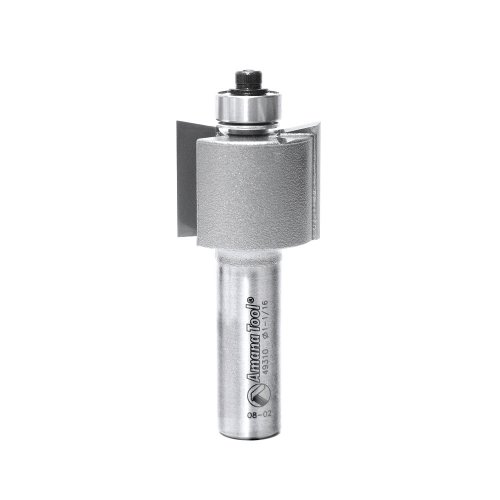
Amana Tool 49310 Special Rabbet Plunge Bit
Amana
- ✓Center-cutting
- ✓Carbide-tipped
- ✓Flat bottom
- ✓1/2-inch shank
Pros
- Amana carbide is harder than standard carbide and holds an edge through repeated plunge cuts
- Center-cutting capability for direct plunge without pilot hole
- Flat bottom for accurate recess depth
- A distinct special-rabbet profile useful for stepped hardware mortises
Cons
- Straight geometry -- more tearout than spiral in difficult grain
- 1/2-inch shank required
Best flat-bottom plunge bit. For hardware mortises and stepped recesses where the floor must be perfectly flat, the Amana 49310 delivers a clean, accurate cut without the added cost of a spiral bit.

Freud 16-520 Mortising Bit, 3/4-Inch
Freud
- ✓3/4-inch mortising bit
- ✓Perma-SHIELD coating
- ✓TiCo carbide
- ✓For mortise and tenon joints
Pros
- Purpose-built for mortise routing -- the most common plunge routing application
- 3/4-inch width matches common tenon thicknesses in furniture-scale joinery
- TiCo carbide produces clean mortise walls without tearout in most hardwoods
- Perma-SHIELD coating reduces friction and pitch buildup during repeated plunge cuts
Cons
- Single fixed width -- buy additional bits for other tenon thicknesses
- Mortise-specific -- less versatile than a general spiral plunge bit
Best mortising plunge bit. For woodworkers who regularly cut mortise and tenon joints with a plunge router, the Freud 16-520 delivers clean mortise walls with TiCo carbide quality. The correct dedicated-use bit for mortise-and-tenon furniture building.

Freud 77-208 Double Compression Bit, 1/2-Inch
Freud
- ✓Compression spiral geometry
- ✓Up-cut at bottom, down-cut at top
- ✓TiCo Hi-Density carbide
- ✓For CNC and plunge routing
Pros
- Compression spiral is both up-cut at the bottom (clean floor) and down-cut at the top (clean surface) simultaneously
- Produces clean cuts on both faces of a panel -- correct for veneered plywood routed on a CNC or with a plunge router
- TiCo Hi-Density carbide with Black I.C.E. coating for extended tool life
- Eliminates the need to choose between up-cut and down-cut when both faces are critical
Cons
- Higher price than a single-direction spiral bit
- Primarily a CNC-oriented bit -- requires consistent feed rate for best performance
- Less common in hand-held plunge routing
Best compression spiral plunge bit. The compression geometry eliminates tearout on both the top and bottom faces simultaneously. The correct bit for routing sheet goods where both faces are visible in the finished piece -- cabinet doors, drawer fronts, and display panels.
Starting a cut in the middle of a panel, rather than entering from an edge, is a job that regular router bits handle poorly.
That's exactly why the best plunge router bits carry a center-cutting tip built for stopped grooves, mortises, and inlay work.
Freud dominates this lineup with three entries, including the 75-100 up spiral at $34.99 for fast waste clearance and the 76-102 down spiral at $44.99 for clean top-surface edges without tearout.
Specialized tasks call for specialized geometry. The Freud 16-520 mortising bit at $34.99 is ground specifically for hinge and mortise work, while the Freud 77-208 double compression bit at $74.99 combines up and down spiral cutting to leave clean edges on both faces of plywood.
Budget-conscious shops can reach for the YONICO 3-bit carbide set at $34.99 to cover multiple diameters at once.
What Makes a Bit a Plunge Router Bit
A standard router bit cuts by feeding in from the edge of a workpiece. The cutting edge is on the side of the bit, and a standard bit cannot start cutting in the middle of a panel.
A plunge bit has a center-cutting end -- the bottom of the bit has carbide that can cut as the bit is lowered (plunged) into the surface. This allows the router to start cutting anywhere on a panel, not just from the edge.
Most spiral router bits (up-cut and down-cut) are center-cutting by design. Some straight bits are not center-cutting -- they cannot be plunged into material and must enter from an edge.
Always verify that a straight bit is center-cutting before attempting a plunge cut. A non-center-cutting bit forced into a plunge cut will rub, burn, and potentially break.
Up-Cut vs Down-Cut vs Compression
Up-cut spiral: cuts on the upward sweep of the flute. Chips are pulled upward out of the cut. Leaves a clean bottom but may cause slight tearout on the top surface. Best for mortises, stopped grooves, and cuts where the floor is the critical surface.
Down-cut spiral: cuts on the downward sweep. Chips are pushed downward. Top surface is clean. Better for veneered panels and laminates where the top face is visible. Less efficient chip clearing.
Compression spiral: combines up-cut at the bottom and down-cut at the top. Both surfaces are clean. Best for panel routing where both faces are visible.
Common Plunge Router Applications
Mortises: rectangular recesses for mortise-and-tenon joints. A plunge router with a spiral plunge bit and an edge guide is faster and more consistent than a chisel mortiser for production furniture.
Inlay recesses: routing a recess to the exact depth and shape of an inlay piece. Templates and a flush trim bit or straight plunge bit are used.
Lock and hinge mortises: routing the recess for door hardware. Straight plunge bits with flat bottoms are correct for hardware mortises.
Stopped grooves: grooves that stop before reaching the edge of the panel. Plunge routing starts the groove after the entry point.
Lettering and signs: CNC and handheld plunge routing of text and decorative carved elements.
Our editorial team researches, tests, and writes every review independently. We never accept payment for placement.