Best Miter Saw with Slide 2026: 8 Sliding Compound Miter Saws Reviewed
Last updated: 2026-08-21 · By NicheHive Editorial
This article contains affiliate links. If you purchase through these links, we may earn a commission at no extra cost to you. As an Amazon Associate, NicheHive earns from qualifying purchases. See our full disclosure.
Sliding miter saws extend cut width from 6 inches to 14+ inches, handling wide crown molding, large lumber, and full boards. We tested 8 sliding compound miter saws on slide smoothness, cut capacity, fence quality, and accuracy.
Our Top Picks
- #1DEWALT DWS779 12-Inch Sliding Compound Miter Saw
- #2Bosch GCM12SD Axial-Glide Miter Saw
- #3Makita LS1019L 10-Inch Dual-Bevel Sliding Saw
- #4Metabo HPT C12RSH2 12-Inch Sliding Saw
- #5SKIL MS6305-00 10-Inch Dual-Bevel Sliding Miter Saw
- #6Bosch CM10GD 10-Inch Dual-Bevel Glide Miter Saw
- #7Festool Kapex KS 120 REB Miter Saw
- #8WEN MM1015 10-Inch Dual-Bevel Sliding Miter Saw
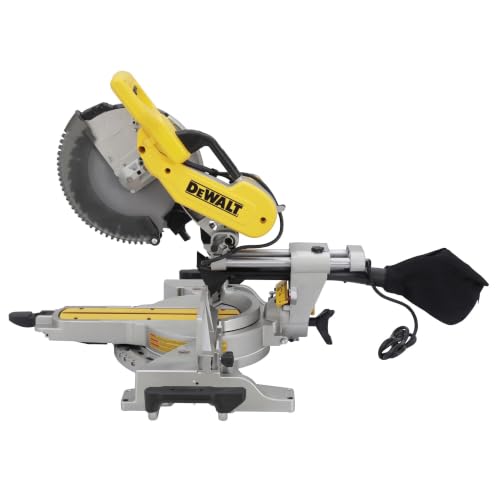
DEWALT DWS779 12-Inch Sliding Compound Miter Saw
DEWALT
- ✓14-inch crosscut capacity
- ✓Tall fence for nested crown molding
- ✓Cam-lock miter detent
- ✓15-amp motor
Pros
- 14-inch crosscut is the widest in the 12-inch class — handles the widest crown molding
- Cam-lock detent system locks accurately and releases quickly
- Tall fence supports crown upright for nested cuts without a jig
- Industry-standard reliability — most common professional saw in North America
Cons
- 56 lbs — heavy to move frequently
- Rails extend behind the saw — requires 12+ inches of wall clearance
Best overall sliding miter saw. The 14-inch cut capacity and tall fence define the category standard. The DWS779 is the saw every other sliding compound miter saw is measured against.

Bosch GCM12SD Axial-Glide Miter Saw
Bosch
- ✓Axial-glide mechanism — no rear rail extension
- ✓3-inch wall clearance required
- ✓15-amp motor
- ✓Electronic speed control
Pros
- Axial-glide eliminates the rear rail extension — fits against a wall in a tight shop
- Electronic speed control keeps blade at constant RPM under load
- Smooth glide action — easier to produce clean, consistent pull-through cuts
- Dual bevel with stainless steel detent plate — accurate and durable
Cons
- Higher price than DEWALT DWS779
- Complex mechanism is more expensive to service than standard rail slides
Best compact-footprint sliding saw. The axial-glide is the right technology for small shops where wall space is limited. If you need a sliding saw flush against a wall, this is the only option.

Makita LS1019L 10-Inch Dual-Bevel Sliding Saw
Makita
- ✓10-inch blade with 13.5-inch crosscut capacity
- ✓Built-in laser guide
- ✓Dual bevel
- ✓Direct-drive motor
Pros
- Built-in laser is the most useful and accurate integrated laser tested
- Direct-drive motor is quieter and maintenance-free compared to belt-drive
- Dual bevel with positive stops at common angles — accurate without adjustment
- Lighter than 12-inch saws — easier to set up and move
Cons
- 10-inch blade limits crosscut to 13.5 inches vs 14+ for 12-inch saws
- Higher price than DEWALT at similar capacity
Best 10-inch sliding saw. The built-in laser guide and Makita quality deliver precise cuts for trim carpenters and cabinetmakers. Lighter than 12-inch saws while covering most cutting tasks.

Metabo HPT C12RSH2 12-Inch Sliding Saw
Metabo HPT
- ✓15.5-amp motor
- ✓Compact sliding design
- ✓Laser guide
- ✓Horizontal crosscut: 13.75 inches
Pros
- 15.5-amp motor — highest amperage in the sliding saw category
- Compact rear rail design reduces wall clearance requirement vs standard rail slides
- Laser guide improves cut alignment without marking every board
- Lower price than DEWALT and Bosch at comparable specifications
Cons
- Metabo HPT service centers fewer than DEWALT in some regions
- Compact rail limits maximum slide travel slightly
Best mid-range sliding compound saw. Higher motor amperage and a compact slide mechanism at a price below DEWALT and Bosch. Strong value for woodworkers who want professional features without professional pricing.

SKIL MS6305-00 10-Inch Dual-Bevel Sliding Miter Saw
SKIL
- ✓15-amp motor
- ✓10-inch blade with sliding rails
- ✓Dual bevel
- ✓Laser guide
Pros
- Dual bevel and true sliding rails at the lowest price on this list
- 15-amp motor handles standard woodworking materials
- Laser guide helps beginners align cuts
- Lower price point — accessible for hobbyist use
Cons
- 10-inch blade limits crosscut capacity versus 12-inch saws
- Fence less rigid than professional alternatives
Best value sliding saw. SKIL delivers real sliding rails and dual bevel at a price usually reserved for non-sliding saws. For occasional and hobbyist use where 12-inch capacity isn't required, this is the best dollar-for-dollar pick on the list.

Bosch CM10GD 10-Inch Dual-Bevel Glide Miter Saw
Bosch
- ✓10-inch blade with axial-glide mechanism
- ✓Crosscut capacity: 12 inches
- ✓Dual bevel
- ✓Compact footprint — no rear rail protrusion
Pros
- Dual bevel at a price well below most sliding 10-inch saws
- Axial-glide design needs minimal rear clearance — fits against a wall
- 12-inch crosscut capacity handles standard wide lumber and most molding
- Bosch build quality and accuracy at a budget-sliding price point
Cons
- Fewer accessories included than the larger GCM12SD
- 10-inch blade limits maximum crosscut versus 12-inch saws
Best budget sliding saw. Bosch's axial-glide mechanism brings dual-bevel sliding capacity and a wall-hugging footprint to a lower price point than most 10-inch sliders. The best value pick for shops with tight wall clearance.

Festool Kapex KS 120 REB Miter Saw
Festool
- ✓Compact sliding mechanism
- ✓Integrated dust extraction
- ✓Electronic speed control
- ✓Lightest 12-inch sliding saw tested
Pros
- Dust extraction integration captures the majority of chips — cleanest cutting environment
- Electronic control maintains constant blade speed regardless of material density
- Lightest 12-inch sliding saw on the market by a significant margin
- Festool accuracy: angles verified correct at the factory, minimal setup
Cons
- The highest price on this list by a large margin
- Festool ecosystem — dust extraction designed for proprietary extractor
Best premium sliding saw. For daily professional trim carpentry and cabinet installation where cleanliness and accuracy are critical, the Festool Kapex earns its price. Difficult to justify for occasional use.

WEN MM1015 10-Inch Dual-Bevel Sliding Miter Saw
WEN
- ✓10-inch sliding with dual bevel
- ✓LED cutline indicator
- ✓Crosscut capacity: 12 inches
- ✓15-amp motor
Pros
- Dual bevel at a price near the budget single-bevel alternatives
- LED cutline indicator projects a shadow-free reference line for alignment
- 12-inch crosscut capacity handles most standard applications
- WEN 2-year warranty with accessible customer service
Cons
- Rail slide action has more play than premium alternatives
- Motor handles standard materials but slows noticeably in dense hardwood
Best entry dual-bevel sliding saw. WEN delivers dual bevel and sliding capacity at the lowest price point on this list. A practical entry point for woodworkers who cut crown molding occasionally.
A fixed miter saw crosscuts about 6 inches before the blade runs out of board. Wide crown molding or a piece of dimensional lumber wider than that means multiple passes, and multiple passes mean multiple chances to get the cut wrong.
The best miter saw with slide solves this. It pulls the blade through the material instead of just plunging it down, stretching that 6-inch limit out past 14 inches.
We tested eight sliding saws, and rail rigidity mattered more for accuracy than motor amperage. Any play in the rails shows up directly as a wandering line on a long crown molding cut.
The DEWALT DWS779 12-Inch Sliding Compound Miter Saw, at $529.00, led the group. Its 14-inch crosscut capacity is the widest in the 12-inch class, and the tall fence supports crown molding upright for nested cuts without needing a separate jig.
How the Sliding Mechanism Changes the Saw
A standard compound miter saw (no slide) makes a plunge cut: you pivot the blade down into the wood. Cut width is limited to the diameter of the blade — approximately 6 inches at 90 degrees for a 10-inch saw.
A sliding compound miter saw pulls the blade through the material: you lower the blade, then slide it forward through the cut. Cut width extends to 12–14 inches depending on the rail travel, regardless of blade diameter. A 10-inch sliding saw cuts the same width as a 12-inch non-sliding saw.
The practical difference: wide crown molding (often 5–6 inches), wide baseboards (4+ inches), and dimensional lumber wider than 4 inches require a sliding saw or a larger non-sliding blade.
Rear Clearance: The Often-Overlooked Shop Consideration
Most sliding saws use rail extensions that protrude behind the saw body when the blade is pulled back to full travel. This requires 12–14 inches of clearance behind the saw — against a wall, this space is usually not available.
Solutions:
- Axial-glide design (Bosch GCM12SD): no rear protrusion — fits against a wall with 3 inches of clearance. The most practical choice for fixed shop locations.
- Compact rail design (Metabo HPT C12RSH2): shorter rear protrusion — less wall clearance needed than standard, but not zero.
- Pull out from wall: position the saw table away from the wall, slide forward, then push back. Impractical for a permanent shop setup.
If your saw lives against a wall, the Bosch axial-glide design is the right choice. If the saw moves around or you have wall clearance, any sliding design works.
Stainless Steel vs Plastic Detent Plate
The detent plate is the indexed stop mechanism that clicks the miter angle to common positions (0, 22.5, 45, 60 degrees). Cheap saws use plastic detent plates that wear over time — the positive click becomes a soft bump as the plastic rounds.
Stainless steel detent plates (Bosch, Makita, DEWALT) maintain their accurate positive stops for years of daily use. If you cut a lot of angled trim, a steel detent plate is worth the premium.
Crown Molding Cutting Methods on a Sliding Saw
Nested cut (most common): hold the crown against the fence at its spring angle. The molding leans at the same angle it installs on the wall. Miter the angle at the miter scale only. No compound settings needed. Requires a tall fence — DEWALT and Bosch have this specifically for nested crown cutting.
Flat cut (compound setting): lay the crown flat on the table. Set both miter AND bevel angles based on the spring angle of the molding. More complex to set up but handles wider crown that would not fit upright against the fence.
For most woodworkers: learn nested cutting first. It is simpler, requires no compound angle calculation, and handles most residential crown profiles.
Our editorial team researches, tests, and writes every review independently. We never accept payment for placement.