Best Marking Gauge 2026: 8 Gauges for Joinery Layout and Woodworking
Last updated: 2026-08-21 · By NicheHive Editorial
This article contains affiliate links. If you purchase through these links, we may earn a commission at no extra cost to you. As an Amazon Associate, NicheHive earns from qualifying purchases. See our full disclosure.
A marking gauge scribes an accurate line parallel to a reference edge. We tested 8 marking gauges for beam straightness, fence accuracy, cutter type, and performance on both face grain and end grain layout work.
Our Top Picks
- #1iGaging 34-708 Wheel 3-in-1 Marking Gauge with Mortise Gauge
- #2iGaging 34-777 Ebony Marking/Mortise Gauge
- #3General Tools Multi-Functional Marking Gauge, Aluminum Alloy
- #4Big Horn 26018 8 Inch Marking Gauge, Beechwood
- #5Crown 135 Marking Gauge, Beech
- #6Crown Tools 152 Mortise and Marking Gauge, Rosewood
- #7Big Horn 19562 Mortise Marking Gauge with Knurled Brass Adjusting Screw
- #8Big Horn 19256 Marking Gauge, 9-Inch with Knurled Brass Adjusting Screw

iGaging 34-708 Wheel 3-in-1 Marking Gauge with Mortise Gauge
iGaging
- ✓Wheel cutter
- ✓1/32 inch and 1mm scale
- ✓Combined mortise gauge
- ✓Solid brass head
Pros
- Wheel cutter severs wood fibers across and with the grain -- cleaner line than pin gauges
- Dual 1/32-inch and 1mm scale reads precisely without conversion
- Combines a wheel marking gauge and a mortise gauge in one tool
- One of the most consistently recommended affordable wheel gauges among hand tool woodworkers
Cons
- Fit and finish is a step below premium boutique gauges
- Wheel cutter requires occasional sharpening
Best overall marking gauge. The iGaging 34-708 is the reference recommendation for precise joinery layout at a reasonable price. The wheel cutter produces a clean line by severing fibers rather than tearing them, and the built-in mortise gauge function adds versatility without a second tool. The correct single marking gauge for woodworking.

iGaging 34-777 Ebony Marking/Mortise Gauge
iGaging
- ✓Double-pinned mortise side
- ✓Single-pin marking side
- ✓Ebony and brass body
- ✓Adjustable pin spacing
Pros
- Double-pinned side marks both sides of a mortise in one pass -- the fastest mortise layout tool
- Adjustable spacing between the two pins for different mortise widths
- Solid ebony and brass construction is the premium standard for a traditional-style marking gauge
- Reversible single-pin side for standard marking gauge use
Cons
- Higher price than basic beechwood gauges
- Dual-function layout is specialized -- a single cutter gauge also performs this function with two passes
Best premium marking gauge. The iGaging 34-777 Ebony gauge is the correct tool for woodworkers doing significant mortise and tenon work. The double-pinned side eliminates one step per mortise, and the ebony and brass construction is the premium standard among traditional-style gauges. The premium investment for dedicated hand tool joinery work.
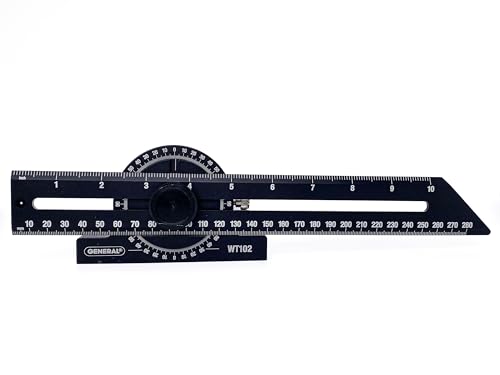
General Tools Multi-Functional Marking Gauge, Aluminum Alloy
General Tools
- ✓Aluminum alloy body
- ✓360-degree rotating wheel
- ✓Laser-engraved markings
- ✓Multi-function scribing
Pros
- Aluminum alloy body resists moisture-related movement that affects wooden gauges
- 360-degree rotating wheel locks in place for replicating markings in multiple locations
- Laser-engraved markings stay legible longer than printed scales
- The correct gauge for shop environments where humidity variation is significant
Cons
- Not a traditional wheel-cutter gauge -- it scribes rather than severing fibers
- Some woodworkers prefer the feel of a wood fence against the workpiece
Best aluminum marking gauge. The General Tools multi-functional gauge is the precision-machined alternative to wooden gauges for woodworkers who want dimensional stability across humidity changes. Aluminum alloy construction and laser-engraved markings at a fraction of boutique gauge prices. The correct choice for climate-controlled and climate-variable shops alike.

Big Horn 26018 8 Inch Marking Gauge, Beechwood
Big Horn
- ✓Traditional pin gauge
- ✓Kiln-dried beechwood
- ✓Plastic thumbscrew lock
- ✓Classic design
Pros
- The traditional pin marking gauge design used in woodworking for over a century
- Simple, reliable design with no complexity
- One of the lowest price functional marking gauges available
- The correct starter gauge for woodworkers learning layout before investing in wheel gauges
Cons
- Pin cutters tear wood fibers rather than severing them -- rougher line than wheel gauges
- Pin marks on end grain require a separate mortise gauge for accurate joinery layout
Best traditional marking gauge. The Big Horn 26018 is the correct entry-level gauge for woodworkers new to hand tool layout. The pin cutter is less clean than a wheel, but functional for face-grain layout. Learn layout technique with a basic beechwood gauge before upgrading to a wheel gauge.

Crown 135 Marking Gauge, Beech
Crown
- ✓UK made
- ✓Kiln-dried beech body
- ✓Plain head
- ✓Pin cutter
Pros
- Crown is a well-established Sheffield, UK tool maker with a strong hand tool reputation
- Kiln-dried beech wood body is stable and traditional
- Simple, repairable pin gauge design with no complexity to break
- The correct mid-price upgrade from a bare-bones starter gauge
Cons
- Pin cutter is less clean than a blade or wheel cutter
- Less precision adjustment than a micro-adjust wheel gauge
Best value upgrade marking gauge. The Crown 135 is the correct upgrade from a starter pin gauge at a moderate price. The beech body is stable and traditional, and Crown's Sheffield manufacturing has a strong reputation in the UK hand tool community. The correct step before committing to premium wheel-gauge prices.

Crown Tools 152 Mortise and Marking Gauge, Rosewood
Crown
- ✓UK made
- ✓Mortise and marking combined
- ✓Kiln-dried rosewood
- ✓Brass thumbscrew
Pros
- UK made mortise and marking gauge at a lower price than premium boutique brands
- Traditional rosewood fence and beam with a brass thumbscrew
- Combines mortise gauge and standard marking gauge functions in one tool
- Crown tools are well reviewed in the UK hand tool community
Cons
- Pin-based mortise gauge, not a wheel cutter
- Less available in North America than major US brands
Best UK marking gauge. The Crown 152 mortise and marking gauge provides combined mortise and standard marking function at a lower price than premium brands. The traditional rosewood body, UK manufacture, and brass thumbscrew make it the correct choice for woodworkers who want classic Sheffield tool construction.

Big Horn 19562 Mortise Marking Gauge with Knurled Brass Adjusting Screw
Big Horn
- ✓Dual-pin mortise side
- ✓Single-pin marking side
- ✓Knurled brass adjusting screw
- ✓Hardwood body
Pros
- Dual-pin side scribes both shoulder lines of a mortise in one pass -- registers on the reference face
- Single-pin reverse side handles standard marking gauge duties from the same tool
- Knurled brass adjusting screw allows fast, repeatable pin-spacing changes
- The most efficient two-in-one gauge for narrow mortise and tenon layout
Cons
- More expensive than a single-function pin gauge
- Specialized dual-pin design is less flexible than a wheel gauge for freeform layout
Best mortise marking gauge. The Big Horn 19562 is the specialized marking gauge for mortise and tenon layout. The dual-pin side scribes both shoulder lines from a single registration against the reference face, and the reverse single-pin side covers standard marking duties. The correct specialized addition after a standard wheel gauge.

Big Horn 19256 Marking Gauge, 9-Inch with Knurled Brass Adjusting Screw
Big Horn
- ✓Compact 9-inch beam
- ✓Polished hardwood body
- ✓Brass-plated head and shaft
- ✓Brass thumbscrew
Pros
- Compact size fits in an apron pocket and works in tight spaces
- Brass-plated head and shaft resist wear at the fence and beam contact points
- Short beam is less prone to flexing than long beams
- Low price makes it practical to keep as a dedicated secondary gauge
Cons
- 9-inch beam limits maximum setting versus a full-length gauge
- Pin cutter rather than a wheel or blade cutter
Best secondary marking gauge. The Big Horn 19256 is the correct secondary gauge to keep set to a fixed dimension while the primary gauge changes. Its compact size fits in an apron pocket, and the brass-plated wear points and low price make it practical to buy a second one just for this purpose.
A pencil line has width. Under a chisel or a saw, that width is the difference between a dovetail that fits and one that doesn't.
A marking gauge scribes a single, precise line by scoring the wood fibers instead of drawing over them, and it's the tool that separates careful hand-tool joinery from guesswork.
We tested eight gauges, and cutter type turned out to be the main dividing line between them: wheel cutters sever fibers cleanly, while traditional pins can tear end grain if they're not kept sharp.
The iGaging 34-708 Wheel 3-in-1 Marking Gauge, at $42.99, took best overall. Its wheel cutter scores cleanly with the grain and against it, and the built-in mortise gauge function covers a second layout task without a second tool.
Types of Marking Gauge Cutters
Pin cutter: a sharpened steel pin that scratches the wood surface. The oldest and simplest design. Tears wood fibers across the grain -- produces a fuzzy line on end grain. The correct basic gauge for face grain layout.
Blade/knife cutter: a small blade that slices across the grain rather than tearing. Sharpenable on a stone. Cleaner than a pin, especially on end grain. Requires more frequent sharpening than a wheel.
Wheel cutter: a small disk with a sharpened perimeter that rolls along the grain. The cleanest cut of any gauge type. Severs fibers on both sides of the line. The correct choice for joinery layout where the gauge line is the cut line (dovetails, mortises).
Pin vs. Wheel for Joinery
For through dovetail layout, the gauge line is the shoulder line -- the saw cuts to this line. A clean wheel-cut line provides a precise reference that requires no additional knife work.
A pin gauge marks a line that is rougher and less precisely positioned than a wheel gauge line. For precise joinery, the wheel cutter is the correct choice.
Setting a Marking Gauge
- Measure the desired distance with a rule
- Hold the gauge fence against the end of the rule and adjust the beam until the cutter point aligns with the graduation
- Lock the fence
- Test on scrap -- check the resulting mark against the rule
For the Veritas micro-adjust: set the coarse position by eye, then use the micro-adjust knob to dial in precisely.
Using a Marking Gauge
- Hold the fence firmly against the reference face
- Tilt the gauge slightly forward (in the direction of travel)
- Pull the gauge along the board with light pressure
- Make multiple light passes rather than one heavy pass
The mark should be a clean, continuous line. If the line wanders, the fence is not maintaining contact with the reference face. If the line is ragged, the cutter needs sharpening.
Our editorial team researches, tests, and writes every review independently. We never accept payment for placement.