Best Hand Saws for Woodworking 2026: 8 Saws for Rip, Crosscut, and Joinery
Last updated: 2026-08-21 · By NicheHive Editorial
This article contains affiliate links. If you purchase through these links, we may earn a commission at no extra cost to you. As an Amazon Associate, NicheHive earns from qualifying purchases. See our full disclosure.
A sharp hand saw cuts faster and more accurately than a dull power tool. We tested 8 hand saws for cut quality, tooth geometry, handle comfort, and performance in hardwood and softwood.
Our Top Picks
- #1Gyokucho Razorsaw 9-1/2-Inch Double Edge (Ryoba) for Hardwoods
- #2Gyokucho Razorsaw Kataba Saw 240mm No. 410
- #3Stanley 15-579 15-Inch SharpTooth Saw
- #4Spear & Jackson Professional Tenon Saw, 10-Inch x 13 PPI
- #5Gyokucho Japanese Pull Saw, Dozuki Style, 180mm Blade
- #6Gyokucho Razorsaw Kataba Saw 255mm No. 105
- #7Irwin Marathon 2011201 15-Inch Coarse Cut Carpenter Saw
- #8Gyokucho 770-3500 Razor Dozuki Saw

Gyokucho Razorsaw 9-1/2-Inch Double Edge (Ryoba) for Hardwoods
Gyokucho
- ✓Pull-stroke cutting
- ✓Dual-edge (rip and crosscut)
- ✓Thin kerf
- ✓Japanese style
Pros
- Pull-stroke design cuts on the pull stroke, which is the natural direction of wrist and arm movement
- Dual-edge design: crosscut teeth on one side, rip teeth on the other
- Thin kerf removes less material and requires less force than Western-style push saws
- Japanese pull saw teeth are fleam-filed for the cleanest possible cut surface
Cons
- Replacement blades are required rather than resharpening -- a recurring cost
- Dual edge means the back edge teeth can damage the bench or the finished surface
Best overall hand saw. The Gyokucho Ryoba combines the most efficient cutting action (pull stroke) with dual crosscut and rip teeth. The thin kerf, clean cut, and natural pull-stroke motion make this the most practical all-purpose hand saw for furniture woodworking.

Gyokucho Razorsaw Kataba Saw 240mm No. 410
Gyokucho
- ✓Premium Japanese single-edge saw
- ✓Precision-filed crosscut teeth
- ✓No back-edge tooth hazard
- ✓Replaceable blade
Pros
- Gyokucho is one of the highest-quality Japanese saw brands widely available outside Japan
- Precision impulse-hardened teeth stay sharp longer than standard hand-filed teeth
- Single-edge design eliminates the back-edge tooth hazard of a dual-edge ryoba
- The reference recommendation from experienced hand tool woodworkers for flush and single-direction cuts
Cons
- Single edge means a separate saw is needed for the other cutting direction
- Replacement blades are a recurring cost since the impulse-hardened teeth can't be resharpened
Best single-edge Japanese pull saw. The Gyokucho Kataba is in a separate quality class from budget imports. The precision of the tooth geometry and the quality of the impulse hardening produce a noticeably cleaner, faster cut, without the back-edge hazard of a dual-edge ryoba. The correct investment for woodworkers who use hand saws regularly.

Stanley 15-579 15-Inch SharpTooth Saw
Stanley
- ✓Push-stroke Western design
- ✓Triple-cut teeth
- ✓Comfortable handle
- ✓15-inch blade
Pros
- Western-style push saw for woodworkers who prefer the familiar push-stroke action
- Triple-cut teeth cut faster and stay sharp longer than traditional hand-filed teeth
- 15-inch blade handles large crosscuts and furniture parts
- The most affordable quality crosscut saw -- outperforms every older Western saw for the price
Cons
- Non-sharpenable teeth -- replace the saw when dull
- Produces slightly more tearout than Japanese pull saws in fine woodworking
Best Western-style crosscut saw. The Stanley SharpTooth is the correct modernized Western saw for general woodworking. For woodworkers accustomed to push-stroke saws, the SharpTooth triple-cut teeth dramatically outperform older or cheaper Western saws.

Spear & Jackson Professional Tenon Saw, 10-Inch x 13 PPI
Spear & Jackson
- ✓Brass back reinforced
- ✓Precision filed teeth
- ✓For joinery
- ✓British manufactured since 1760
Pros
- Spear & Jackson has manufactured British hand saws to a professional standard since 1760
- Brass back keeps the blade perfectly straight during precision joinery cuts
- Hand-filed teeth produce a clean cut in hardwood tenon cheeks and shoulders
- A traditional backsaw that will outlast most budget saws with basic care
Cons
- Higher price than a basic hardware-store backsaw
- Specialized for precision joinery -- not appropriate for general rough crosscutting
Best backsaw for joinery. The Spear & Jackson tenon saw brings a long-established British saw-making tradition to a reasonable price point. For dovetails, tenon cheeks, and precision joinery where a clean, straight saw cut is required, the brass-backed blade and hand-filed teeth deliver reliable results.

Gyokucho Japanese Pull Saw, Dozuki Style, 180mm Blade
Gyokucho
- ✓Single-edge design
- ✓No back edge hazard
- ✓Crosscut teeth
- ✓For flush-cutting
Pros
- Single-edge design eliminates the back-edge tooth hazard of dual-edge saws
- Correct for flush-cutting (cutting protruding tenons, dowels, and plugs flush with the surface)
- Gyokucho quality tooth geometry in a single-edge format
- The paired companion to a dual-edge pull saw for workpiece surface protection
Cons
- Single edge means changing saws between rip and crosscut cuts
- Less versatile than dual-edge design
Best single-edge pull saw. For flush-cutting operations where the back teeth of a dual-edge saw would damage the workpiece surface, the Gyokucho single-edge is the correct tool. Paired with the Gyokucho Ryoba for a complete pull-saw toolkit.

Gyokucho Razorsaw Kataba Saw 255mm No. 105
Gyokucho
- ✓Single-edge, longer blade
- ✓Natural wrapped handle
- ✓Rip and crosscut options
- ✓For larger flush-cut and tenon work
Pros
- Gyokucho produces some of the most widely used Japanese pull saws outside Japan
- 255mm blade reaches across wider tenon shoulders and larger flush-cut surfaces than the 240mm Kataba
- Traditional wrapped handle is comfortable for extended precision work
- The correct saw for woodworkers who need single-edge reach beyond the standard Kataba length
Cons
- Larger size is less convenient for tight spaces than the shorter Kataba
- Impulse-hardened teeth cannot be resharpened -- replace the blade when dull
Best large single-edge saw for bigger flush-cut and joinery work. When the standard 240mm Kataba isn't long enough to reach across a wide shoulder or surface, the 255mm Gyokucho Kataba covers the extra reach while keeping the single-edge safety advantage.

Irwin Marathon 2011201 15-Inch Coarse Cut Carpenter Saw
Irwin
- ✓Coarse teeth
- ✓Fast rough cutting
- ✓Softwood and green wood
- ✓Budget price
Pros
- Coarse teeth cut green wood, pressure-treated lumber, and rough timber faster than fine-tooth saws
- Lowest price for a functional 15-inch hand saw
- Hardened teeth last through reasonable use before replacement
- The correct saw for rough cutting, construction lumber, and material preparation
Cons
- Coarse cut produces a rough surface -- not appropriate for joinery or fine woodworking
- Non-sharpenable -- replace when dull
Best rough-cut budget saw. The Irwin coarse saw is the correct tool for rough material preparation: cutting lumber to length, cutting off tenon waste, and working with green or construction lumber. Not for joinery or fine woodworking.
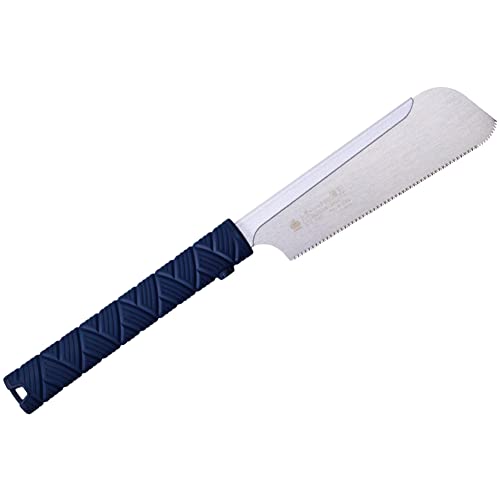
Gyokucho 770-3500 Razor Dozuki Saw
Gyokucho
- ✓Back-reinforced blade
- ✓Fine crosscut teeth
- ✓For precision joinery
- ✓Japanese dozuki design
Pros
- Dozuki style: reinforced back keeps the blade perfectly straight during precision cuts
- Fine crosscut teeth produce the cleanest cut of any hand saw tested
- The Japanese equivalent of a Western backsaw -- used for dovetails and joinery
- Gyokucho precision and impulse hardening in the finest-tooth saw category
Cons
- Back reinforcement limits depth of cut
- Fine teeth are slow in thick or coarse stock
Best Japanese dozuki saw. The Gyokucho dozuki is the Japanese answer to the Western backsaw. Fine teeth, back reinforcement, and Gyokucho's precision tooth geometry produce the cleanest possible saw cut for dovetails and precision joinery. The correct pairing with a ryoba for a complete Japanese saw toolkit.
A sharp hand saw beats a dull power tool for accuracy every time, especially in tight joinery where a wandering cut ruins the fit. Most woodworkers just haven't picked up the right one yet.
This lineup of eight hand saws for woodworking splits fairly evenly between Western push saws and Japanese pull saws, and the difference between them is bigger than most beginners expect.
Gyokucho's Razorsaw line takes four of the eight spots, priced from $32.99 to $38.99, a reflection of how consistently their impulse-hardened teeth hold an edge across ryoba, kataba, and dozuki styles.
The best overall is the Gyokucho Razorsaw 9-1/2-Inch Double Edge Ryoba, at $34.09. Its dual-edge blade puts crosscut teeth on one side and rip teeth on the other, and the pull-stroke action removes material with a thinner kerf and less effort than any push saw in the test.
Push Saw vs Pull Saw
Western-style push saws: cut on the push stroke. The sawing motion is away from the body. Blades are thicker and stiffer to resist the compression load during the push stroke. Traditional in North America and Europe.
Japanese-style pull saws: cut on the pull stroke. The sawing motion is toward the body. Because the blade is under tension during cutting, it can be much thinner -- typically 0.3 to 0.5mm vs 1mm+ for Western blades. The thinner kerf removes less material, requires less effort, and produces a cleaner cut surface.
Most experienced furniture woodworkers who try Japanese pull saws prefer them for the cleaner cut and lighter effort required. Both styles produce accurate cuts when used correctly.
Tooth Count: Fine vs Coarse
Teeth per inch (TPI) determines cut speed and cut quality:
Low TPI (5-8): coarse, fast cut. More tearout. For rough work and green wood.
Medium TPI (10-14): the range for most furniture woodworking crosscuts and rips.
High TPI (15-25): the fine-tooth range for dovetails, miters, and joinery. Slower cut, cleanest surface.
Match the tooth count to the work:
- Rough cutting lumber: 7 to 9 TPI
- General furniture crosscutting: 10 to 14 TPI
- Dovetails and precision joinery: 16 to 20+ TPI
Rip vs Crosscut Teeth
Crosscut teeth: filed at an angle to slice across wood grain. Produces a clean surface perpendicular to the grain. The correct tooth for most furniture crosscuts.
Rip teeth: filed straight across to scrape and tear along the grain. Fast and aggressive along-grain cuts. The correct tooth for ripping planks and cutting tenon cheeks along the grain.
A dual-edge Japanese saw or separate rip and crosscut saws covers both cutting directions.
Sharpening vs Replacement
Traditional hand-filed saws (Spear & Jackson): the teeth can be resharpened. A triangular file restores the tooth geometry. A properly sharpened premium saw outperforms a new budget saw.
Impulse-hardened teeth (Stanley SharpTooth, Gyokucho, Irwin): hardened teeth that cannot be resharpened with standard files. Produce excellent results when sharp, but the entire blade must be replaced when dull.
For woodworkers who hand-sharpen their own tools, a traditional hand-filed backsaw like the Spear & Jackson tenon saw is the correct lifetime investment.
Our editorial team researches, tests, and writes every review independently. We never accept payment for placement.