Best Hand Plane for Beginners 2026: 8 Planes to Start With
Last updated: 2026-08-21 · By NicheHive Editorial
This article contains affiliate links. If you purchase through these links, we may earn a commission at no extra cost to you. As an Amazon Associate, NicheHive earns from qualifying purchases. See our full disclosure.
A hand plane smooths, flattens, and fits wood without sandpaper marks. We tested 8 hand planes for flatness, iron quality, mouth adjustment, and ease of setup for woodworkers starting with hand tools.
Our Top Picks
- #1Stanley Sweetheart No. 62 Low Angle Jack Plane
- #2Kunz Plus Smoothing Plane No. 4
- #3Amazon Basics Woodworking Hand Planer No. 4 Adjustable Bench Plane
- #4Stanley Sweetheart No. 4 Smoothing Bench Plane
- #5Stanley Sweetheart No. 60-1/2 Low Angle Block Plane
- #6Stanley No. 5 Jack Plane
- #7Stanley No. 4 Sweetheart Premium Bench Plane with A2 Steel
- #8Crown 20180 Cabinet Scraper, Carbon Steel

Stanley Sweetheart No. 62 Low Angle Jack Plane
Stanley
- ✓Low angle (12 degree bed)
- ✓A2 steel iron
- ✓Adjustable mouth
- ✓One-piece cast base and frog
Pros
- Low angle bed cuts difficult grain (end grain, reversing grain) more cleanly than standard 45-degree beds
- A2 steel iron holds an edge longer than the softer steel in budget Stanley planes
- Adjustable mouth allows closing the opening for fine shaving cuts or opening for heavy removal
- One of the most commonly recommended single planes for woodworking beginners
Cons
- High price for a first plane
- Low angle planes require a sharpened bevel angle higher than standard to compensate
Best overall beginner hand plane. The Stanley Sweetheart No. 62 Low Angle Jack is a versatile single plane. Low angle cuts end grain and difficult grain more cleanly than standard planes, and the Sweetheart line's tighter tolerances reduce the tuning required compared to a vintage or budget plane. A strong first plane if budget allows.

Kunz Plus Smoothing Plane No. 4
Kunz
- ✓No. 4 bench plane
- ✓Precision-ground cast body
- ✓High carbon steel iron
- ✓German made
Pros
- Kunz produces a premium German hand plane standard -- precision-machined to tight tolerances
- High carbon steel iron takes a very fine edge and is straightforward to sharpen
- Arrives well tuned from the factory -- minimal setup required
- The No. 4 is the most versatile bench plane size -- for smoothing, joint fitting, and general work
Cons
- Very high price for a first plane
- Fewer aftermarket parts and accessories than Stanley-pattern planes
Best premium bench plane. The Kunz Plus No. 4 is the correct plane for woodworkers who want to invest once in a precision tool. German made to a high production standard, it arrives well tuned and performs at the level of the best vintage planes without requiring restoration.
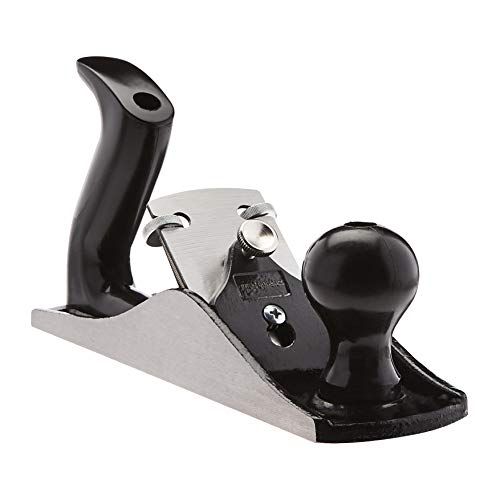
Amazon Basics Woodworking Hand Planer No. 4 Adjustable Bench Plane
Amazon Basics
- ✓No. 4 size
- ✓2-inch steel blade
- ✓Adjustable depth and lateral controls
- ✓Budget price
Pros
- 2-inch steel blade -- takes a workable edge after the standard new-plane sharpening
- Lowest price of any usable No. 4 bench plane -- accessible for a first-time buyer
- Adjustable depth and lateral controls work the same way as premium planes, useful for learning plane anatomy
- The most practical budget alternative to Stanley and Kunz
Cons
- Requires more sole-flattening and iron-sharpening work than premium planes before it performs well
- Less consistent casting quality than Stanley or Kunz
Best value bench plane. The Amazon Basics No. 4 is the correct bench plane for woodworkers who want to learn hand planing without a large upfront investment. It needs the standard new-plane tuning -- flatten the sole, flatten the iron back, sharpen the iron -- but once tuned it performs adequately for practice and small projects.

Stanley Sweetheart No. 4 Smoothing Bench Plane
Stanley
- ✓Stanley Sweetheart line
- ✓Better than budget Stanley
- ✓Chrome casting
- ✓No. 4 size
Pros
- Stanley Sweetheart line is the improved version over budget Stanley -- better iron and casting
- The original Stanley No. 4 form factor -- the most successful bench plane design in history
- Lower price than WoodRiver and Veritas
- The correct choice for woodworkers who want to learn on a Stanley before committing to a premium plane
Cons
- Still requires flattening the sole and back of the iron before first use
- Chrome casting is more brittle than ductile iron (Lie-Nielsen)
Best Stanley bench plane. The Stanley Sweetheart No. 4 is the correct entry plane for woodworkers who want to learn hand planing on a Stanley without buying vintage. Less setup required than budget Stanley, but still requires the standard new-plane tuning: flatten the sole, flatten the iron back, sharpen the iron.

Stanley Sweetheart No. 60-1/2 Low Angle Block Plane
Stanley
- ✓Low angle block plane
- ✓One-piece cast base and frog
- ✓A2 steel iron
- ✓Adjustable throat
Pros
- One-hand block plane is the tool woodworkers reach for most often -- chamfering, trimming, fitting joints
- Low angle bed handles end grain cleanly, which a standard bench plane struggles with
- A2 steel iron holds an edge through repeated small trimming cuts
- Small size makes it easy to carry and keep within reach at the bench
Cons
- Too small for flattening or smoothing a full board face
- Not a substitute for a No. 4 or No. 5 bench plane in a beginner kit
Best companion block plane. The Stanley Sweetheart No. 60-1/2 is the tool that gets picked up constantly for small trimming, chamfering, and end-grain cleanup tasks that a full-size bench plane is too large for. A worthwhile second plane alongside a No. 4 or No. 5.

Stanley No. 5 Jack Plane
Stanley
- ✓No. 5 jack plane
- ✓Cast iron body
- ✓Rosewood-style handle and knob
- ✓14-inch length
Pros
- The No. 5 (jack plane) is the most useful single size for stock preparation, jointing smaller work, and rough smoothing
- Classic Stanley Bailey-pattern body -- widely understood, easy to find parts and upgrades for
- 14-inch length bridges the gap between a No. 4 smoother and a No. 7 jointer
- Lower price than premium jack planes, a reasonable second plane after a No. 4
Cons
- Requires the standard new-plane tuning before it performs well -- flatten the sole, flatten the iron back, sharpen the iron
- Stock iron is thinner and softer than premium A2 irons -- needs more frequent resharpening
Best basic jack plane. The Stanley No. 5 covers stock preparation and general-purpose planing that a No. 4 smoother is too short for. It needs the usual new-plane tuning, but the Bailey-pattern design is well understood and easy to maintain, making it a practical second plane for a beginner's kit.

Stanley No. 4 Sweetheart Premium Bench Plane with A2 Steel
Stanley
- ✓No. 4 size
- ✓Extra-thick A2 steel iron
- ✓One-piece cast base and frog
- ✓Norris-type adjuster with lateral lock
Pros
- Extra-thick A2 steel iron holds an edge significantly longer than standard-thickness irons
- One-piece base and frog casting reduces chatter compared to separate-frog designs
- Norris-type adjuster combines depth and lateral adjustment in one control
- A step up from the standard Sweetheart line for woodworkers who plan to plane difficult domestic hardwoods regularly
Cons
- Higher price than the standard-iron Sweetheart No. 4
- A2 steel is harder to sharpen freehand than O1 for beginners without a honing guide
Best A2-steel bench plane for beginners who know they'll be planing harder woods. The upgraded iron holds an edge through more strokes between sharpenings, at the cost of a steeper up-front price and a slightly harder sharpening routine.

Crown 20180 Cabinet Scraper, Carbon Steel
Crown
- ✓Rectangular cabinet scraper
- ✓6-inch x 3-inch blade
- ✓Hardened and tempered carbon steel
- ✓Crown UK quality
Pros
- Cabinet scraper removes thin shavings for glass-smooth surfaces without sandpaper
- Used after hand planing to remove any remaining plane marks
- Crown carbon steel takes and holds a burnished hook well at a moderate price
- The correct companion tool to a bench plane for furniture surface preparation
Cons
- Requires a separate burnisher and technique to set the hook (cutting edge)
- Not a substitute for a bench plane in material removal rate
Best cabinet scraper. The Crown 20180 cabinet scraper is the correct companion to any bench plane. After the plane has produced a flat surface, the scraper removes the remaining plane marks without sandpaper, leaving a surface that accepts stain and finish without raised grain. An essential hand tool addition.
Most people who try hand planing once and give up on it aren't bad at it. They started with a plane that needed hours of tuning before it could take a clean shaving, and nobody told them that going in.
The right hand plane for a beginner shortens that learning curve considerably.
We tested eight planes spanning from a $34.99 budget option to a $199.99 premium model, and setup quality mattered more than price or brand name.
The Stanley Sweetheart No. 62 Low Angle Jack Plane, at $178.99, stood out. Its low-angle bed handles end grain and difficult grain more cleanly than a standard 45-degree plane, and the adjustable mouth is easier to dial in than most planes a first-time buyer will encounter.
Hand Plane Sizes and Numbering
Stanley established the hand plane numbering system still used today:
- No. 1 to 4: smooth planes. Short length (7 to 9 inches). For final smoothing on already-flat surfaces.
- No. 5: jack plane. Medium length (14 inches). For general material preparation and flattening. The most versatile single plane.
- No. 6: fore plane. Longer than jack (18 inches). For flattening longer boards.
- No. 7 and 8: jointer planes. Very long (22 to 24 inches). For jointing edges true.
For a beginner: a No. 4 or No. 5 covers 90% of furniture woodworking planing tasks.
Bench Angle vs Low Angle
Standard angle (45 degrees): the traditional bedding angle. Produces a fine surface on most straight-grained woods. With a back-bevel or tight mouth, also works on difficult grain.
Low angle (12 degrees): the blade beds at 12 degrees, bevel up. Effective cutting angle depends on the sharpening bevel. For difficult grain and end grain, low angle planes cut more cleanly without tearout.
For beginners: a low angle jack plane (Stanley Sweetheart No. 62) is the most versatile single plane if budget allows. Otherwise, a standard No. 4 bench plane (Stanley Sweetheart, Amazon Basics) covers the most common applications.
Tuning a New Plane
All new planes (except premium models that arrive factory-tuned, like Kunz Plus) require some tuning before first use:
- Flatten the sole: the sole must be flat within 0.002 inches for the plane to work correctly. Lap the sole on sandpaper on a flat reference surface.
- Flatten the iron back: the back of the iron must be perfectly flat near the cutting edge. Lap on a fine stone.
- Sharpen the iron: new planes arrive blunt -- sharpen to shaving-sharp before first use.
This process takes 1 to 2 hours. After initial tuning, maintenance requires only regular iron sharpening.
Reading Grain Direction
Planing against the grain causes tearout -- the blade lifts fibers ahead of the cut. The correct direction is with the grain -- the blade rides down along the grain fibers.
Reading grain direction: look at the edge of the board. The grain lines angle up toward the face you are planing. Move the plane in the direction these lines point (into the surface, not up out of it).
When grain reverses direction, the correct approach is either a tighter mouth (smaller opening in front of the blade), a higher cutting angle (using a different bevel angle), or a cabinet scraper.
Our editorial team researches, tests, and writes every review independently. We never accept payment for placement.