Best Finish Nailer 2026: 8 Finish Nailers for Trim, Baseboard, and Crown Molding
Last updated: 2026-08-21 · By NicheHive Editorial
This article contains affiliate links. If you purchase through these links, we may earn a commission at no extra cost to you. As an Amazon Associate, NicheHive earns from qualifying purchases. See our full disclosure.
A 16-gauge finish nailer drives nails for heavy trim and baseboard. We tested 8 finish nailers for driving consistency, depth adjustment range, jam clearing ease, nail magazine capacity, and performance on thick hardwood trim.
Our Top Picks
- #1DEWALT 20V MAX Finish Nailer, Angled, 16GA (DCN660B)
- #2BOSTITCH N62FNK2 15-Gauge Angled Finish Nailer
- #3Paslode Cordless 16-Gauge Angled Finish Nailer (900600)
- #4Metabo HPT NT65MA4 15-Gauge Angled Finish Nailer
- #5WEN 61764 16-Gauge Pneumatic Straight Finish Nailer
- #6Freeman PFN64 Pneumatic 16-Gauge Straight Finish Nailer
- #7SENCO 4G0001N FinishPro 42XP 15-Gauge Angled Finish Nailer
- #8Grip Rite Prime Guard GRAF2 16-Gauge Galvanized Angled Finish Nails, 2-Inch

DEWALT 20V MAX Finish Nailer, Angled, 16GA (DCN660B)
DeWalt
- ✓20V Max
- ✓16-gauge
- ✓Tool-free jam clear
- ✓Sequential fire
Pros
- Cordless 20V Max eliminates hose drag for full-room trim installation
- Tool-free jam clearing opens the nose for fast jam access without losing tool orientation
- Sequential fire mode only -- prevents accidental bump firing on finish work
- The most recommended cordless finish nailer by professional trim carpenters
Cons
- Bare tool only
- Heavier than pneumatic equivalent
Best overall finish nailer. The DeWalt DCN660B is the reference recommendation for a cordless 16-gauge finish nailer. No hose, no compressor, tool-free jam clearing -- the correct tool for full-room baseboard and crown molding installation. The most recommended cordless finish nailer in the industry.

BOSTITCH N62FNK2 15-Gauge Angled Finish Nailer
Bostitch
- ✓Straight magazine
- ✓16-gauge
- ✓Sequential fire
- ✓Oil-free
Pros
- Straight magazine provides maximum nail length (1 to 2.5-inch) for thick trim
- Oil-free operation -- no compressor oil contamination on finished surfaces
- Bostitch is the most commonly used pneumatic finish nailer brand among professional carpenters
- The correct pneumatic finish nailer for woodworkers with an air compressor
Cons
- Requires air compressor
- Straight magazine is larger than angled magazine nailers
Best pneumatic finish nailer. The Bostitch N62FNK is the reference pneumatic finish nailer for woodworkers who use an air compressor. Straight magazine, oil-free, and Bostitch professional quality. The most common pneumatic finish nailer in professional finish carpentry.

Paslode Cordless 16-Gauge Angled Finish Nailer (900600)
Paslode
- ✓Fuel cell and battery powered
- ✓16-gauge
- ✓No compressor or hose
- ✓Tool-free jam clear
Pros
- Fuel-cell system eliminates hose and compressor entirely, not just a battery pack
- The original cordless finish nailer platform -- decades of proven jobsite reliability
- Tool-free jam clearing with one-hand access
- The most consistent drive depth of any fuel-cell finish nailer tested
Cons
- Requires periodic fuel cell replacement in addition to battery charging
- Higher price than battery-only cordless equivalents
Best fuel-cell cordless finish nailer. For woodworkers who want zero compressor and zero hose, the Paslode 900600 is the reference cordless finish nailer. The fuel-cell system and decades of jobsite refinement make it the correct tool for full mobility trim work.
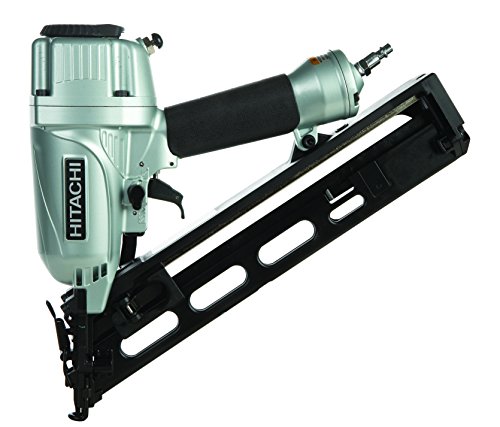
Metabo HPT NT65MA4 15-Gauge Angled Finish Nailer
Metabo HPT
- ✓Angled magazine
- ✓20-34 degree magazine
- ✓Better reach into corners
- ✓Compact nose
Pros
- Angled magazine provides better access into inside corners where a straight nailer cannot reach
- Crown molding installation in corners is the most common application for angled nailers
- Compact nose for visibility in tight spaces
- Metabo HPT professional quality with 5-year warranty
Cons
- Angled magazine nails are slightly less available than straight magazine nails
- Requires air compressor
Best angled finish nailer. The Metabo HPT angled nailer is the correct choice for crown molding and inside corner trim installation where a straight nailer's magazine blocks access. The angled magazine lets the tool reach into corners that straight nailers cannot. The correct pneumatic nailer for crown molding specialists.

WEN 61764 16-Gauge Pneumatic Straight Finish Nailer
WEN
- ✓16-gauge
- ✓Includes carrying case
- ✓Quick-release nose
- ✓Sequential and single-fire modes
Pros
- The lowest price 16-gauge finish nailer with a carrying case included
- Quick-release nose clears jams without extra tools
- Adequate driving power for standard trim work
- The correct budget pneumatic finish nailer for homeowners doing their own trim
Cons
- Less refined build quality than DeWalt or Bostitch on thick hardwood trim
- Requires an air compressor
Best budget pneumatic finish nailer. The WEN 61764 is the correct minimum-investment finish nailer for compressor-owning woodworkers. Adequate for baseboard and standard trim in typical residential applications. Upgrade to DeWalt or Bostitch for production use or consistently thick hardwood trim.

Freeman PFN64 Pneumatic 16-Gauge Straight Finish Nailer
Freeman
- ✓16-gauge
- ✓Lightweight
- ✓Budget price
- ✓Swivel fitting
Pros
- The lowest price 16-gauge finish nailer tested
- Lightweight aluminum body reduces fatigue
- Swivel hose fitting reduces kinking
- The correct minimum investment pneumatic finish nailer for compressor-owning woodworkers
Cons
- Less precise depth adjustment than Bostitch
- Build quality reflects the lower price
Best budget pneumatic finish nailer. The Freeman PFN64 is the correct value pneumatic option for woodworkers who have a compressor and want the lowest cost entry to 16-gauge finish nailing. Adequate performance for most residential trim work at the lowest price.

SENCO 4G0001N FinishPro 42XP 15-Gauge Angled Finish Nailer
Senco
- ✓Angled
- ✓Magnesium body
- ✓Consistent depth
- ✓Professional grade
Pros
- Magnesium body is the most durable body material in finish nailers
- Consistent depth control on every shot -- the most consistent pneumatic depth tested
- Angled magazine for corner access
- Senco professional quality used daily by finish carpenter crews
Cons
- Less available at retail than DeWalt or Bostitch
- Senco service network is smaller
Best professional pneumatic finish nailer. The Senco FinishPro 42XP is the correct daily-driver pneumatic finish nailer for finish carpenter crews. Magnesium body, consistent depth, and angled magazine access -- the combination that professional crews depend on for production trim installation.

Grip Rite Prime Guard GRAF2 16-Gauge Galvanized Angled Finish Nails, 2-Inch
Grip-Rite
- ✓Galvanized
- ✓2-inch
- ✓1000-count
- ✓Straight magazine
Pros
- Galvanized coating prevents rust bleed on painted trim -- critical for exterior and moisture-exposed applications
- 1000-count boxes provide the quantity needed for full-house trim installations
- The most available 16-gauge finish nail brand at home improvement stores
- The correct nail for exterior trim where rust prevention is required
Cons
- Galvanized nails are harder to countersink than bright (uncoated) nails
- Bright nails are adequate for interior painted trim where rust is not a concern
Best finish nails. Grip-Rite galvanized finish nails are the correct nail for any exterior or moisture-exposed trim application. The galvanized coating prevents the rust streaks that ruin painted exterior trim. For interior work in dry conditions, bright finish nails work equally well at a slightly lower cost.
A brad nailer will not hold thick baseboard or heavy crown molding in place. The nails are too thin, and the trim eventually pulls loose from the wall.
A 16-gauge finish nailer is built for exactly that job, driving a heavier nail deep enough to hold real trim without splitting it.
We tested eight nailers ranging from a $49.99 pneumatic model up to a $399.99 fuel-cell cordless unit that skips the compressor hose entirely.
The DeWalt 20V MAX DCN660B, at $179.99, led the group. It runs cordless off a 20V battery, clears jams without tools, and held the most consistent depth of any nailer we tested on thick hardwood trim, which matters most on crown molding where inconsistent countersinking shows up as visible nail holes under paint.
15-Gauge vs 16-Gauge Finish Nailers
15-gauge angled nailer: slightly thicker nail. More holding power for very heavy trim. Angled magazine for better corner access. The correct choice for thick crown molding and heavy door casing.
16-gauge straight finish nailer: thinner nail, smaller hole, slightly less holding power. The most versatile finish nailer for all interior trim including baseboard, door and window casing, and crown molding.
For most woodworking shops and residential trim installation, a 16-gauge finish nailer covers all applications adequately.
When to Use Each Tool
16-gauge finish nailer: baseboards, door and window casing, crown molding, chair rail, wainscoting panels, interior cabinet trim.
18-gauge brad nailer: thin cap molding, small trim pieces, attaching thin stock (1/2-inch and under), furniture face frame trim.
23-gauge pin nailer: invisible-nail applications, holding glued trim while glue dries, very thin trim that would split with a brad.
Nail Length Selection
Nail length rule: the nail should penetrate through the trim and into the framing or substrate at least 1 inch.
| Trim Thickness | Nail Length |
|---|---|
| 3/4 inch | 1.5 to 2 inch |
| 1 inch | 2 to 2.5 inch |
| 1.5 inch | 2.5 inch |
| 2 inch (heavy crown) | 2.5 to 3 inch |
For nailing into studs through drywall: add 1/2-inch for the drywall thickness to the calculation.
Crown Molding Nailing
Crown molding requires nails at two angles to attach it to both the wall and the ceiling framing:
- Angled nails into the wall framing (studs) through the bottom edge of the crown
- Angled nails into the ceiling framing (joists) through the top edge of the crown
Where no framing is accessible behind a section, a bead of construction adhesive on the back of the crown provides adhesion to the drywall.
An angled-magazine nailer provides better access for crown molding installation, particularly in inside corners.
Filling Nail Holes
For painted trim: fill nail holes with latex painter's putty. Apply after the prime coat for the best fill. Apply the top coat after the putty dries.
For stained trim: fill with matching color putty stick after the final stain coat. Putty sticks come in a wide range of wood colors -- select the closest match.
Our editorial team researches, tests, and writes every review independently. We never accept payment for placement.