Best Epoxy Glue for Wood 2026: 8 Two-Part Epoxies for Strong, Waterproof Wood Bonds
Last updated: 2026-08-21 · By NicheHive Editorial
This article contains affiliate links. If you purchase through these links, we may earn a commission at no extra cost to you. As an Amazon Associate, NicheHive earns from qualifying purchases. See our full disclosure.
Epoxy bonds wood where standard PVA glue fails: oily tropical hardwoods, end grain, mixed-material joints, and exterior applications. We tested 8 wood epoxies on bond strength, gap filling, and working time.
Our Top Picks
- #1Gorilla 2 Part Epoxy, 5 Minute Set, .85 oz Syringe
- #2System Three T-88 Structural Epoxy Adhesive, 1 Pt Bottle
- #3J-B Weld 8257 KwikWood Wood Repair Epoxy Putty Stick, 1 oz
- #4PC Products PC-Woody Wood Repair Epoxy Paste, 1.5 oz Two-Part (Pack of 12)
- #5Loctite Epoxy Marine, 0.85 fl oz Syringe (Pack of 2)
- #6Loctite Epoxy Extra Time, 0.85 fl oz Syringe, 60 Minute
- #7System Three Mirror Coat BarTop Epoxy Resin Coating, 1.5 Gallon
- #8Devcon 23145 2 Ton Flow-Mix Epoxy, 14 mL Self-Mixing Applicator
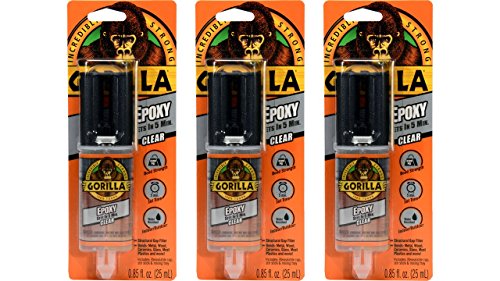
Gorilla 2 Part Epoxy, 5 Minute Set, .85 oz Syringe
Gorilla
- ✓5-minute open time
- ✓24-hour full cure
- ✓Dual-syringe mixing prevents contamination
- ✓Fills gaps up to 1/4 inch
Pros
- Dual syringe dispenses equal parts without measuring — prevents ratio errors
- 5-minute open time is long enough for most small repairs and short assemblies
- Fills gaps that PVA glue cannot bridge — good for rough or uneven joint surfaces
- Available at most hardware stores — convenient restock
Cons
- 5-minute open time too short for complex multi-joint assemblies
- Syringe does not reseal well — remaining epoxy may cure in the tip
Best overall epoxy for woodworking repairs and small assemblies. The dual syringe format eliminates mixing errors. Good for filling gaps, stabilizing cracks, and bonding dissimilar materials.

System Three T-88 Structural Epoxy Adhesive, 1 Pt Bottle
System Three
- ✓Marine-grade waterproof formula
- ✓High-performance structural bonding
- ✓Long working time
- ✓Sands and paints cleanly when cured
Pros
- Marine-grade waterproofing — trusted in boat building, superior to most wood epoxies
- Formulated for superior results under adverse and wet-bonding conditions
- Long open time gives ample working time for complex assemblies
- Cures to a rigid, sandable, paintable surface — suitable for exterior applications
Cons
- Higher price than consumer epoxy syringes
- Requires separate measuring of resin and hardener — more complex than pre-metered syringes
Best marine-grade wood epoxy. Used in boat building and outdoor furniture where waterproofing is non-negotiable. System Three T-88 is the structural epoxy standard for demanding wood bonding applications.

J-B Weld 8257 KwikWood Wood Repair Epoxy Putty Stick, 1 oz
J-B Weld
- ✓15-25 minute set time
- ✓900 PSI strength
- ✓Hand-moldable putty stick
- ✓Compatible with most wood species
Pros
- Hand-kneadable putty format makes it easy to pack into gaps, holes, and rot damage
- 15-25 minute working time gives more working room than 5-minute alternatives
- Cures to a paintable, sandable, drillable surface that will not shrink or rot
- Available at automotive and hardware stores widely
Cons
- Cured color is light tan — visible in light-colored wood if not painted or stained
- Harder to sand than West System when fully cured
Best structural wood epoxy putty. High strength and wide availability make this a reliable option for load-bearing repairs on dry rot, knot holes, and gouges. The tan color requires careful finishing on light-colored woods.

PC Products PC-Woody Wood Repair Epoxy Paste, 1.5 oz Two-Part (Pack of 12)
PC Products
- ✓Paste consistency — stays in place
- ✓Accepts nails and screws when cured
- ✓Sandable, stainable, paintable
- ✓Excellent adhesion to soft or rotted wood
Pros
- Paste consistency stays in fills without sagging — ideal for overhead or vertical repairs
- Accepts nails and screws after cure — treated as structural wood, not just filler
- Stains similarly to wood — less visible in natural finish applications than standard epoxy
- Excellent adhesion to degraded and rotted wood — the standard for exterior wood repair
Cons
- Shorter pot life than West System — must work quickly once mixed
- Paste format not suitable for gap-filling between tight-fitting joinery
Best wood repair epoxy. For rotted sills, damaged trim, and deteriorated outdoor furniture, PC-Woody produces a structural repair that accepts fasteners and stain. The industry standard for wood restoration.

Loctite Epoxy Marine, 0.85 fl oz Syringe (Pack of 2)
Loctite
- ✓Marine waterproof formula
- ✓Dual-syringe dispensing
- ✓Bonds wet surfaces
- ✓2-hour set time
Pros
- Marine-grade waterproofing in an accessible dual-syringe format
- Bonds wet surfaces — useful for below-waterline and damp exterior repairs
- 3,000 PSI bond strength once cured
- Loctite brand consistency and availability
Cons
- Less penetrating than a dedicated low-viscosity structural epoxy — not ideal for wood stabilization
- 2-hour set time is slower than 5-minute consumer epoxies
Best waterproof consumer epoxy. Marine formula bonds wet surfaces in a convenient syringe. Good for exterior joinery and waterproofing repairs without the complexity of a bulk marine epoxy system.

Loctite Epoxy Extra Time, 0.85 fl oz Syringe, 60 Minute
Loctite
- ✓60-minute set time
- ✓Translucent yellow cure
- ✓3,000 PSI bond strength
- ✓Dual-syringe dispensing
Pros
- 60-minute set time for complex assemblies that require extended positioning time
- More time to align parts before the epoxy sets compared to 5-minute formulas
- 3,000 PSI final bond strength — exceeds most consumer epoxies
- Dual syringe dispenses equal parts without measuring
Cons
- Long open time means longer clamp time than 5-minute epoxies — slower workflow
- Translucent yellow cure is more visible than a fully clear epoxy
Best slow-cure epoxy for complex assemblies. 60-minute working time eliminates the rushing that 5-minute epoxies force. Recommended for multi-joint furniture assemblies and intricate repairs.

System Three Mirror Coat BarTop Epoxy Resin Coating, 1.5 Gallon
System Three
- ✓Crystal clear cure
- ✓UV stabilized formula
- ✓Low blush in humid conditions
- ✓Self-leveling
Pros
- Crystal-clear cure reveals wood grain beneath — suitable for river tables and decorative fills
- UV stabilizer resists yellowing in indirect sunlight
- Low blush formulation stays clear in shop humidity — most epoxies develop a white haze
- Self-leveling reduces brush marks and lays flat without manipulation
Cons
- Not a high-strength structural epoxy — intended for coating and filling, not load-bearing joints
- Higher price than structural epoxies
Best epoxy for decorative wood finishing. River tables, live-edge fills, and transparent coating applications. Not a structural adhesive — System Three is for appearance, not load-bearing joints.

Devcon 23145 2 Ton Flow-Mix Epoxy, 14 mL Self-Mixing Applicator
Devcon
- ✓Self-mixing flow applicator
- ✓30-minute open time
- ✓No mix, no mess dispensing
- ✓Works on wood, metal, ceramic, glass
Pros
- Self-mixing applicator dispenses pre-ratioed epoxy with no measuring or mixing mess
- Devcon brand trust — long-established industrial epoxy manufacturer
- Precision applicator nozzle allows controlled application for small repairs
- Bonds to wood, metal, ceramic, and glass — good for mixed-material repairs
Cons
- 30-minute open time is slower than 5-minute epoxies — not ideal for quick fixes
- Applicator format costs more per repair than a basic twin-tube
Best no-mix epoxy for controlled application. The self-mixing applicator is the right choice for repairs where measuring and mixing by hand is inconvenient. Devcon brand adds confidence in quality.
Yellow wood glue is stronger and cheaper per joint, right up until it hits an oily teak board or a loose-fitting joint it can't bridge. That's where it quits and epoxy takes over.
The best epoxy glue for wood handles what PVA can't: gap-filling, end grain, wet surfaces, and mixed materials like wood-to-metal repairs.
We tested products from the $6.99 J-B Weld KwikWood putty stick up to the $74.99 System Three T-88, a structural epoxy sold by the pint for bigger glue-ups.
For most shop use, the Gorilla 2 Part Epoxy syringe at $7.99 is the one to grab. It sets in 5 minutes, the dual syringe meters equal parts automatically, and it fills gaps up to 1/4 inch that a bottle of PVA would never hold.
When to Use Epoxy Instead of Wood Glue
Standard PVA wood glue (yellow or white glue) outperforms epoxy in most basic woodworking joints — it's stronger per dollar, cleans up with water, and cures at room temperature without precise mixing. Use epoxy when PVA falls short:
- Oily hardwoods: Teak, rosewood, and ipe contain natural oils that prevent PVA from forming a strong bond. Epoxy adheres despite oil contamination.
- End grain joints: PVA is absorbed by end grain and forms a weak bond. Epoxy bridges end grain effectively.
- Gap-filling: PVA requires tight-fitting joints. Epoxy fills gaps up to 1/4 inch without losing strength.
- Mixed materials: Bonding wood to metal, glass, or stone. PVA only bonds to porous materials.
- Waterproof applications: Marine-grade epoxy handles full water immersion. PVA glue fails when repeatedly wetted and dried.
Mixing Ratios Matter
Epoxy is a two-part system: resin and hardener. The ratio must be correct — too much hardener or too much resin produces a weak, tacky, or brittle cure. Always follow the manufacturer's ratio exactly:
- 1:1 ratio (most consumer syringes): equal parts resin and hardener. Dual syringes dispense equal amounts automatically.
- 2:1 ratio (West System, System Three): two parts resin to one part hardener. Measure by volume, not weight.
- 5:1 ratio (some marine epoxies): more complex; requires careful measurement.
Dual-syringe consumer formats eliminate ratio errors. Bulk epoxies (West System, Bob Smith) require measuring and are more economical for large applications.
Working Time and Temperature
Epoxy working time decreases as temperature rises. At 90°F, a 30-minute epoxy may only give 15 minutes of working time. In a cold shop (below 60°F), the same epoxy may stay workable for 45+ minutes but will cure slowly.
For summer shop work: use slower hardeners or work in batches to avoid having epoxy cure in the mixing cup before use. For winter: bring epoxy to room temperature before mixing — cold resin is viscous and mixes poorly.
Clamping Epoxy Joints
Epoxy bonds do not require the same clamping pressure as PVA. Light clamping to maintain contact is sufficient — over-clamping squeezes out the epoxy layer and weakens the joint. For gap-filling applications, no clamping is needed at all.
For structural joints, tape or light rubber band pressure holds parts in alignment while the epoxy cures. Full cure takes 24 hours at room temperature for most consumer epoxies, despite short open times. Avoid loading the joint for at least 12 hours.
Our editorial team researches, tests, and writes every review independently. We never accept payment for placement.