Best Drawknife 2026: 8 Drawknives for Chair Making and Green Woodworking
Last updated: 2026-08-21 · By NicheHive Editorial
This article contains affiliate links. If you purchase through these links, we may earn a commission at no extra cost to you. As an Amazon Associate, NicheHive earns from qualifying purchases. See our full disclosure.
A drawknife is a two-handled blade pulled toward the user to rapidly shape wood. We tested 8 drawknives for blade geometry, handle comfort, steel quality, and performance on green wood chair legs and bow staves.
Our Top Picks
- #1Flexcut KN25 3-Inch Draw Knife
- #2Robert Larson Arno Flat Forged Drawknife
- #3Two Cherries 500-1320 225mm Straight Drawknife
- #4Morakniv Wood Carving Hook Knife 164
- #5Koch Industries 10-Inch Drawknife
- #6Two Cherries 500-2210 Inshave
- #7Shaving Horses, Lap Shaves and Other Woodland Vices
- #8DMT Diafold Diamond Flat Folding File, Extra-Coarse

Flexcut KN25 3-Inch Draw Knife
Flexcut
- ✓High-carbon steel
- ✓Ash handles
- ✓8-inch blade
- ✓American made
Pros
- The most commonly recommended production drawknife for green woodworking and chair making
- High-carbon steel takes and holds a sharp edge for extended shaping sessions
- Ash handles are comfortable and durable -- the traditional handle material for drawknives
- 8-inch blade is the most versatile size for chair legs, bow staves, and general shaping
Cons
- Requires initial sharpening from the factory edge
- High-carbon steel rusts -- requires oil after each use in humid shops
Best overall drawknife. The Flexcut KN25 is the reference recommendation for woodworkers starting with green woodworking and chair making. The high-carbon steel, ash handles, and 8-inch blade provide the correct tool for chair leg shaping, bow stave work, and rough curve shaping. Available new with consistent quality.

Robert Larson Arno Flat Forged Drawknife
Robert Larson
- ✓Hot-forged 6-inch blade
- ✓Ball-turned wooden handles
- ✓Leather protective sheath
- ✓European made
Pros
- Hot forging produces a denser, better-wearing edge than stamped modern alternatives
- Ball-turned handles are comfortable and distribute grip pressure evenly across long sessions
- Leather sheath protects the edge and makes safe storage simple
- A frequent recommendation among professional chairmakers for a primary forged drawknife
Cons
- Higher price than mass-produced alternatives
- Shorter 6-inch blade is better suited to detail work than wide stock removal
Best forged drawknife. The Robert Larson Arno is the correct tool for serious green woodworking that wants forged-blade quality without hunting for a restorable vintage tool. The hot-forged blade and ball-turned handles make it a durable primary drawknife.

Two Cherries 500-1320 225mm Straight Drawknife
Two Cherries
- ✓10-inch blade
- ✓German steel
- ✓Hardwood handles
- ✓German made
Pros
- Two Cherries is the most respected current-production tool maker for drawknives
- 10-inch blade for wider, faster cuts than the 8-inch -- correct for large green wood stock
- German steel holds an edge comparable to vintage American tools
- The correct new-production drawknife for woodworkers who cannot source vintage tools
Cons
- Higher price than Flexcut
- 10-inch blade is larger than needed for most chair leg work
Best German drawknife. The Two Cherries 10-inch drawknife is the correct new-production drawknife for serious green woodworking. German steel, 10-inch blade, and Two Cherries quality make it the best currently available new drawknife. The correct choice when vintage tools are not available or preferred.
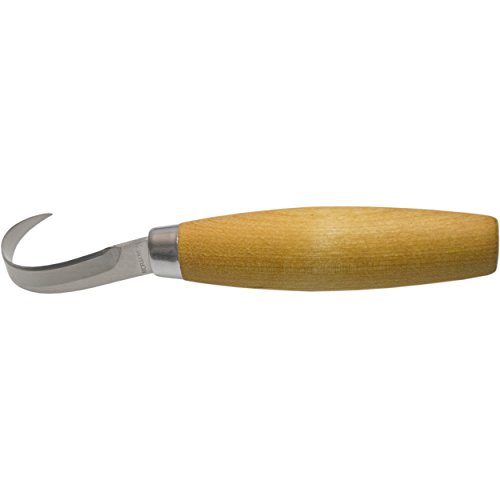
Morakniv Wood Carving Hook Knife 164
Morakniv
- ✓Sandvik stainless steel
- ✓0.5-inch internal radius hook
- ✓One-handed carving knife
- ✓Swedish made
Pros
- Morakniv is the Swedish maker known for razor-sharp steel at reasonable prices
- Arrives very sharp from the factory -- ready to use without initial sharpening
- The hooked blade complements a drawknife for hollowing spoons, bowls, and small concave surfaces
- The most affordable quality carving tool for woodworkers starting with green wood
Cons
- One-handed knife, not a two-handed drawknife -- a companion tool rather than a drawknife substitute
- Smaller scope of work than a full-size drawknife
Best budget companion tool. The Morakniv 164 hook knife is the correct low-cost addition to a drawknife kit for woodworkers starting with green woodworking. Swedish steel, factory sharp, and Morakniv quality at a low price point that pairs well with any of the drawknives above.

Koch Industries 10-Inch Drawknife
Koch
- ✓10-inch blade
- ✓Straight blade geometry
- ✓Cushioned grip handles
- ✓Wide-stock capable
Pros
- The wide 10-inch blade removes material faster than shorter drawknives on large stock
- Straight blade geometry suits flat-surface shaping and peg making
- Cushioned handles reduce hand fatigue during long shaping sessions
- A solid new-production drawknife for wide green wood stock at a reasonable price
Cons
- Heavier than a compact chairmaking drawknife
- Straight blade is less useful for curved work than a slightly curved blade
Best wide-blade drawknife. The Koch Industries 10-inch is the correct choice for woodworkers who regularly rough out wide stock -- bow staves, wide chair seat blanks, and general timber framing shaping -- where a shorter chairmaking drawknife would require more passes.

Two Cherries 500-2210 Inshave
Two Cherries
- ✓Curved blade
- ✓Bowl hollowing
- ✓Chair seat
- ✓Inshave design
Pros
- Curved inshave blade for hollowing chair seats and bowl blanks
- The correct tool for the saddle seat cut on Windsor chairs -- cannot be done with a straight drawknife
- Reaches into concave surfaces that a straight drawknife cannot access
- Used with a shaving horse for the most control during deep hollowing
Cons
- Specialized tool -- only useful for concave surface work
- Requires more skill to sharpen than a straight drawknife
Best inshave. An inshave (curved drawknife) is the correct tool for hollowing Windsor chair seats and any concave shaping. The curved blade reaches into the seat hollow that a straight drawknife cannot access. Required for the traditional Windsor chair saddle seat. Not a substitute for a straight drawknife -- both are needed.

Shaving Horses, Lap Shaves and Other Woodland Vices
Sean Hellman
- ✓Book of plans and techniques
- ✓Multiple shaving horse designs
- ✓Green woodworking focus
- ✓Diagrams and build guidance
Pros
- Covers several shaving horse designs so a builder can pick the one that fits their bench and body size
- Diagrams and cut lists make it practical to shop-build a shaving horse from dimensional lumber
- A shaving horse is the correct workholding for all drawknife and spokeshave work -- hands-free clamping via a foot pedal
- Written specifically for green woodworking, not general woodshop furniture building
Cons
- A book, not a physical tool -- still requires lumber and build time to get a working shaving horse
- Some designs assume access to a pole lathe or similar green woodworking setup
Best shaving horse reference. This book is the correct starting point for building a shaving horse, the essential workholding for drawknife and spokeshave work. The foot-operated clamp it teaches allows immediate workpiece repositioning without putting down the tool. The correct first green woodworking infrastructure investment before a pole lathe.

DMT Diafold Diamond Flat Folding File, Extra-Coarse
DMT
- ✓Diamond file
- ✓In-use sharpening
- ✓Multiple grits
- ✓Field sharpening
Pros
- Diamond files sharpen drawknives without removing them from the shaving horse -- sharpen in place
- No water or oil required -- correct for green wood shop use where liquids create mess
- Multiple grit options for coarse reshaping and fine honing
- The correct field-sharpening method for drawknives during an active shaping session
Cons
- Less effective for major edge repair than a bench stone
- Diamond files wear over time
Best drawknife sharpening tool. A diamond file is the correct sharpening tool for maintaining a drawknife during active use. The file sharpens the blade in place on the shaving horse without removing it -- critical for maintaining momentum during long shaping sessions. The correct companion to any drawknife for green woodworking.
Reach for a spokeshave to rough out a chair leg from a green log and you'll be at it all afternoon. A drawknife, pulled toward the body with two hands, clears the same stock in a fraction of the strokes.
That's why it's stayed the primary shaping tool on the shaving horse for as long as chairmakers have been building on one.
We tested eight drawknives, from a $24.99 Morakniv hook knife suited to detail work up to a $89.99 Two Cherries inshave built for hollowing concave seats.
The best drawknife overall is the Flexcut KN25, at $49.99. Its high-carbon steel holds an edge through a full shaping session, and the ash handles, the traditional material for this tool, hold up to the repeated pulling motion without fatiguing the hands.
Straight vs Curved Drawknife Blades
Drawknife blades have different curvatures that suit different applications:
Straight blade: the most common. Correct for flat-sided work -- squaring blanks, creating flat surfaces, and removing large amounts of material. Also used for riving and splitting operations.
Slightly curved (concave on the bevel side): the most versatile for chair making. The curve allows cutting into slightly concave surfaces and following the curve of a chair leg blank.
Highly curved (inshave): for hollowing -- chair seats, bowl blanks, and deep concave surfaces. A specialized tool that is the only correct tool for Windsor chair seat hollowing.
Working with Green vs Dry Wood
Green wood (freshly cut, high moisture content):
- Cuts much easier than dry wood -- the fibers separate cleanly
- Must be processed quickly before checking (drying cracks) develop
- The traditional material for chair making -- shaped green, assembled dry, the joints tighten as the green wood dries around dry mortises
Dry wood (kiln-dried lumber):
- Requires significantly more force
- Harder on blade edges
- Still possible with a drawknife but much slower than green wood
Most serious green woodworkers (chair makers, pole lathe turners, bodgers) work almost exclusively with green local timber.
Drawknife Angles and Presentation
The drawknife can be presented bevel-up or bevel-down:
Bevel down: removes material aggressively. Correct for rough stock removal. The bevel acts as a ramp, driving the blade into the wood.
Bevel up: more controlled, thinner shavings. Correct for finishing cuts. The bevel redirects the cut away from the wood surface.
The stroke angle also matters -- a skewing cut (blade angled to the direction of travel) produces a slicing action that cuts more easily in grain reversals.
Maintaining a Drawknife
A drawknife requires more maintenance than most hand tools:
- Sharpen regularly: a drawknife dulls faster than a plane iron (more surface area, less blade geometry refinement)
- Oil after use: high-carbon steel rusts rapidly -- wipe with an oily rag after every session
- Protect handles: wooden handles dry out -- treat with linseed oil twice a year
- Store safely: a drawknife with exposed blade is dangerous -- always store with the blade protected
Our editorial team researches, tests, and writes every review independently. We never accept payment for placement.