Best Coping Saw 2026: 8 Coping Saws for Trim, Molding, and Joinery
Last updated: 2026-08-21 · By NicheHive Editorial
This article contains affiliate links. If you purchase through these links, we may earn a commission at no extra cost to you. As an Amazon Associate, NicheHive earns from qualifying purchases. See our full disclosure.
A coping saw cuts inside curves and coped joints in trim molding. We tested 8 coping saws for frame stiffness, blade tension, throat depth, handle comfort, and performance on pine and hardwood trim.
Our Top Picks
- #1Stanley FatMax Coping Saw
- #2Bahco 301 6-1/2-Inch Coping Saw
- #3Olson CP30000BL Coping Saw Blade Assortment
- #4Eclipse 70-CP1R Wood Handle Coping Saw
- #5Gyokucho 770-3500 Razor Dozuki Pull-Stroke Saw
- #6Bahco 302 12-Inch Deep Throat Fretsaw
- #7Robert Larson 540-2000 High-Tension Coping Saw
- #8Eclipse 71-CP24R Coping Saw Blades, 24 TPI (Pack of 10)

Stanley FatMax Coping Saw
Stanley
- ✓4.75-inch throat
- ✓Blade rotation
- ✓Steel frame
- ✓12 TPI blade
Pros
- The most commonly used and recommended coping saw in North American woodworking
- Blade rotates 360 degrees in the frame -- correct for cutting in any direction
- 4.75-inch throat provides adequate clearance for most coped trim work
- The reference coping saw at the lowest price point
Cons
- Less blade tension than premium alternatives -- blade can flex on thick material
- Blade change requires unscrewing the handle
Best overall coping saw. The Stanley 15-106C is the reference recommendation for coping trim and molding. The rotating blade, adequate throat depth, and availability make it the correct coping saw for woodworkers and finish carpenters at the lowest investment. The most sold coping saw in North America.

Bahco 301 6-1/2-Inch Coping Saw
Bahco
- ✓High tension
- ✓Steel frame
- ✓Ergonomic handle
- ✓Swedish made
Pros
- The highest blade tension of any coping saw tested -- less blade flex on thick material
- Swedish made to the same standard as Bahco hand saws
- Ergonomic handle reduces fatigue during extended coped joint cutting
- The professional coping saw standard in Europe and increasingly in North American shops
Cons
- Higher price than Stanley
- Bahco blades must be used -- other brand blades may not match the pin spacing
Best premium coping saw. The Bahco 301 is the correct coping saw for woodworkers and carpenters who do significant coped joint work. The higher blade tension produces more accurate cuts on thick crown molding where a low-tension blade flexes. Swedish quality that outlasts budget alternatives.

Olson CP30000BL Coping Saw Blade Assortment
Olson
- ✓10-pack
- ✓Multiple TPI
- ✓Skip-tooth
- ✓Standard pin
Pros
- Olson is the most recommended coping saw blade brand -- better steel than included OEM blades
- 10-pack value allows frequent replacement -- fresh blades cut dramatically better
- Multiple TPI options: 10 TPI for wood, 15 TPI for fine wood and light metal
- Standard pin size fits most coping saws including Stanley and Bahco
Cons
- Must order -- not always available at hardware stores
- Standard pin blades are not compatible with all coping saw designs
Best coping saw blades. Olson blades are the correct upgrade from included coping saw blades. Better steel, sharper teeth, and 10-pack value that encourages regular replacement. A sharp coping saw blade makes significantly better cuts than a dull one -- replace blades frequently.

Eclipse 70-CP1R Wood Handle Coping Saw
Eclipse
- ✓High tension
- ✓UK made
- ✓Beech handle
- ✓Chrome frame
Pros
- The professional UK standard coping saw -- high tension chrome frame
- Beech handle is the traditional and most comfortable handle material
- The highest quality construction of any coping saw at this price
- Eclipse produces cutting tools used by British tradespeople as a career tool
Cons
- Available primarily online in North America
- Chrome frame is heavier than some alternatives
Best professional coping saw. The Eclipse 70-CP4 is the correct coping saw for woodworkers who want the best construction available in a traditional design. Chrome frame, beech handle, and UK manufacturing at a reasonable professional price. The correct tool for woodworkers who do significant hand tool trim work.
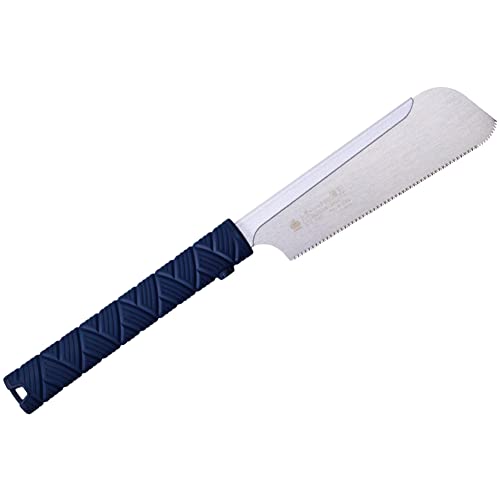
Gyokucho 770-3500 Razor Dozuki Pull-Stroke Saw
Gyokucho
- ✓Japanese steel
- ✓Fine cut
- ✓Pull stroke
- ✓Replaceable blade
Pros
- Japanese high-carbon steel provides a much finer edge than Western coping saw blades
- Pull-stroke design reduces blade flex for very precise, controlled cuts
- Fine rip teeth produce a smoother finish-carpentry cut surface than many Western saws
- The correct tool for premium finish carpentry paired with a coping saw for the roughing cut
Cons
- Pull-stroke technique takes practice for woodworkers used to Western push-stroke saws
- Not a direct blade swap for a standard coping saw frame -- it is a standalone joinery saw
Best Japanese pull-stroke saw for finish work. The Gyokucho Dozuki produces some of the finest cut surfaces available in a hand saw. The Japanese high-carbon steel, pull-stroke design, and fine teeth are the correct choice for premium finish work where surface quality is critical alongside a standard coping saw for tight inside curves.

Bahco 302 12-Inch Deep Throat Fretsaw
Bahco
- ✓12-inch deep throat
- ✓Swedish made
- ✓Beech handle
- ✓Fine fretsaw blade
Pros
- 12-inch throat for cutting curves and fretwork much deeper into a workpiece than a standard-throat coping saw
- Swedish made to the same Bahco standard as their coping saws
- Beech handle and plated steel frame hold tension well for fine, controlled cuts
- The correct saw for decorative fretwork and inside-curve cutting in wider panels and workpieces
Cons
- Less available at hardware stores than a standard-depth coping saw
- Deep throat adds length and makes the saw more awkward in tight spaces
Best deep throat saw. The Bahco 302 fretsaw is the correct tool for cutting curves and fretwork deeper into a workpiece than a standard coping saw allows. The 12-inch throat is useful for cutting inside curves in cabinet panels and larger workpieces. Swedish made with the tension and control Bahco tools are known for.

Robert Larson 540-2000 High-Tension Coping Saw
Robert Larson
- ✓Nickel-plated steel frame
- ✓Handle-adjustable tension
- ✓360-degree blade rotation
- ✓Standard pin blades
Pros
- Handle-adjustable tensioning provides noticeably higher blade tension than a basic Stanley-style frame
- High tension reduces blade flex -- produces more accurate cuts on thick material
- Durable nickel-plated steel frame with a comfortable turned handle
- A well-regarded upgrade coping saw at a moderate price
Cons
- Higher price than a basic Stanley coping saw
- Not as rigid as an aluminum lever-tension frame at the premium end of the category
Best high-tension coping saw. The Robert Larson 540-2000 is the correct upgrade coping saw for woodworkers who want noticeably higher blade tension than a basic frame without paying for a premium lever-tension aluminum saw. The correct tool for woodworkers who do significant fine joinery work with a coping saw.

Eclipse 71-CP24R Coping Saw Blades, 24 TPI (Pack of 10)
Eclipse
- ✓24 TPI
- ✓Pack of 10
- ✓Carbon spring steel
- ✓Standard pin ends
Pros
- 24 TPI fine-tooth blades produce a smoother coped joint surface than a standard 15 TPI blade
- Pack of 10 allows frequent replacement -- fresh blades cut dramatically better on fine trim work
- Carbon spring steel resists breakage better than budget included blades
- Standard pin ends fit most coping saw frames including Stanley, Eclipse, and Bahco
Cons
- Fine teeth cut slower than a coarser blade on thick stock
- More prone to breakage than coarser blades if twisted during the cut
Best fine-tooth coping saw blades. The Eclipse 71-CP24R pack is the correct upgrade for fine trim and joinery work where surface quality matters most. The 24 TPI tooth count and durable carbon spring steel produce a cleaner coped joint than a standard blade, and the 10-pack encourages replacing blades before they go dull.
Try to miter an inside corner where the walls aren't perfectly square, which they never are, and you'll see a visible gap no amount of caulk fully hides. A coped joint fixes that, and cutting one requires a coping saw.
Frame stiffness and blade tension decide how clean that cope comes out, which is why we tested 8 coping saws on exactly those two qualities, plus throat depth and handle comfort on pine and hardwood trim.
The Stanley FatMax is the reference pick at $14.99. Its blade rotates a full 360 degrees in the frame for cutting in any direction, and a 4.75-inch throat gives adequate clearance for most coped work.
It's also the most widely used coping saw in North American woodworking, though blade changes mean unscrewing the handle, and tension lags behind the premium alternatives on this list.
What a Coping Saw Is Used For
The coping saw's primary use in finish carpentry is cutting coped joints in inside corners of trim molding.
A butt joint at an inside corner leaves a visible gap when the molding is installed -- the two pieces of molding meet at a 45-degree miter. If the corner is not a perfect 90 degrees (and they never are), the miter gap opens visibly.
A coped joint avoids this: one piece of molding is cut square to the wall, the second piece is coped -- its profile is cut to overlay the first piece. The coped piece's profile matches exactly the profile of the first piece, hiding any gap at the corner.
The coping process:
- Cut the first piece of molding square to the wall
- On the second piece, cut a 45-degree bevel inward (the same angle as a miter)
- Use the coping saw to cut along the profile that the 45-degree bevel reveals
- The coped profile mates exactly against the face of the first piece
Coping Saw Blade Orientation
Coping saw blades cut on the push stroke or the pull stroke depending on blade orientation.
Teeth pointing toward the handle (traditional Western orientation): cuts on the push stroke. More common in American tools.
Teeth pointing away from the handle: cuts on the pull stroke. Less blade flex, more control. Used in Japanese coping tools and some premium Western tools.
Either orientation can be used -- choose based on preference and what your specific saw accommodates.
Blade Selection
For softwood trim (pine, poplar): 10 to 15 TPI. Faster cutting.
For hardwood trim (oak, cherry): 15 to 20 TPI. Smoother cut on dense material.
For very fine work (jewelry, thin stock): 20+ TPI. Slowest but finest cut.
Using a Coping Saw
- Mark the cut line on the face of the molding using a pencil
- Secure the molding in a vise or with a clamp -- coping saw work requires a stable workpiece
- Start the cut with the toe of the blade (tip) to establish a kerf before the full blade engages
- Cut along the profile line with smooth, even strokes -- let the saw do the work
- Final fitting: the coped profile will usually need slight adjustment with a rasp, file, or sandpaper to fit tight against the adjacent piece
Our editorial team researches, tests, and writes every review independently. We never accept payment for placement.