Best Compound Miter Saw 2026: 8 Miter Saws for Trim, Framing, and Woodworking
Last updated: 2026-08-21 · By NicheHive Editorial
This article contains affiliate links. If you purchase through these links, we may earn a commission at no extra cost to you. As an Amazon Associate, NicheHive earns from qualifying purchases. See our full disclosure.
Compound miter saws cut at two angles simultaneously — miter and bevel — for crown molding, picture frames, and complex trim work. We tested 8 compound and sliding compound miter saws on accuracy, motor power, and fence quality.
Our Top Picks
- #1DEWALT 12 Inch Double Bevel Sliding Compound Miter Saw (DWS779)
- #2BOSCH GCM12SD 15 Amp 12 Inch Corded Dual-Bevel Sliding Glide Miter Saw with 60 Tooth Saw Blade & MS1234 Miter Saw Length Stop
- #3Makita LS1019L 10" Dual-Bevel Sliding Compound Miter Saw with Laser
- #4CRAFTSMAN V20 Cordless Sliding Miter Saw, 7-1/4 inch, Single Bevel, Battery and Charger Included (CMCS714M1)
- #5SKIL MS6305-00 10-Inch Dual Bevel Sliding Compound Miter Saw
- #6Metabo HPT C12RSH2 12-Inch Sliding Compound Miter Saw
- #7Festool 575306 Kapex KS 120 REB Sliding Compound Miter Saw
- #8WEN MM1015 15-Amp 10-Inch Dual Bevel Sliding Compound Miter Saw
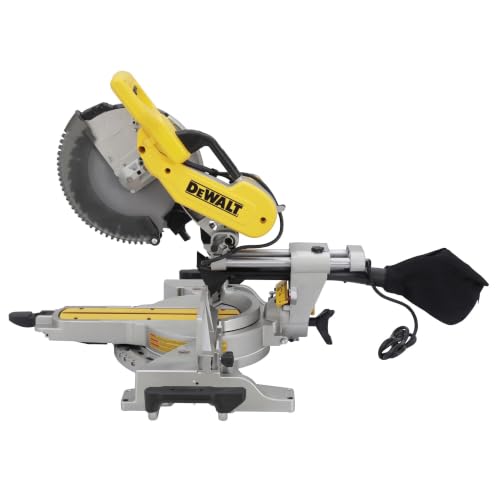
DEWALT 12 Inch Double Bevel Sliding Compound Miter Saw (DWS779)
DEWALT
- ✓15-amp motor
- ✓12-inch blade
- ✓14-inch horizontal cutting capacity
- ✓Tall sliding fence supports crown and base molding
Pros
- 14-inch horizontal capacity handles wide stock without repositioning
- Tall sliding fence supports crown molding upright for accurate nested compound cuts
- Cam-lock miter detent mechanism clicks accurately to common angles
- 15-amp motor handles 12-inch blades through hardwood without bogging
Cons
- Heavy at 56 lbs — not easy to move around the shop regularly
- No laser guide — add-on available separately
Best overall compound miter saw. The DEWALT DWS779 is the most common professional miter saw in North American construction and woodworking shops. 14-inch cut capacity, accurate detents, and tall fence make it the baseline to compare against.

BOSCH GCM12SD 15 Amp 12 Inch Corded Dual-Bevel Sliding Glide Miter Saw with 60 Tooth Saw Blade & MS1234 Miter Saw Length Stop
Bosch
- ✓Axial-glide sliding mechanism — smaller footprint than rail-slide saws
- ✓15-amp motor
- ✓Dual bevel — tilts left and right without flipping the workpiece
- ✓Electronic speed control
Pros
- Axial-glide mechanism needs only 3 inches of wall clearance vs 12+ for rail-slide saws
- Dual bevel enables left and right tilts without repositioning crown molding
- Electronic speed control maintains blade speed under load in hardwood
- Lower table height than many competitors — better ergonomics at workbench height
Cons
- Higher price than DEWALT DWS779
- Glide mechanism is complex and expensive to repair if damaged
Best for tight spaces. The axial-glide mechanism requires minimal wall clearance — the key advantage in small shops. Dual bevel and electronic speed control justify the premium over the DEWALT for serious woodworkers.

Makita LS1019L 10" Dual-Bevel Sliding Compound Miter Saw with Laser
Makita
- ✓10-inch blade
- ✓Laser guide built-in
- ✓Dual bevel
- ✓Direct-drive motor — quieter than belt-drive
Pros
- Built-in laser guide shows exact cut line — the best integrated laser on any saw tested
- Direct-drive motor is quieter and requires less maintenance than belt-drive designs
- Dual bevel handles crown and coped joints without workpiece repositioning
- Makita engineering quality is excellent — accurate detents out of the box
Cons
- 10-inch blade limits maximum cut depth vs 12-inch saws
- Higher price than entry-level 10-inch saws
Best 10-inch sliding miter saw. The built-in laser and Makita quality make this the cleanest cutting 10-inch saw tested. Lighter and easier to move than 12-inch saws while still handling most woodworking tasks.
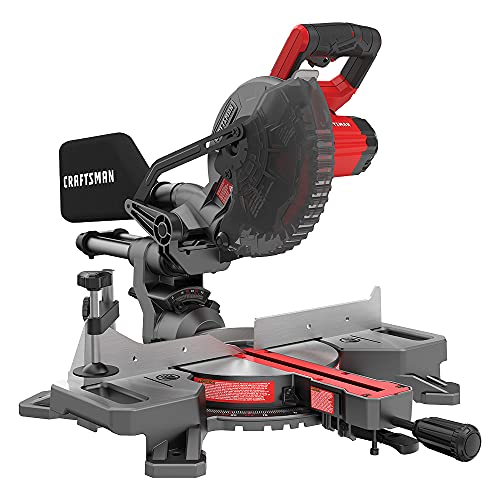
CRAFTSMAN V20 Cordless Sliding Miter Saw, 7-1/4 inch, Single Bevel, Battery and Charger Included (CMCS714M1)
CRAFTSMAN
- ✓20V MAX cordless — battery and charger included
- ✓7-1/4-inch blade
- ✓Single bevel
- ✓Sliding rail for extended crosscut capacity
Pros
- Lowest price on this list for a sliding compound miter saw with battery included
- Cordless operation — no cord to manage on job sites without power
- Compact 7-1/4-inch size is lightweight and easy to carry
- Sliding rail extends crosscut capacity beyond fixed-head compact saws
Cons
- 7-1/4-inch blade limits cut depth compared to 10 or 12-inch saws
- Single bevel only — no right-tilt without flipping the workpiece
Best budget compound miter saw. For hobbyist woodworkers and DIYers who cannot justify the DEWALT price or want cordless convenience, the Craftsman CMCS714M1 delivers functional sliding capability at a fraction of the cost.

SKIL MS6305-00 10-Inch Dual Bevel Sliding Compound Miter Saw
SKIL
- ✓15-amp motor
- ✓10-inch blade
- ✓LED shadow line
- ✓Dual bevel — left and right
Pros
- Dual bevel at the lowest price in the 12-inch segment
- Laser guide included — helpful for cut alignment without marking each piece
- 15-amp motor handles standard woodworking materials
- Simple setup — ready to cut out of the box
Cons
- No sliding carriage — cut capacity limited to blade diameter
- Fence quality lower than premium alternatives — check with a square before cutting trim
Entry-level dual bevel. The sliding carriage extends cut width beyond blade diameter alone, but the fence and detent quality are a step below premium alternatives. Adequate for baseboards, door casing, and picture frames.

Metabo HPT C12RSH2 12-Inch Sliding Compound Miter Saw
Metabo HPT
- ✓15.5-amp motor
- ✓12-inch sliding capacity
- ✓Compact sliding design — reduced rear footprint
- ✓Laser guide
Pros
- Lighter than DEWALT DWS779 — easier to move between sites
- Compact rear slide design requires less wall clearance than standard rail-slide saws
- 15.5-amp motor is the highest amperage on this list — handles demanding cuts well
- Laser guide built in at a competitive price
Cons
- Metabo HPT brand (formerly Hitachi) less represented in service centers than DEWALT
- Compact slide limits travel slightly compared to full-extension rail designs
Best balance of performance and weight. Lighter than DEWALT with a higher amp motor. The compact slide design suits shop use where wall clearance is limited. A strong value in the mid-range.

Festool 575306 Kapex KS 120 REB Sliding Compound Miter Saw
Festool
- ✓Dust extraction port — minimal chip scatter
- ✓Dual bevel
- ✓Electronic motor control
- ✓Compact folding design
Pros
- Dust extraction system captures the majority of chips — cleanest cut environment tested
- Electronic motor control maintains exact blade speed regardless of load
- Compact folding design collapses for transport — lightest 12V equivalent footprint
- Festool quality: angles accurate out of the box, adjustments minimal
Cons
- Extremely high price — difficult to justify outside of professional daily use
- Festool proprietary system — dust port designed for Festool extractors
Best premium miter saw. The dust extraction and electronic motor control set the Festool apart for cabinet shop and high-end trim work. Justifiable for daily professional use — the price is difficult to rationalize for hobbyists.

WEN MM1015 15-Amp 10-Inch Dual Bevel Sliding Compound Miter Saw
WEN
- ✓15-amp motor
- ✓10-inch blade
- ✓Bevel up to 45 degrees
- ✓Built-in clamp
Pros
- Lowest price for a functional 10-inch compound miter saw
- Built-in clamp holds workpieces during cuts without a separate accessory
- Compact and lightweight — easy to move around a small shop
- WEN brand provides accessible warranty service
Cons
- No sliding carriage — cut capacity limited to blade diameter
- Single bevel — only tilts left
- Fence calibration less precise than professional alternatives
Best entry-price miter saw. For beginners making picture frames, simple trim, and short crosscuts, the WEN MM10 delivers functional performance at the lowest price on this list. The single bevel and lack of sliding limit it significantly as skills advance.
A standard chop saw cuts one angle at a time. Crown molding, picture frames, and coped corners need two angles cut simultaneously, and that's a job a compound miter saw was built for.
We tested 8 compound and sliding compound miter saws for accuracy, motor power, and fence quality.
DEWALT's DWS779 came out on top. This 12-inch double bevel sliding model runs $399 and offers a 14-inch horizontal cutting capacity, wide enough to avoid repositioning stock mid-project.
Its tall sliding fence supports crown molding upright for accurate nested cuts, a detail that matters once you've fought a short fence trying to hold molding at the right angle.
At 56 pounds it's not a saw you'll want to haul around the shop daily, and the laser guide costs extra, but for the price it remains the benchmark most other saws on this list get measured against.
Compound vs Sliding Compound Miter Saw: Which Do You Need?
Compound miter saw: the blade head swings left and right (miter) AND tilts (bevel) simultaneously. Fixed blade position — cut width limited to the blade diameter. A 10-inch blade makes a cut approximately 5–6 inches wide at 90 degrees. Most affordable.
Sliding compound miter saw: same compound capability, plus the blade slides forward on rails to extend the cut. A 12-inch sliding saw cuts 14+ inches wide — handles full crown molding width and wide lumber. More expensive and takes up more wall space.
Dual bevel: tilts both left and right without repositioning the workpiece. Single bevel tilts one direction only — for opposite-direction cuts you flip the material. Dual bevel saves time on crown molding, saves mistakes on complex trim.
For most woodworking: a 10-inch compound miter saw handles door casing, picture frames, and basic trim. A 12-inch sliding compound saw handles crown molding, wide lumber, and production trim work. Dual bevel is worth the premium if you cut crown regularly.
Crown Molding Math
Cutting crown molding correctly is the most complex common use of a miter saw. Two methods:
Flat method (compound cut): Crown lies flat on the saw table. The miter and bevel angles are set simultaneously based on the spring angle of the molding. The saw does a true compound cut. Each profile requires different angle combinations — look up the spring angle of your molding, then look up the miter and bevel settings.
Nested method (simple cut): Crown is held against the fence at the exact angle it installs against the wall. The bevel is set to 0 degrees and only the miter angle changes. The saw cuts at a simple miter — no compound needed. Requires a tall fence (the DEWALT and Bosch have tall fences specifically for this).
Nested cutting is simpler for beginners. Flat cutting (compound) is faster for production when you understand the math.
Blade Selection for Miter Saws
The stock blades on most miter saws in this price range are functional but not optimal for fine woodworking:
- Fine crosscut blade (80+ teeth): produces the cleanest cuts in hardwood and MDF trim. Necessary for visible joints in cabinetry and furniture.
- General purpose (40–60 teeth): handles framing and rough trim — good for construction, rough for fine joinery.
- Negative hook angle: reduces tear-out on crosscuts through veneered panels. Worth the extra cost for visible cabinetry work.
Replace the stock blade with an 80-tooth Freud, Diablo, or Forrest blade to significantly improve cut quality without buying a better saw.
Miter Saw Accuracy: Check Before You Cut
New miter saws can be out of square from the factory. Before cutting trim, verify:
- 90-degree crosscut: cut a board, flip one piece, hold the cut faces together and look for a gap — two 1/2-degree errors add to 1 degree visible
- 45-degree miter: cut two pieces at 45 degrees, assemble the corner, check with a square — errors compound in four-corner assemblies
- Bevel at 90 degrees: place a reliable square against the fence, check the blade — should be exactly perpendicular
Most saws have adjustment screws for all three calibrations. Adjust before starting a project, not in the middle of cutting trim.
Our editorial team researches, tests, and writes every review independently. We never accept payment for placement.