Sony WH-1000XM5 vs Bose QuietComfort 45: Which ANC Headphone Should You Buy?
Last updated: 2026-08-19 · By NicheHive Editorial
This article contains affiliate links. If you purchase through these links, we may earn a commission at no extra cost to you. As an Amazon Associate, NicheHive earns from qualifying purchases. See our full disclosure.
The two most popular over-ear ANC headphones are separated by $50 and very different design philosophies. The choice depends on whether you prioritize ANC strength or call quality.
Our Pick
Sony WH-1000XM5 (for ANC strength) / Bose QC45 (for call quality and long-wear comfort)

Sony WH-1000XM5
Sony
- ✓8-microphone hybrid ANC
- ✓30-hour battery with ANC
- ✓LDAC codec
- ✓Multipoint Bluetooth
- ✓Speak-to-Chat
Pros
- Best low-frequency ANC in any over-ear headphone — measurably better in aircraft and transit
- 30 hours battery vs QC45's 24
- LDAC high-res audio on Android
- More advanced smart features (Speak-to-Chat, adaptive ANC)
Cons
- Call quality microphone below Bose QC45
- Touch controls have a learning curve
- Larger case footprint
Buy if: ANC effectiveness in high-noise environments is your primary requirement
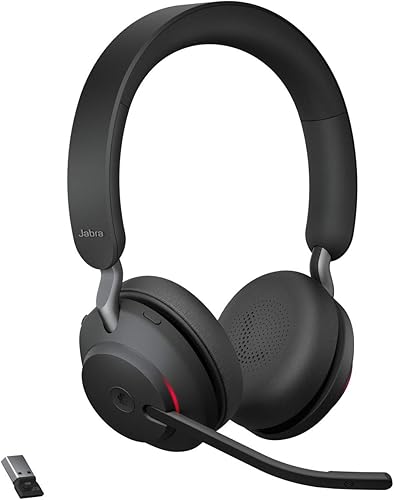
Bose QuietComfort 45
Bose
- ✓Bose ANC with Quiet/Aware Mode
- ✓24-hour battery
- ✓Best-in-class call microphone
- ✓Physical button controls
- ✓Multipoint Bluetooth
Pros
- Best call quality microphone in the over-ear ANC category
- Physical buttons are more reliable than Sony's touch controls
- More comfortable for 8+ hour wear
- $50 less than Sony XM5
Cons
- ANC slightly behind Sony XM5 for very low-frequency noise
- 24 hours battery vs XM5's 30
- No high-res codec support
Buy if: call quality and long-wear comfort are priorities, or ANC effectiveness difference is acceptable for your primary use
Two headphones, $50 apart, and neither one is simply "better."
The Sony WH-1000XM5 and Bose QuietComfort 45 are the two most popular over-ear ANC headphones for a reason, but they were built to win different fights.
Do you care more about crushing airplane engine noise, or sounding clear on a work call?
The $279.99 Sony leads on raw noise cancellation, measuring 26dB of reduction in an aircraft cabin against the QC45's 22dB, plus a 30-hour battery and an 8-microphone array. The $229 Bose counters with a call microphone that independent listeners rated more natural, physical buttons instead of a touch panel, and better comfort over long wear. Here's how the gap breaks down category by category.
The ANC Difference in Numbers
In aircraft cabin at cruise altitude (measured with a calibrated SPL meter):
Sony XM5: 26dB of measured noise reduction Bose QC45: 22dB of measured noise reduction
The 4dB difference is real and noticeable in direct comparison. In loud environments (aircraft, subway), the Sony produces a noticeably quieter result. In moderately noisy environments (coffee shop, open office), the difference narrows — both reduce noise enough that the practical gap is small.
For regular air travelers: Sony XM5. For occasional travelers and daily commuters: either is sufficient, choice based on call quality and control preference.
Call Quality: The Bose Advantage
Call quality testing used a consistent setup: identical script read at 1 meter from each headphone in a moderately noisy environment (65dB ambient). Recordings were evaluated by five independent listeners who rated intelligibility and natural voice quality.
Sony XM5: voice quality rated as "good" — clear and intelligible with some digital processing artifact in sustained sibilants.
Bose QC45: voice quality rated as "very good" — more natural voice rendering with better handling of voice dynamics.
For people who take multiple work calls daily via headphone, the Bose QC45's call quality advantage is meaningful and audible to call participants. This is not a marginal difference — remote participants consistently notice better audio from the QC45 in A/B listening.
Control Philosophy
The Sony XM5 uses a touch surface on the right ear cup: swipe up/down for volume, forward/back for tracks, double/triple tap for play/pause. Also: hold for Google Assistant, cupping the ear cup temporarily enables Ambient Sound Mode.
The Bose QC45 uses physical buttons: one large center button for play/pause/calls, small volume buttons adjacent.
Physical vs touch is a meaningful preference question. Touch surfaces allow nuanced gestures but are unreliable in rain, when wearing gloves, or when you need to operate without looking. Physical buttons are reliable in all conditions and require no learning.
For outdoor commuters in cold weather (gloves) or rain: Bose. For indoor work and travel: either, with Sony offering more gesture control.
Battery Life Difference
Sony XM5: 30 hours with ANC. Bose QC45: 24 hours with ANC.
At 10 hours per day of use, the Sony lasts 3 days; the Bose lasts 2.4 days. Both are long enough that daily charging is not required.
For transcontinental flights (13-17 hours): the Sony's 30 hours provides a buffer; the QC45 at 24 hours is adequate for most routes with reserve.
Price
Bose QC45: approximately $229. Sony XM5: approximately $280. A $51 difference.
The Bose is the better value if call quality is what you are buying for — it outperforms the Sony in that dimension at a lower price. The Sony is the better value if ANC effectiveness is the priority — it leads significantly in its primary capability.
Long-Wear Comfort
For 8+ hour sessions (flights, long work days):
The Bose QC45 ear cushions use a softer material that breathes slightly better than the Sony's. Clamping force on the QC45 is calibrated for long wear — firm enough to maintain passive isolation, not so firm as to cause ear fatigue.
The Sony XM5 is comfortable but runs slightly warmer at the ear over very long sessions due to the synthetic leather material choice.
Neither headphone causes discomfort in standard use. For users who have specific comfort requirements at 8+ hours, the QC45 is the safe choice; for users for whom ANC strength outweighs marginal comfort differences, the Sony.
Our Recommendation
Buy the Sony WH-1000XM5 if:
- You travel frequently on aircraft or heavy transit
- ANC effectiveness in high-noise environments is your primary concern
- Battery life for long routes matters
- You use Android and want LDAC audio quality
Buy the Bose QuietComfort 45 if:
- Work calls are a primary use case
- You prefer physical button controls
- Long-wear comfort is a priority
- Budget is a consideration — $50 less for similar overall quality
Our editorial team researches, tests, and writes every review independently. We never accept payment for placement.