Solar Cover vs. Safety Cover: Blue Wave NS420 vs. WaterWarden Mesh Compared
Last updated: 2026-09-02 · By NicheHive Editorial
This article contains affiliate links. If you purchase through these links, we may earn a commission at no extra cost to you. As an Amazon Associate, NicheHive earns from qualifying purchases. See our full disclosure.
Blue Wave NS420 solar cover vs. WaterWarden mesh safety cover side-by-side: what each one actually protects against, weight rating, heat gain, price, and which pool owners need one, the other, or both.
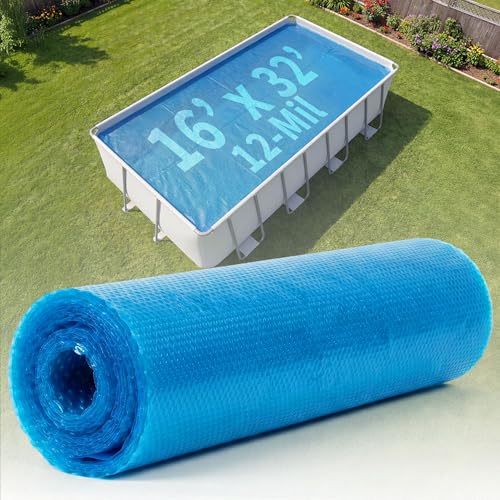
Blue Wave NS420 16x32 Ft Rectangle Solar Pool Cover 12-Mil Blue
Blue Wave
- ✓12-mil blue polyethylene bubble construction
- ✓16x32 ft rectangle sizing
- ✓5-year seam warranty
- ✓Raises water temperature up to 10-15 degrees F in full sun
- ✓Reduces evaporation by up to 95%
Pros
- Raises water temperature 10 to 15 degrees F under good sun exposure
- Blocks up to 95% of evaporation, cutting water and chemical loss
- Lightweight (well under 50 lbs for a 16x32) and easy to handle without a reel
- $100 to $150 price point, far cheaper than a safety cover
Cons
- Zero weight rating; must never be treated as a safety barrier
- 3 to 5 year realistic lifespan before UV and chemical exposure degrade the bubbles
- Provides no protection against debris, leaves, or unauthorized pool access

WaterWarden Inground Pool Safety Cover 20x40 Ft Rectangle, Blue Mesh
WaterWarden
- ✓ASTM F1346-certified polypropylene mesh
- ✓20x40 ft rectangular sizing
- ✓Full perimeter brass anchor system
- ✓Self-draining mesh weave
- ✓Blue mesh finish
Pros
- UL classified to ASTM F1346, rated to support an adult and child standing on it
- Mesh drains rain and snowmelt through automatically, no cover pump needed
- Blocks about 92% of sunlight, meaningfully reducing algae growth
- 10 to 15 year typical lifespan, far longer than a solar cover
Cons
- $500 to $1,200+ installed with hardware, several times the cost of a solar cover
- Provides no water heating; blocking sunlight actually works against solar gain
- Requires deck anchors, which means drilling into coping or decking to install
People shop for "pool covers" like it's one product. It isn't, and a solar cover vs. safety cover comparison shows exactly why.
The Blue Wave NS420, a $100 to $150 bubble cover, raises water temperature 10 to 15 degrees F. It carries zero weight rating.
The WaterWarden mesh safety cover costs $500 to $1,200+ installed. It's UL classified to ASTM F1346 and can support an adult and child standing on it, but it does nothing for water temperature.
Put a safety cover on during swim season and you lose most of the solar heating benefit. Rely on a solar cover unsupervised and you get zero structural protection. This comparison breaks down where the two diverge, and when buying both actually makes the most sense.
The Decision in 30 Seconds
| Blue Wave NS420 Solar Cover | WaterWarden Mesh Safety Cover | |
|---|---|---|
| Primary job | Heat water, reduce evaporation | Block access, support weight |
| ASTM F1346 rated | No | Yes |
| Can be walked on | No, never | Yes, when properly installed |
| Blocks sunlight | No (transmits it for heating) | About 92% |
| Requires deck anchors | No | Yes |
| Typical lifespan | 3 to 5 years | 10 to 15 years |
| Price (16x32 to 20x40 range) | $100 to $150 | $500 to $1,200+ installed |
These two products are not competing for the same purchase decision. One heats the pool during the season you're using it; the other protects the pool structurally when you're not.
Where the Two Covers Differ
What They're Actually Rated For
The Blue Wave NS420 has no structural rating of any kind. It's a floating sheet of bubble-laminate polyethylene, and its entire job is optical and thermal: pass sunlight through to warm the water, then insulate against overnight heat loss. It provides no protection against someone falling in.
The WaterWarden mesh cover is UL classified to ASTM F1346, the U.S. standard for pool safety covers. That certification covers the complete installed system, mesh fabric, webbing, springs, and brass deck anchors, tested to support a static load representing an adult and child standing together. It is the only one of the two products designed to be walked on.
Sunlight: Feature vs. Obstacle
For the solar cover, transmitting sunlight through to the water is the entire point. For the safety cover, blocking sunlight is what limits algae growth during the off-season. Put a safety cover on during peak swim season and you lose essentially all solar heating benefit; leave only a solar cover on through an unsupervised stretch and you have zero structural protection. Neither cover does the other's job.
Installation and Cost
The solar cover requires no deck hardware; it's cut to size and floated on. The safety cover requires brass anchors set into the surrounding deck or coping at measured intervals, which is typically a professional installation, and drives most of the cost difference between the two products.
The Verdict
Choose the Blue Wave NS420 solar cover if:
- The pool is already secured by a code-compliant fence or supervision, and safety is not the open question
- The priority is extending the swim season and cutting evaporation-driven water/chemical costs
- Budget favors a lower-cost purchase now
Choose the WaterWarden mesh safety cover if:
- Children, pets, or unsupervised visitors can reach the pool area
- Local code requires a compliant cover as part of the pool barrier
- Off-season protection and a walk-on rated surface matter more than in-season heating
Buy both if the budget allows: use the solar cover during active swim season, switch to the safety cover for the off-season or any extended unsupervised period. This is what most pool owners with full-time access concerns end up doing.
Frequently Asked Questions
Our editorial team researches, tests, and writes every review independently. We never accept payment for placement.