Best Stand Mixers for Bread: Top Picks for Kneading Dough
Last updated: 2026-09-02 · By NicheHive Editorial
This article contains affiliate links. If you purchase through these links, we may earn a commission at no extra cost to you. As an Amazon Associate, NicheHive earns from qualifying purchases. See our full disclosure.
The best stand mixers for bread baking — 10 models ranked by dough hook design, motor torque, bowl capacity, and sustained kneading ability from KitchenAid, Cuisinart, Bosch, and Breville for sandwich loaves, artisan bread, pizza dough, and bagels.
Our Top Picks
- #1KitchenAid KP26M1XER Professional 600 Series 6-Qt. Bowl-Lift
- #2Bosch Universal Plus Stand Mixer MUM6N10UC
- #3Breville BEM825BAL the Bakery Chef Stand Mixer
- #4KitchenAid KSM70SKXX 7-Qt. Bowl-Lift Stand Mixer
- #5KitchenAid KSM150PSER Artisan 5-Qt. Tilt-Head Stand Mixer
- #6Cuisinart SM-70 7-Qt. 12-Speed Stand Mixer
- #7KitchenAid KSMC895 Commercial Series 8-Qt. Bowl-Lift
- #8Cuisinart SM-50BCC 5.5-Qt. 12-Speed Stand Mixer
- #9KitchenAid KSM8990OB Commercial 8-Qt. Stand Mixer (Onyx Black)
- #10KitchenAid KSM3311XBM Artisan Mini 3.5-Qt.

KitchenAid KP26M1XER Professional 600 Series 6-Qt. Bowl-Lift
KitchenAid
- ✓575W motor with bowl-lift design
- ✓6-quart stainless bowl
- ✓Spiral dough hook, flat beater, and wire whip included
- ✓10 speeds
- ✓Handles 8-pound flour batches
Pros
- Bowl-lift design holds the bowl rigid against a yoke, eliminating the tilt-head flex that develops under repeated heavy dough
- 575W motor sustains 10-minute kneading cycles without the warm-up pauses smaller tilt-head motors need
- Spiral dough hook centers dough automatically instead of pushing it to one side of the bowl
- 6-quart bowl handles two standard loaves or one large artisan batch per cycle
Cons
- 17+ inch height does not fit under most upper cabinets
- $400 to $550 is a significant step up from tilt-head models
- Bowl-lift mechanism is slower to load and unload than a tilt-head for quick single-item tasks

Bosch Universal Plus Stand Mixer MUM6N10UC
Bosch
- ✓500W motor with bowl-drive (motor-in-base) mechanism
- ✓6.5-quart stainless bowl — holds 8 cups of flour
- ✓Spiral dough hook, balloon whisk, and cookie paddles included
- ✓Motor-in-base design maximizes torque without head leverage limits
Pros
- Motor-in-base layout delivers the highest usable kneading torque of any consumer stand mixer
- Handles 8-pound flour batches — four standard loaves — in a single continuous cycle
- Bowl-drive geometry eliminates dough-climbing up the hook shaft, a common head-drive problem
- Costs less than a comparable KitchenAid bowl-lift despite more raw power
Cons
- Attachment ecosystem is much smaller than KitchenAid's
- Covered bowl makes adding ingredients mid-mix less intuitive than a tilt-head
- 1-year limited warranty versus KitchenAid's longer coverage

Breville BEM825BAL the Bakery Chef Stand Mixer
Breville
- ✓550W motor with electronic speed sensor that maintains speed under load
- ✓5-quart stainless bowl with bowl-lift design
- ✓Built-in scale for measuring ingredients directly in the bowl
- ✓Timer function and 12 speed settings
Pros
- Electronic speed sensor actively compensates for dough resistance, holding a set speed rather than bogging down like standard AC motors
- Integrated scale removes a separate measuring step for flour and liquids
- Bowl-lift stability with a lower profile than most bowl-lift competitors
Cons
- 3,200 ratings is a much smaller review base than KitchenAid's tens of thousands
- Breville's attachment lineup for this model is limited compared to KitchenAid's hub ecosystem
- Price sits at a premium similar to KitchenAid's bowl-lift models without the same brand recognition for baking

KitchenAid KSM70SKXX 7-Qt. Bowl-Lift Stand Mixer
KitchenAid
- ✓800W motor with bowl-lift design
- ✓7-quart stainless bowl
- ✓Spiral dough hook, flat beater, and wire whip included
- ✓10 speeds
Pros
- 7-quart bowl handles triple batches or three standard loaves in one cycle — the largest practical capacity in the KitchenAid consumer lineup
- 800W motor keeps pace with large dense-dough batches that would tax a 6-quart bowl-lift
- Spiral dough hook centers large dough masses consistently across the bigger bowl diameter
Cons
- Large footprint and height make storage and under-cabinet placement difficult
- Overkill capacity for single-loaf or small-batch bakers
- Price sits near the top of the consumer stand mixer range
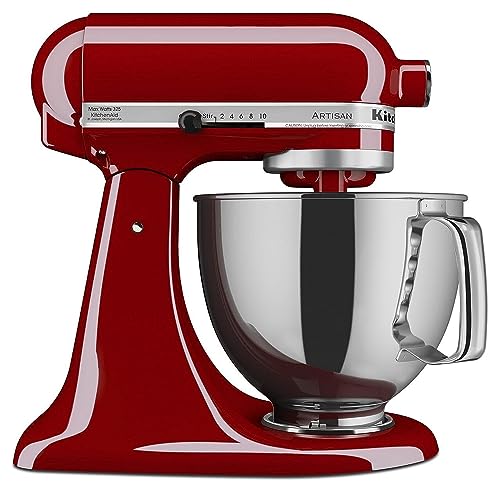
KitchenAid KSM150PSER Artisan 5-Qt. Tilt-Head Stand Mixer
KitchenAid
- ✓325W continuous-rated motor with 10-speed control
- ✓5-quart stainless bowl, tilt-head design
- ✓C-hook dough hook, flat beater, and wire whisk included
- ✓Compatible with 12+ official KitchenAid hub attachments
Pros
- Handles standard single-loaf bread recipes without difficulty at speed 2
- 36,000 ratings at 4.8 stars — the deepest bread-recipe and troubleshooting documentation of any stand mixer
- Tilt-head design is faster to load for a single weekly loaf than a bowl-lift
- Attachment hub opens the door to a pasta roller or grinder without buying a second machine
Cons
- 325W motor and C-hook are not built for double-loaf batches or frequent heavy dough use
- Motor runs warm after 4 to 5 minutes of continuous stiff-dough kneading
- Tilt-head latch can develop slight play under years of repeated bread stress

Cuisinart SM-70 7-Qt. 12-Speed Stand Mixer
Cuisinart
- ✓500W motor with bowl-lift design
- ✓7-quart stainless bowl
- ✓12 speeds
- ✓Dough hook, flat beater, and whisk included
Pros
- 7-quart bowl-lift stability at a lower price than KitchenAid's equivalent bowl-lift models
- 500W motor handles large dough batches without the strain a tilt-head at this wattage would show
- 12 speeds give finer low-end control for gentle bread-starter mixing than most bowl-lift competitors
Cons
- Cuisinart's attachment ecosystem for the SM-70 hub is far smaller than KitchenAid's
- 8,400 ratings is a modest review base for a bowl-lift-class purchase
- Bowl-lift height still requires open counter clearance above the machine

KitchenAid KSMC895 Commercial Series 8-Qt. Bowl-Lift
KitchenAid
- ✓1.3 HP commercial-rated motor with bowl-lift design
- ✓8-quart stainless bowl
- ✓Spiral dough hook rated for continuous commercial-style use
- ✓NSF-certified for commercial kitchen use
Pros
- 1.3 HP commercial motor is rated for continuous use well beyond household duty cycles
- 8-quart bowl and spiral hook handle the largest home or small-commercial dough batches without motor strain
- NSF certification signals build quality appropriate for near-daily heavy bread production
Cons
- Price and footprint are excessive for anyone baking less than several times per week
- 4,400 ratings — a small sample given the price tier
- No practical benefit over the 6-quart Pro 600 for households making one to two loaves at a time

Cuisinart SM-50BCC 5.5-Qt. 12-Speed Stand Mixer
Cuisinart
- ✓500W motor with 12-speed control
- ✓5.5-quart stainless bowl, tilt-head design
- ✓Die-cast zinc body with lever-lock tilt-head
- ✓$200 to $280 retail
Pros
- 500W motor outperforms the KitchenAid Artisan on stiff dough and bagel batches at a lower price
- 5.5-quart bowl handles a double-loaf batch that a 5-quart tilt-head cannot
- Lever-lock tilt-head holds position more firmly under dough stress than a spring latch
Cons
- Tilt-head design still develops flex over years of heavy repeated bread use, same as any tilt-head
- Smaller attachment ecosystem than KitchenAid limits future expansion
- 12,800 ratings is solid but well below KitchenAid's community size

KitchenAid KSM8990OB Commercial 8-Qt. Stand Mixer (Onyx Black)
KitchenAid
- ✓1.3 HP commercial motor with bowl-lift design
- ✓8-quart stainless bowl in onyx black finish
- ✓Spiral dough hook rated for continuous use
- ✓NSF-certified commercial build
Pros
- Commercial-rated motor and NSF certification suit dedicated home bakers producing bread multiple times weekly
- 8-quart capacity matches the largest batches most home ovens can bake in one session
- Onyx black finish distinguishes it visually from the standard commercial silver models
Cons
- Large size and weight make it a permanent counter fixture, not a stored appliance
- 3,200 ratings — a limited review base to judge long-term reliability at scale
- Price is not justified for anyone baking fewer than several loaves per week

KitchenAid KSM3311XBM Artisan Mini 3.5-Qt.
KitchenAid
- ✓250W motor with 10-speed control
- ✓3.5-quart stainless bowl, tilt-head design
- ✓C-hook dough hook, flat beater, and wire whisk included
- ✓Compatible with the full KitchenAid attachment hub
- ✓20% smaller footprint than the full-size Artisan
Pros
- Full KitchenAid attachment compatibility in a compact 3.5-quart body — no functional attachment downgrade versus the 5-quart Artisan
- 250W motor handles a single standard loaf (3 cups flour) without strain
- Smaller footprint suits kitchens without room for a full-size stand mixer
Cons
- 3.5-quart bowl caps out well below a full loaf-and-a-half batch
- 250W motor is the least powerful in the KitchenAid consumer lineup — not for double batches or stiff dough
- Not the right choice for households baking more than one loaf at a time
A stand mixer that whips cream beautifully can still stall halfway through a batch of bagel dough. Bread asks more of a motor than almost anything else you'll make in a kitchen.
The number on the box rarely tells the real story. What matters is sustained torque, minute after minute, while stiff dough tries to fight the hook to a stop.
That's where a bowl-lift design earns its keep, and why the best stand mixers for bread lean on it instead of a spring-loaded tilt-head.
The KitchenAid Professional 600 tops this list. Its bowl-lift frame holds steady through full 10-minute kneading cycles, and its spiral dough hook centers dense dough instead of pushing it to one side of the bowl, the kind of consistency a once-a-week sandwich loaf doesn't need but a serious baker feels immediately.
The Best for Bread Baking
Best overall for bread: KitchenAid Professional 600 KP26M1 6-quart bowl-lift ($400 to $550). The 575W motor and bowl-lift design handle stiff dough, large batches, and sustained 10-minute kneading cycles without the tilt-head flex that develops in the Artisan under heavy repeated bread use. The spiral dough hook is standard.
Best for the dedicated bread baker: Bosch Universal Plus ($350 to $450). The motor-in-base design maximizes usable torque without head leverage limitations, making it the strongest dough-kneading stand mixer at its price. Handles 8-pound flour batches that would strain a KitchenAid Pro 600.
Best for occasional bread bakers: KitchenAid Artisan 5-quart ($280 to $350 on sale). If you make bread once per week or less in standard one-loaf quantities: the Artisan handles it without difficulty. The upgrade to the Pro 600 is justified by frequency, not by occasional bread baking.
How to Read Bread-Specific Specs
Bowl capacity for bread: a standard white sandwich loaf uses 3 cups of flour (about 1.5 pounds of flour + water + salt). A 4.5-quart bowl handles one standard loaf. A 5-quart handles a 1.5-loaf batch. A 6-quart handles two standard loaves or one large artisan loaf. For weekly bread baking for a family of 4: the 6-quart is the correct minimum.
Motor wattage for bread: 250W for single-loaf occasional use; 325 to 500W for regular one to two loaf batches; 575W+ for large batches or frequent use. The Artisan (325W) at one batch per week is adequate; the Pro 600 (575W) is the correct motor for multiple batches per week.
Frequently Asked Questions
Our editorial team researches, tests, and writes every review independently. We never accept payment for placement.