Best Food Dehydrators for Fruit Leather: Top Picks for Smooth, Even Sheets
Last updated: 2026-09-12 · By NicheHive Editorial
This article contains affiliate links. If you purchase through these links, we may earn a commission at no extra cost to you. As an Amazon Associate, NicheHive earns from qualifying purchases. See our full disclosure.
The best food dehydrators for homemade fruit leather ranked by tray flatness, fruit roll sheet availability, temperature control, and drying consistency, for smooth sheets that peel off cleanly every time.
Our Top Picks
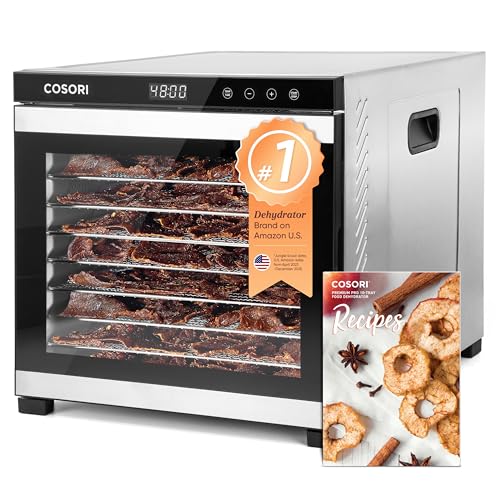
COSORI Premium 10-Tray Stainless Steel Food Dehydrator
COSORI
- ✓10 stainless steel trays, 16.2 square feet of drying space
- ✓Fruit preset dials in the right temperature automatically
- ✓95°F to 165°F in 1°F increments
- ✓Rear-mounted horizontal airflow
- ✓48-hour digital timer
Pros
- Fruit preset removes the guesswork on temperature for first-time leather makers
- 10-tray capacity means a full day's fruit haul can go in as leather in one batch
- Horizontal airflow dries sheets evenly without needing to rotate trays
- 1°F precision keeps leather from overshooting into a brittle, crackly texture
Cons
- Fruit roll sheets sold separately from the base unit in some bundles
- Large 10-tray footprint takes real counter space during a long dry
- Higher price than the NESCO for buyers who only want to make leather occasionally
Best overall for fruit leather. The COSORI Premium's fruit preset and precise low-end control produce consistently smooth sheets.

Presto 06301 Dehydro Digital Electric Food Dehydrator
Presto
- ✓Includes 2 fruit roll sheets in the box
- ✓Digital thermostat and timer, 90°F to 165°F
- ✓6 trays included, expandable to 12
- ✓Bottom-mounted fan
- ✓Nesting trays for compact storage
Pros
- Fruit roll sheets included out of the box, no separate purchase needed to start
- Digital thermostat holds the 135°F to 140°F leather range accurately
- Lower price than COSORI or Excalibur for occasional leather makers
- Nesting trays make this easy to store when not drying a batch
Cons
- Bottom fan dries the lowest tray faster, so rotating trays partway through helps
- 6-tray starting capacity limits how much leather you can dry in one run
- Round trays mean cutting rectangular fruit roll sheets to fit isn't always exact
Best value. The Presto Dehydro Digital includes the sheets you need and hits the right temperature range at a lower price.

NESCO FD-75A Snackmaster Pro Food Dehydrator
NESCO
- ✓5 trays included, expandable to 12
- ✓600W top-mounted fan
- ✓Adjustable thermostat, 95°F to 160°F
- ✓Compact stackable design
- ✓Fruit roll sheets available as an accessory
Pros
- Lowest typical price of the four, a low-commitment way to try making leather
- 160°F ceiling comfortably covers the 135°F to 140°F leather range
- Compact stackable footprint fits in smaller kitchens between uses
- Large, proven track record with tens of thousands of ratings
Cons
- Fruit roll sheets are an added purchase, not included with the base unit
- Top-mounted single fan means top trays dry faster than bottom ones
- 5-tray starting capacity is limiting for anyone processing a large fruit haul at once
Best budget pick. The Snackmaster Pro is the cheapest way onto this list, with sheets sold separately.

Excalibur D900CDSHD 9-Tray Food Dehydrator
Excalibur
- ✓9 stainless steel trays, 15 square feet of drying space
- ✓Parallex horizontal airflow, no rotation needed
- ✓Adjustable thermostat, 105°F to 165°F
- ✓26-hour digital timer
- ✓Clear door for checking progress
Pros
- Horizontal airflow dries every sheet at nearly the same rate across all nine trays
- Largest usable drying area on this list for a full harvest's worth of puree
- Solid trays (with optional flexible sheet inserts) produce clean, even leather
- 26-hour timer covers even the longest leather batches without manual restarting
Cons
- Highest price on this list by a wide margin
- Large footprint is overkill for someone who only makes leather occasionally
- Flexible fruit roll inserts sold separately from the base unit
Best for large batches. The Excalibur's capacity and even airflow make sense for anyone processing a full fruit harvest into leather.
A good fruit leather sheet peels off in one clean piece. A bad one tears, sticks in the middle, and leaves half of it stuck to the tray.
The difference usually comes down to two things: how evenly the dehydrator dries across all its trays, and whether the puree was spread on a purpose-made sheet instead of improvised parchment paper.
The COSORI Premium 10-Tray, at roughly $150 to $170, leads this list. Its dedicated fruit preset and 1°F increment control hold the 135°F to 140°F leather range precisely, and its rear-mounted horizontal airflow dries every sheet at close to the same rate.
The Presto Dehydro Digital undercuts it on price and ships with fruit roll sheets in the box, while the Excalibur D900CDSHD makes the most sense for anyone processing a full harvest's worth of fruit into leather at once.
The Best Dehydrators for Fruit Leather at a Glance
Best overall: COSORI Premium 10-Tray, a dedicated fruit preset and precise low-end temperature control for consistently smooth sheets.
Best value: Presto 06301 Dehydro Digital, includes fruit roll sheets in the box and hits the right temperature range at a lower price.
Best budget: NESCO FD-75A Snackmaster Pro, the cheapest entry point, with sheets sold as an accessory.
Best for large batches: Excalibur D900CDSHD 9-Tray, the most usable drying area for a full fruit harvest in one run.
What Makes a Great Fruit Leather Dehydrator
Temperature precision matters for texture. Fruit leather made too hot turns brittle and cracks when rolled; made too cool, it stays tacky in the center. Look for a thermostat that holds steady in the 135°F to 140°F range, which every dehydrator on this list does.
Purpose-made fruit roll sheets beat improvised parchment. A reusable silicone or plastic sheet shaped to the tray keeps puree from running to the edges and produces an evenly thick sheet. Check whether sheets are included or need to be purchased separately before you buy.
Airflow direction affects evenness across trays. Horizontal airflow designs, used in the Excalibur and COSORI, dry every tray at close to the same rate. Single-fan vertical stack designs, like the NESCO and Presto, tend to finish the tray nearest the fan first, so rotating trays partway through gets a more even result.
Frequently Asked Questions
Our editorial team researches, tests, and writes every review independently. We never accept payment for placement.