Best Baby Monitors for Toddlers: Picks That Grow Past the Crib
Last updated: 2026-09-18 · By NicheHive Editorial
This article contains affiliate links. If you purchase through these links, we may earn a commission at no extra cost to you. As an Amazon Associate, NicheHive earns from qualifying purchases. See our full disclosure.
Toddler monitoring needs a wider field of view and a camera that can watch a climbing, roaming kid, not just a sleeping infant. Here are the best baby monitors for toddlers.
Our Top Picks

Nanit Pro Smart Baby Monitor & Flex Stand
Nanit
- ✓1080p Wi-Fi video with wide room coverage
- ✓Sleep tracking continues to log naps and bedtime through toddlerhood
- ✓Two-way audio for talking a toddler back to sleep
- ✓Flex stand can be repositioned as a room layout changes
- ✓Motion and sound alerts adjust as a toddler becomes more active
Pros
- Sleep data carries over from crib to floor bed, useful for spotting regressions
- Wide-angle overhead view keeps a whole toddler room in frame after a bed transition
- Two-way audio lets a parent verbally resettle a toddler without entering the room
Cons
- No manual pan or tilt, so a toddler who moves to a room edge can leave the frame
- Ongoing sleep insights depend on the paid subscription after year one
- Higher price than either non-Wi-Fi option in this list
Best for tracking sleep continuity from infancy through the toddler years.

Infant Optics DXR-8 Video Baby Monitor
Infant Optics
- ✓Manual pan, tilt and zoom from the parent unit
- ✓Interchangeable lens system
- ✓3.5-inch screen with LED sound bar
- ✓Two-way talk and automatic night vision
- ✓Non-Wi-Fi FHSS connection
Pros
- Manual pan and tilt lets a parent actively follow a toddler moving around the room
- Zoom lens can be swapped to a wider-angle option for a full toddler bedroom
- No subscription needed as sleep-tracking features become less central
Cons
- No sleep-pattern logging or history the way Wi-Fi monitors provide
- 3.5-inch screen makes fine detail harder to see across a larger room
- No remote check-in if you're away from the house
Best for actively tracking a toddler who moves around, thanks to manual pan, tilt, and zoom control.
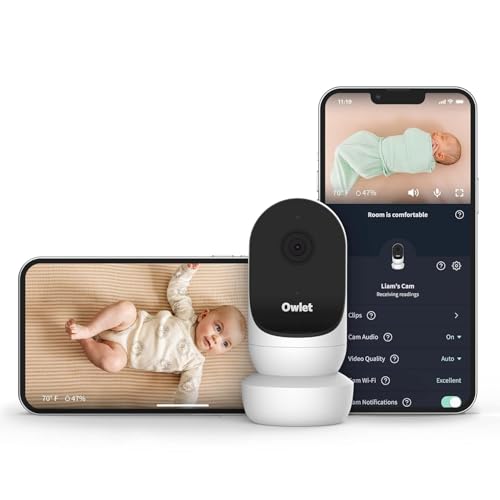
Owlet Cam 2 Smart Baby Monitor
Owlet
- ✓130-degree wide-angle lens
- ✓1080p HD video with 4x zoom
- ✓Night vision and encrypted streaming
- ✓Two-way talk and sound, motion, cry notifications
- ✓Temperature and humidity sensor
Pros
- 130-degree wide-angle lens covers more of a toddler room than a standard-angle camera
- 4x zoom compensates somewhat for the fixed wide-angle mount
- Encrypted Wi-Fi streaming and app access work the same as during infancy
Cons
- No physical pan or tilt, relies on the wide lens and digital zoom instead
- Smaller reviewer base than Nanit or Infant Optics for this age range specifically
- Subscription still applies for extended history as a child ages
Best wide-angle option for a toddler room where a single fixed mount needs to see the whole space.
A newborn monitor mostly needs to watch a stationary crib. A toddler monitor needs to keep up with a kid who climbs, wanders, and eventually moves to a floor bed.
The best baby monitors for toddlers are the ones with either a wide enough lens to cover a full room from a fixed mount, or pan-and-tilt control that lets a parent actively follow movement.
The Nanit Pro carries sleep tracking data forward from infancy, useful for spotting toddler sleep regressions with an actual data trail.
The Infant Optics DXR-8 answers the mobility question directly with manual pan, tilt, and zoom, letting a parent follow a toddler around the room in real time.
The Owlet Cam 2's 130-degree wide-angle lens is the widest fixed field of view in this list, a solid option for parents who'd rather not manually adjust the camera night to night.
The Best Baby Monitors for Toddlers at a Glance
Best for continued sleep tracking: Nanit Pro, sleep data continues logging from crib through the toddler years.
Best for following a moving toddler: Infant Optics DXR-8, manual pan, tilt, and zoom control.
Best wide-angle view: Owlet Cam 2, a 130-degree lens that covers more of the room from one fixed spot.
What Changes at the Toddler Stage
Field of view matters more than crib-specific placement. Once a toddler moves to a floor bed or starts using the whole room, a camera mounted for a crib's footprint alone may need repositioning or a wider lens.
Manual control becomes more useful. Newborns don't move far; toddlers do. A camera with pan, tilt, and zoom that a parent can adjust in the moment adapts better to an active toddler than a fixed wide shot.
Audio takes on a bigger role. As toddlers start talking, calling out, or having nightmares, clear two-way audio for a parent to respond verbally becomes as important as the video feed itself.
Frequently Asked Questions
Our editorial team researches, tests, and writes every review independently. We never accept payment for placement.